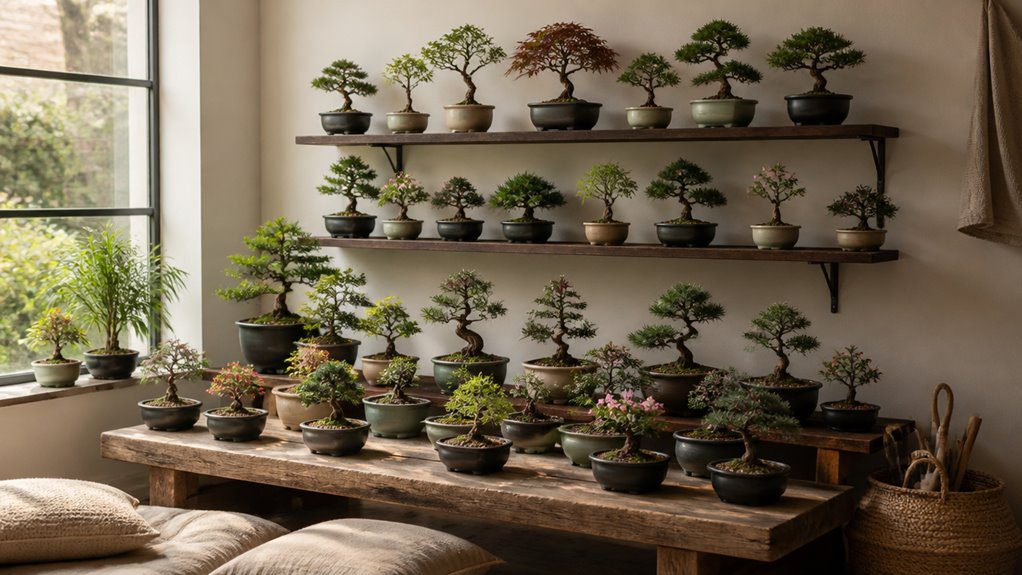
If you’re new to bonsai, choosing the right plant can feel tricky, but don’t worry. Many experts recommend beginner-friendly options like Ficus, Chinese Elm, or Jade for their forgiving nature and easy care. These plants tolerate mistakes and fit well indoors or outdoors. Ready to explore which bonsai might become your new favorite? Keep going, you’ll find tips to help you grow confidence with every tiny tree you shape.
Why Choose Beginner-Friendly Bonsai Plants?
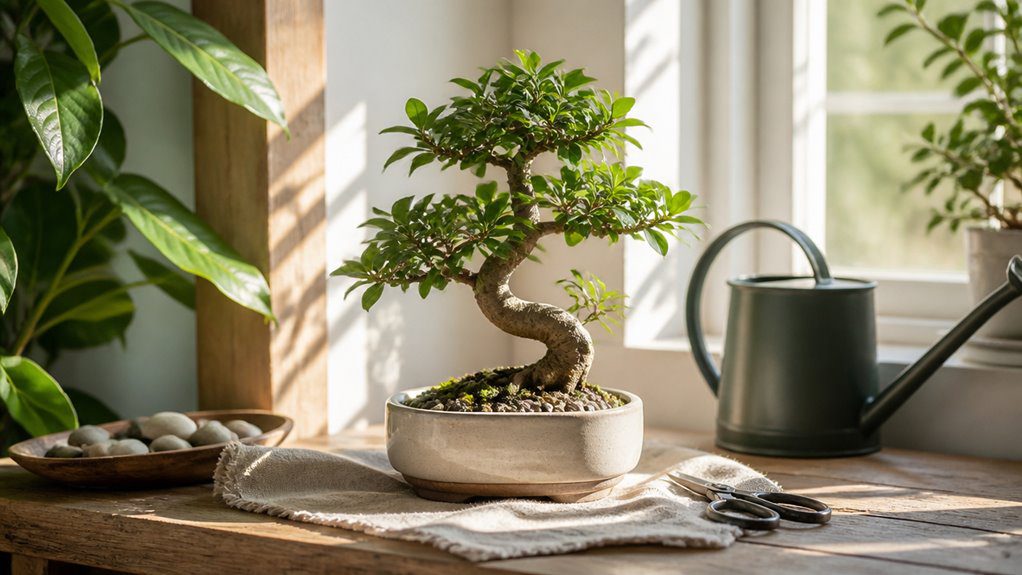
If you’re just starting out with bonsai, choosing beginner-friendly plants is a smart move. A beginner Bonsai like Chinese Elm, Jade, or Ficus is hardy and easy to care for. They tolerate watering mishaps and fit indoors or outside well. These forgiving plants help you enjoy shaping your bonsai without fuss, boosting confidence as you learn. Additionally, selecting plants that are adaptable to indoor environments can make your bonsai journey more successful. Opting for low-maintenance varieties ensures manageable care while developing your skills.
How to Pick the Perfect Bonsai for Your Space and Climate
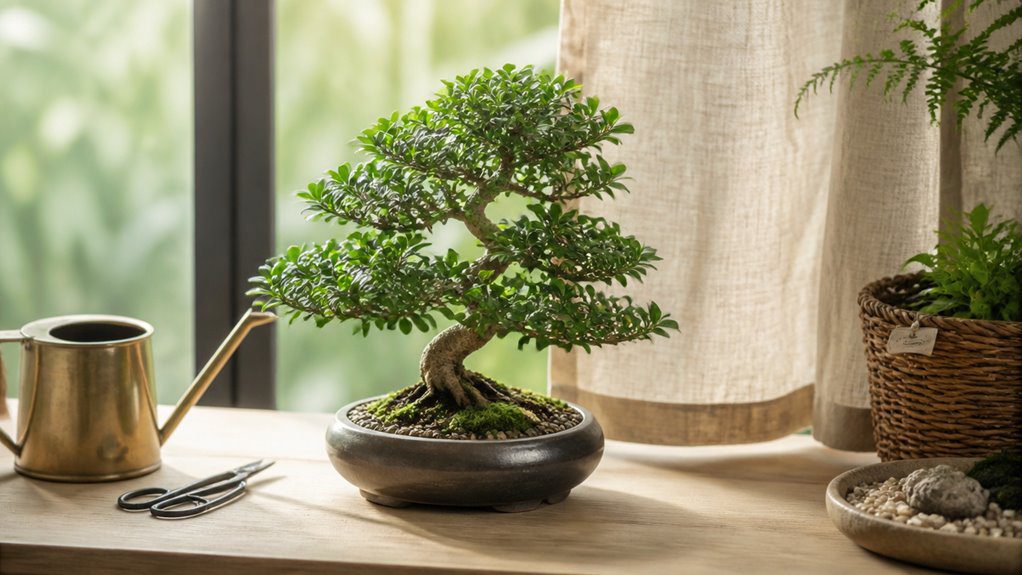
Choosing the right bonsai for your space and climate is key to keeping it happy. Pick an outdoor bonsai like Juniper or Chinese Elm if your area gets plenty of sunlight and mild winters. Make sure the plant suits your environment and your care level. Remember, choosing the right spot helps your bonsai thrive and grow happily! Additionally, understanding the specific care requirements for each species can greatly improve your success as a beginner. Being aware of humidity levels and light needs can help you select a bonsai that will thrive in your environment.
Top 5 Easy Bonsai Trees for Beginners
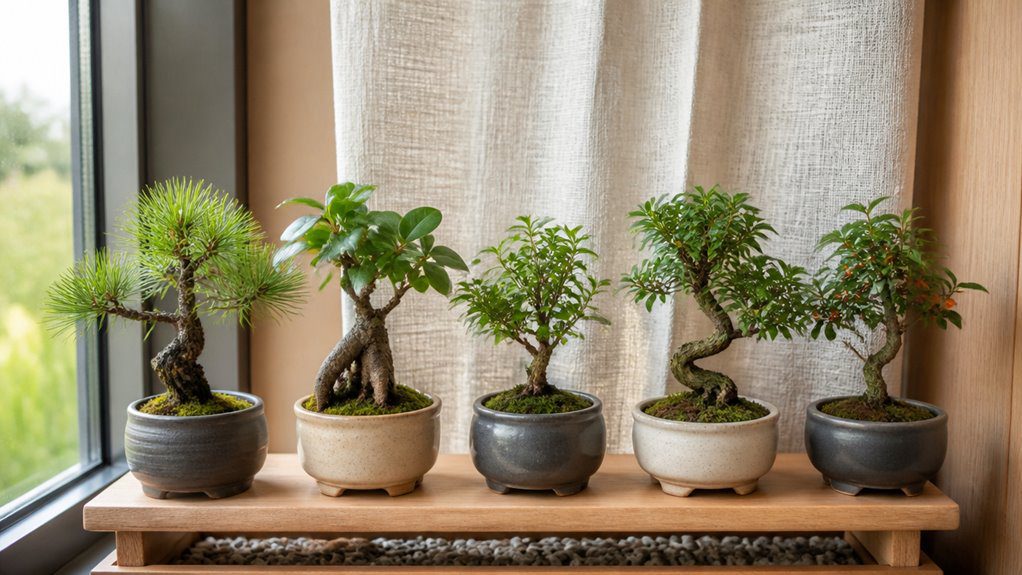
Starting with an easy bonsai can make your gardening journey fun and less stressful. Choose trees that are easy to care for, like the Hawaiian Umbrella Tree or Broadleaf Juniper. They’re resilient and great for beginners. Dwarf Jade and Tiger Bark Ficus also fit this category, offering moderate challenges without feeling overwhelming. Keep it simple and enjoy your bonsai adventure!
Ficus Bonsai – The Best Indoor and Outdoor Choice
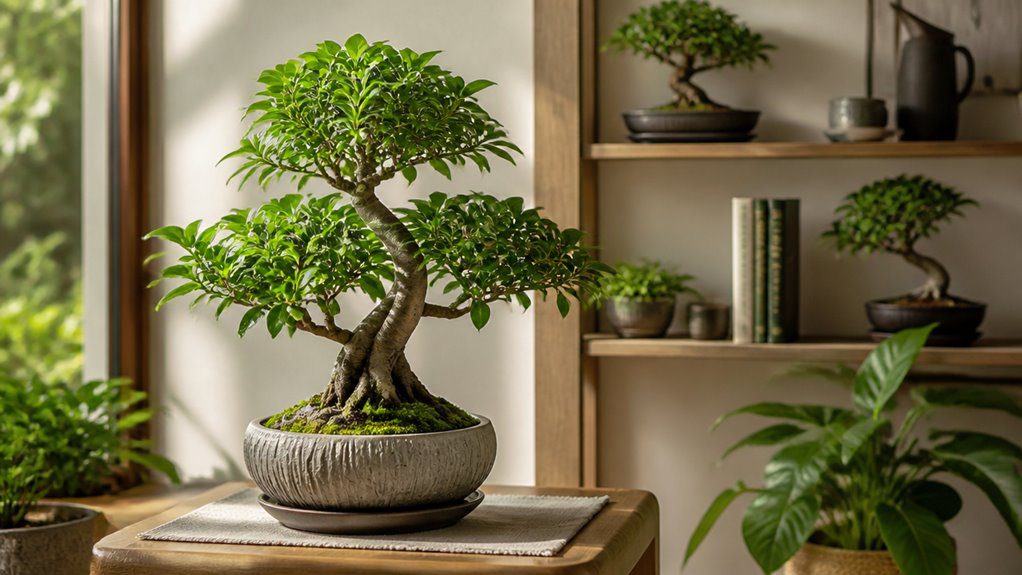
Ever wondered why Ficus bonsai is a favorite among beginners? It’s super tough and forgiving. You can grow it indoors or outdoors, and it survives overwatering or underwatering easily. Pruning is simple, just trim leaves to shape. Its backbudding ability helps you refine its look anytime. A safe, low-maintenance choice that keeps your bonsai dreams alive!
Chinese Elm Bonsai – Easy Care for Beginners
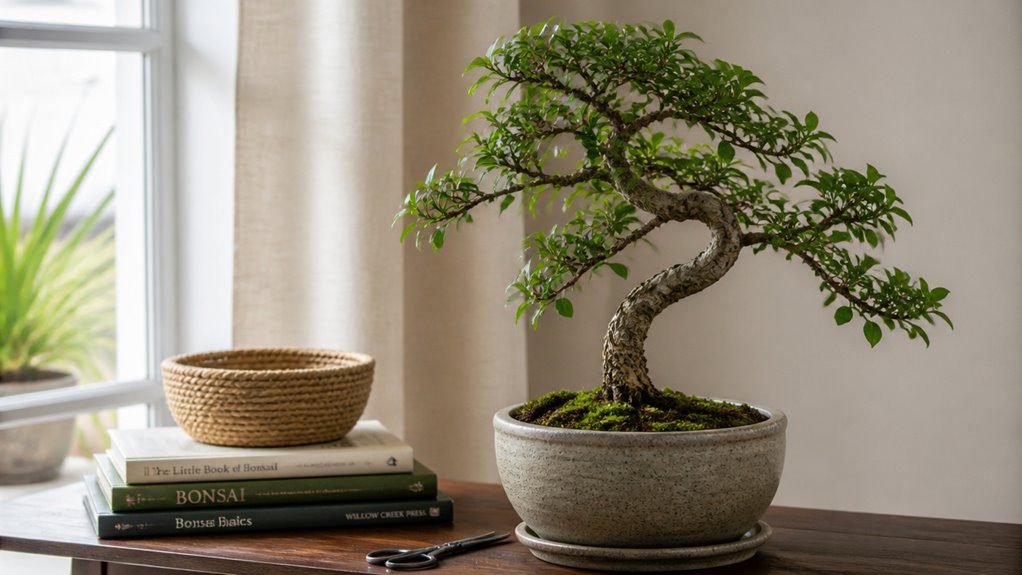
If you’re looking for a beginner-friendly bonsai, the Chinese Elm Bonsai is a great pick. It’s hardy, slow-growing, and adapts well both indoors and outdoors. This tree loves pruning and wiring, helping you shape it easily. Just remember, protect it in cold winters. The Chinese Elm makes growing a bonsai safe, fun, and satisfying!
Juniper Bonsai – Great for Outdoor Shaping
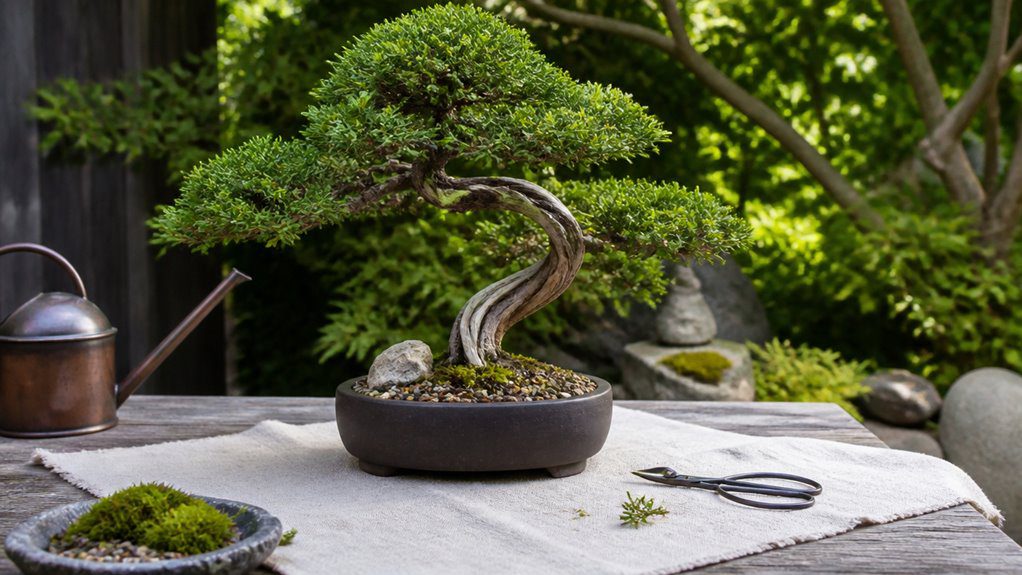
Juniper bonsai trees are perfect for outdoor shaping because they love the sun and fresh air. Make sure to place your juniper bonsai trees outside where they get plenty of sunlight, good airflow, and regular watering. Protect them from freezing temperatures in cold weather. With patience and care, your juniper bonsai trees will grow into beautiful, sculpted masterpieces!
Jade Bonsai – Low-Maintenance Succulent Style
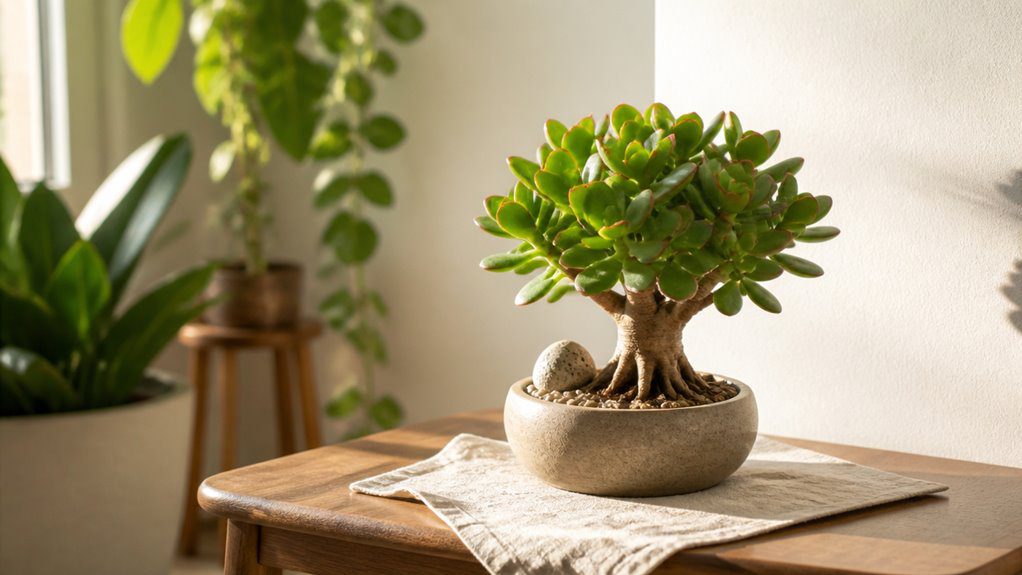
Jade Bonsai, also called Portulacaria afra, is a fantastic choice for beginners because it’s low-maintenance and easy to care for. It tolerates neglect and can be grown indoors or outdoors. Water infrequently, keep well-drained soil, and prune or wire it for shaping. Jade bonsai is a safe, attractive, and practical plant perfect for new bonsai lovers.
Resilient Broadleaf Bonsai for Beginners (Olives, Holly, Boxwood)
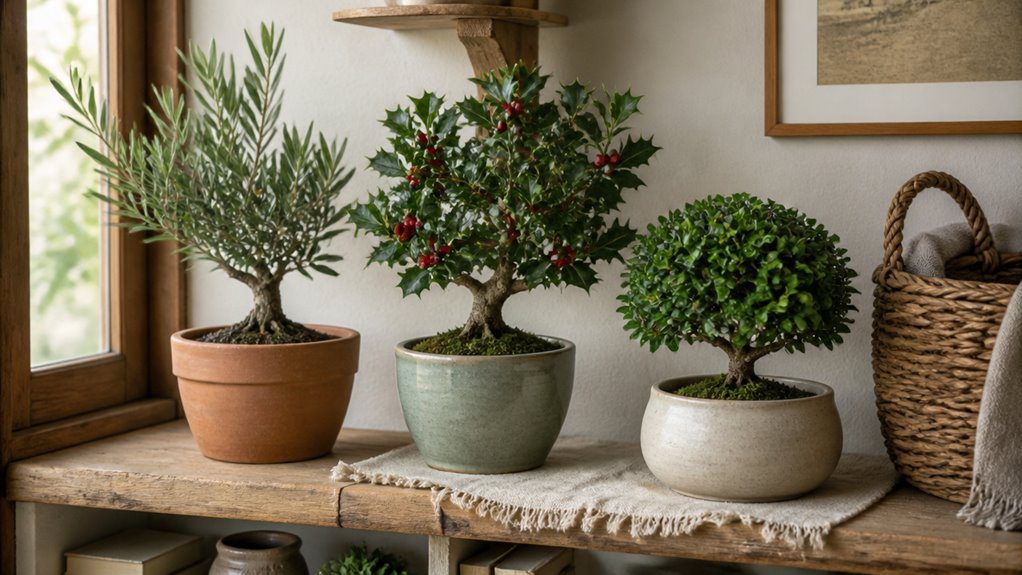
Resilient broadleaf bonsais like olives, holly, and boxwood are perfect for beginners because they’re tough and forgiving. These broadleaf bonsai tolerate some neglect, like irregular watering. They respond well to pruning and wiring, so shaping is fun and easy. Plus, they thrive indoors or outdoors with little fuss, ideal for new gardeners wanting a safe, rewarding start.
Azalea Bonsai – Vibrant Seasonal Flowers
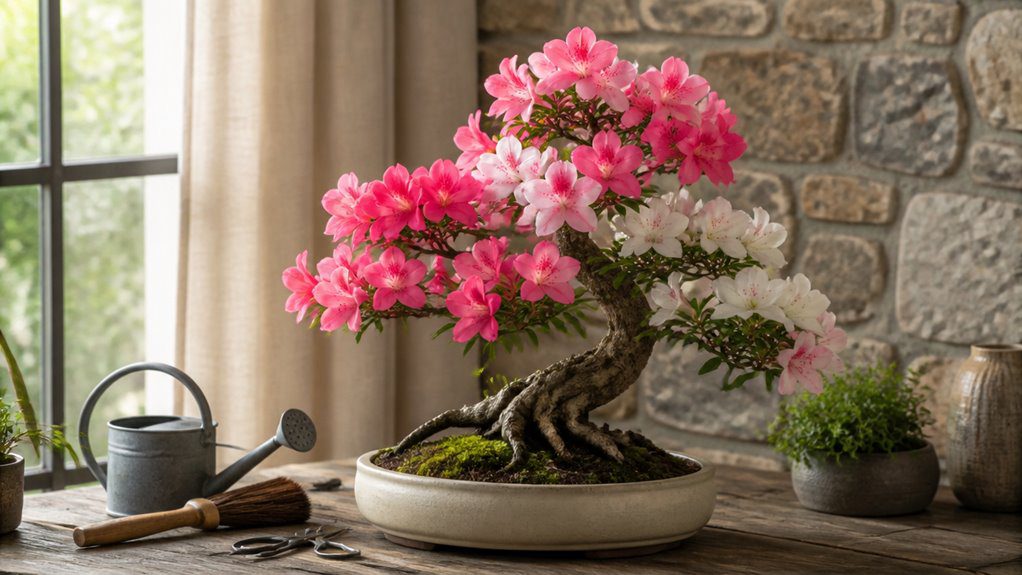
If you’re looking to add some color to your bonsai collection, azalea bonsai is a perfect pick. It produces bright, lively flowers in spring and summer. Use special azalea fertilizers and keep the soil well-draining and acidic. Prune regularly for a neat shape. Protect it from frost, give it plenty of sunlight, and enjoy its cheerful blooms safely.
Fukien Tea – Elegant and Hardy for New Growers
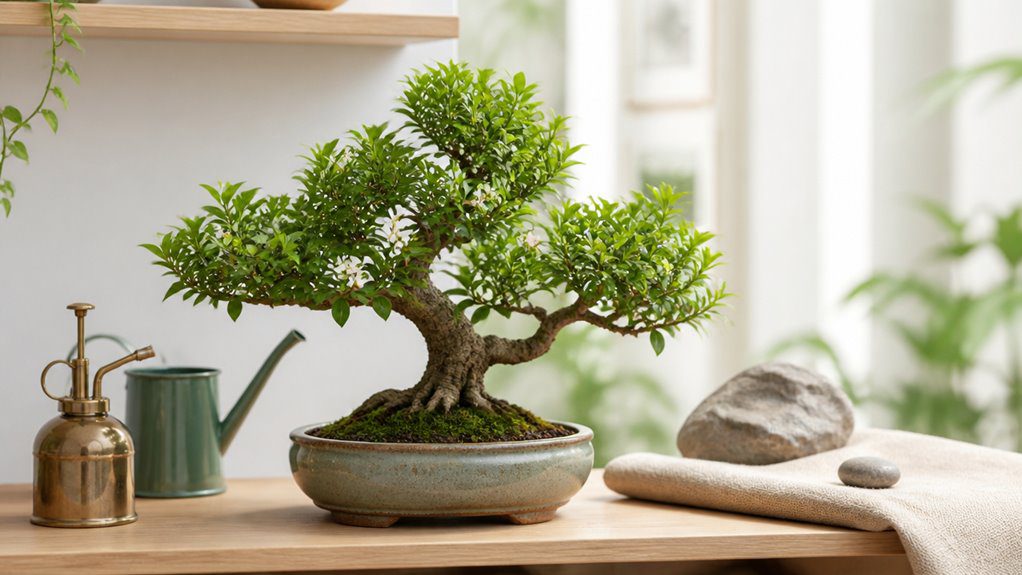
Fukien Tea is an elegant bonsai that’s perfect for beginners, especially if you want a plant that’s easy to care for. Fukien Tea thrives indoors year-round and is forgiving if you forget a watering or two. Keep it in well-draining soil, provide high humidity, and protect it from cold drafts. Enjoy its small white flowers and shiny leaves!
Pine Bonsai – Classic Style Made Simple
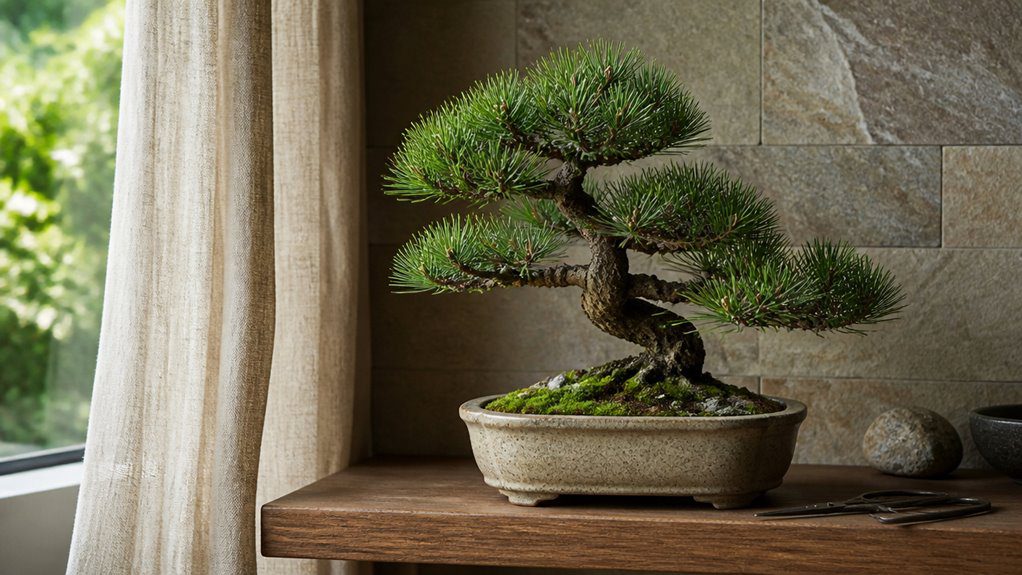
Pine bonsai trees are a classic choice that anyone can enjoy, especially beginners. These trees love full sun and are easy to shape with pruning and wiring. Choose from Japanese black pine or white pine, and remember to repot every 2-3 years. Pine bonsai symbolize strength and long life, a meaningful, stylish addition that’s simple to care for and fun to grow!
Rosemary Bonsai – Fragrant and Easy to Train
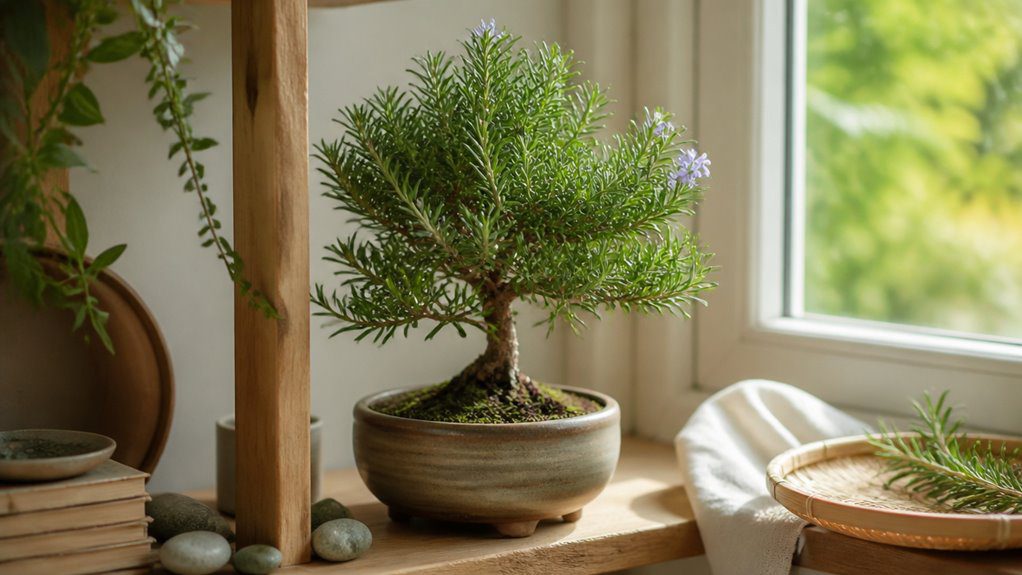
Rosemary bonsai is a great choice if you want a plant that’s both lovely and useful. This beginner-friendly bonsai is easy to train and has fragrant leaves, perfect for cooking or adding aroma. Keep it in well-drained soil, get at least 6 hours of sunlight, and prune regularly. It’s a small, fragrant gift for any gardener!
Chinese Sweet Plum – Unique Foliage for Beginners
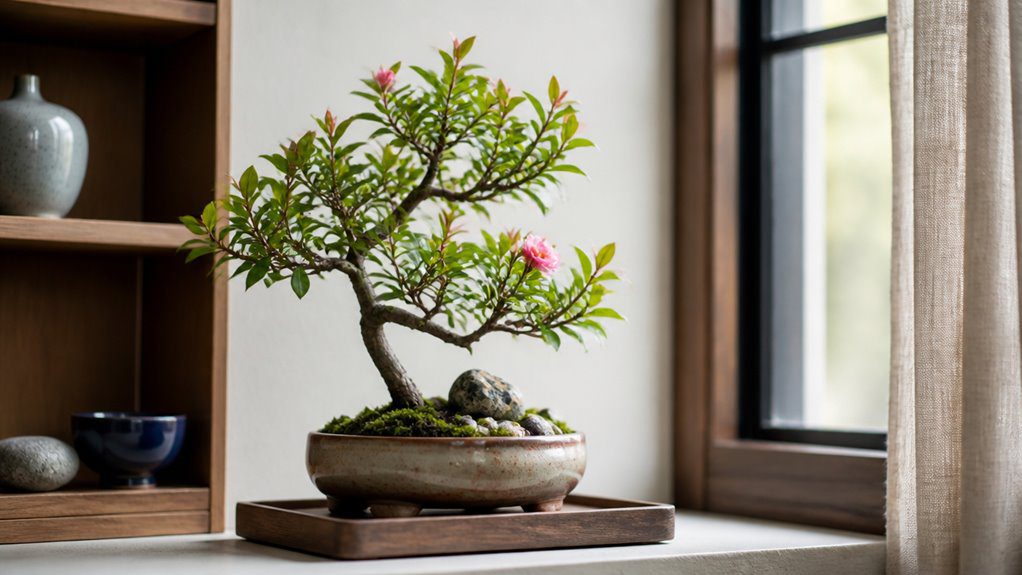
The Chinese Sweet Plum makes a fun and attractive bonsai for beginners who love unique foliage. Like a tiny Chinese Elm, its shiny leaves stay vibrant all year. Just remember, it needs 6-8 weeks of indoor rest in winter for a healthy rebloom. Use safe fertilization formulas, and enjoy watching your tiny tree flourish with minimal fuss.
How to Choose the Right Bonsai for Your Indoor or Outdoor Space
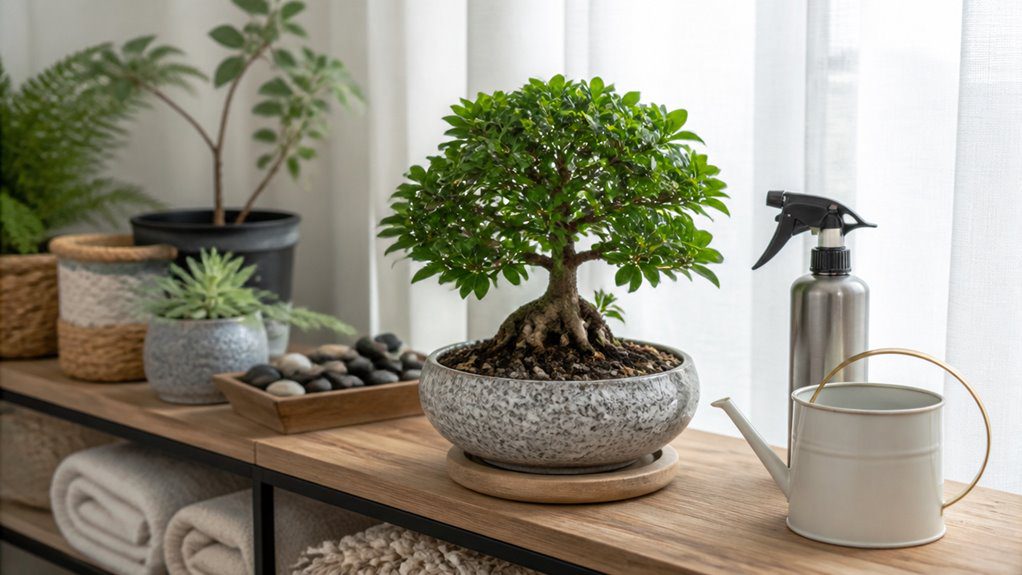
Wondering how to pick the best bonsai for your space? For indoor Bonsai, choose species like Ficus or Jade that thrive inside. Consider your climate and light; if you have limited space, smaller trees like Dwarf Jade are perfect. Always check each plant’s care needs to keep your bonsai healthy, happy, and safe indoors.
Where to Place Your Bonsai Indoors and Outdoors
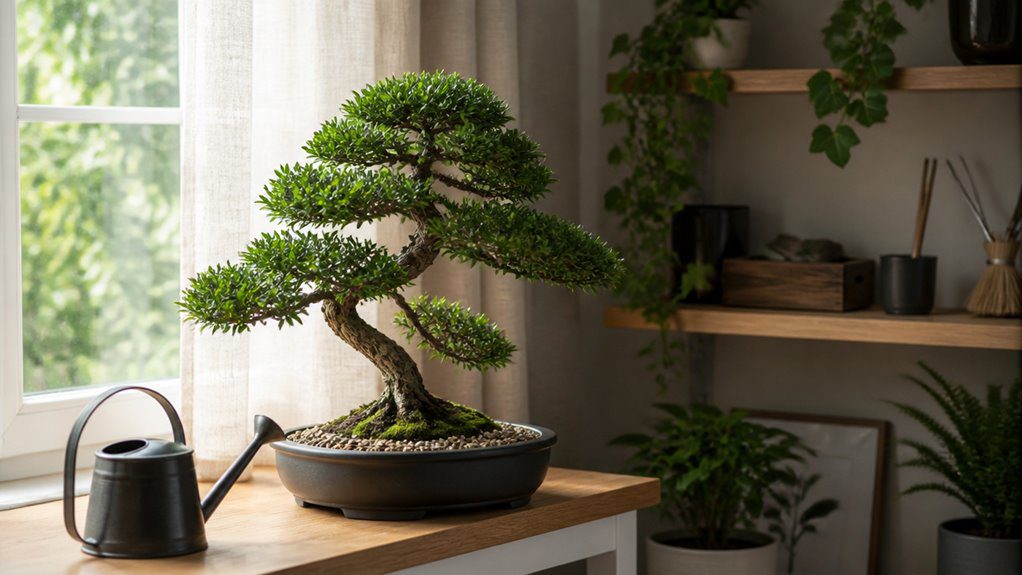
Placing your bonsai indoor plant carefully makes a big difference in its health. For indoor bonsai, like Ficus, put them near south-facing windows for bright, filtered light. Keep away from cold drafts or hot spots. Outdoor bonsai such as Junipers need sunlight and protection from frost. Always choose the right spot to keep your bonsai happy and safe!
Must-Have Tools for Beginner Bonsai Care
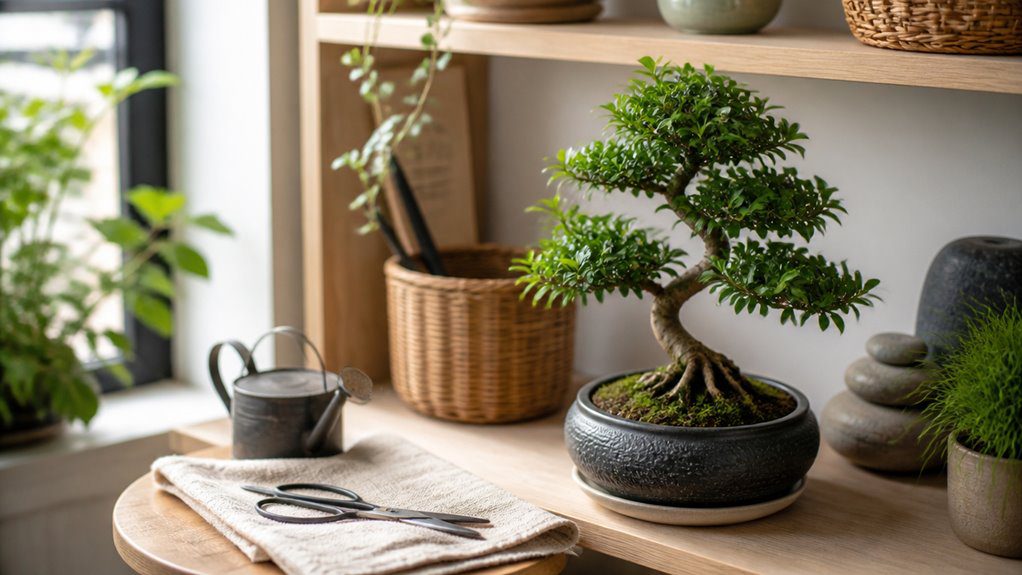
Getting the right tools makes taking care of your bonsai much easier and more fun. Use sharp, high-quality tools like long-handled twig shears and concave cutters for clean pruning and shaping. A bonsai wire cutter safely handles wire, and always clean and store your tools after use. Good tools are the secret to healthy, happy bonsai!
Watering and Fertilizing Tips for Healthy Bonsai
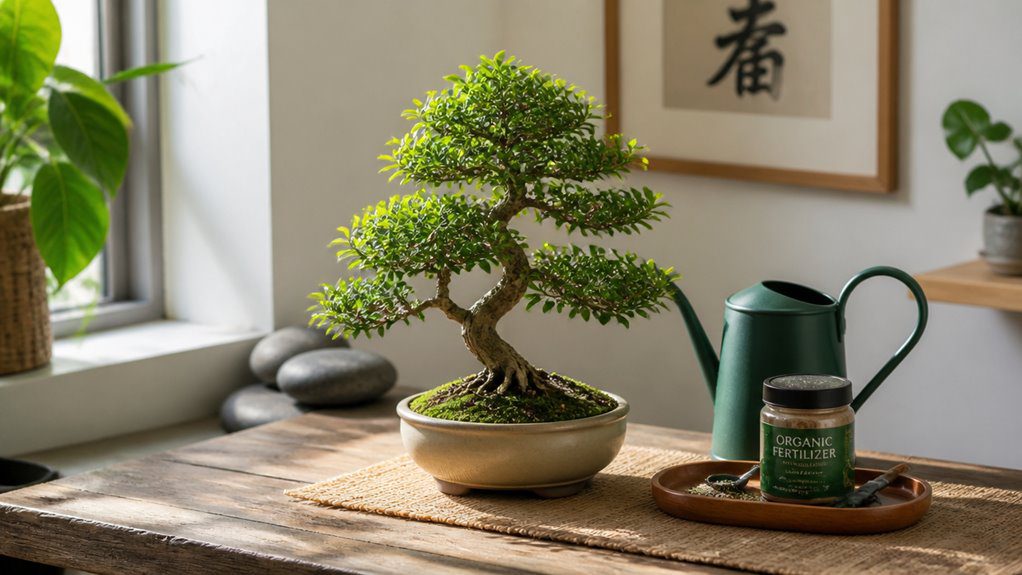
Taking care of your bonsai means giving it just the right amount of water and nutrients. Water your bonsai thoroughly when the topsoil feels slightly dry, and check the soil moisture often with a finger or moisture meter. Fertilize every two weeks during the growing season with a balanced, diluted fertilizer. Avoid overwatering or over-fertilizing to keep your plant healthy and happy.
How to Safely Prune and Wire Your Bonsai
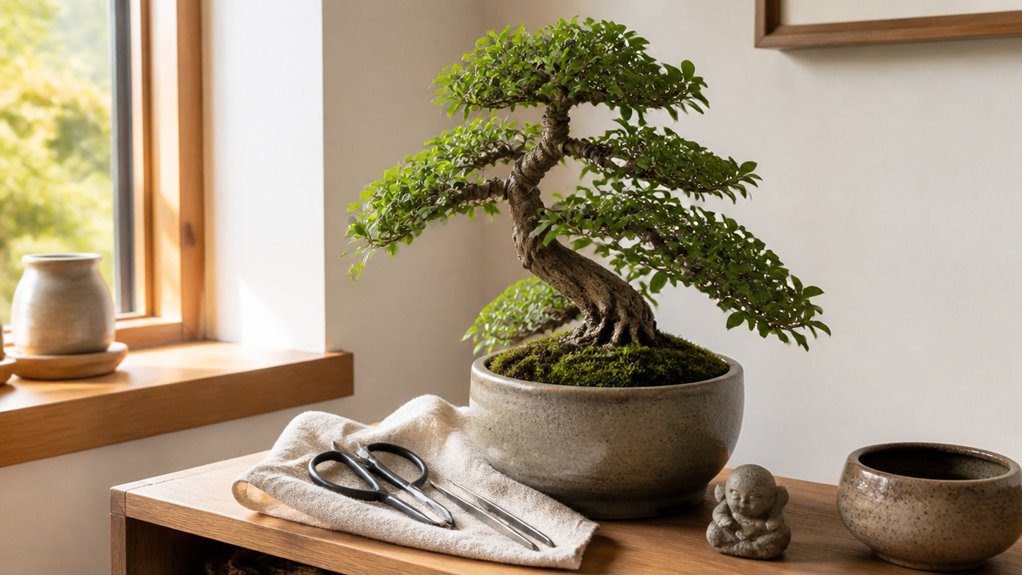
Pruning and wiring are key steps in shaping your bonsai, so it’s important to do them safely and correctly. Always use concave cutters for clean cuts that heal fast. Wrap wiring carefully to avoid bark damage, removing it after 6-8 weeks. Regularly check wired branches, prune, or re-wire to keep your bonsai looking perfect and healthy!
When and How to Repot Your Bonsai
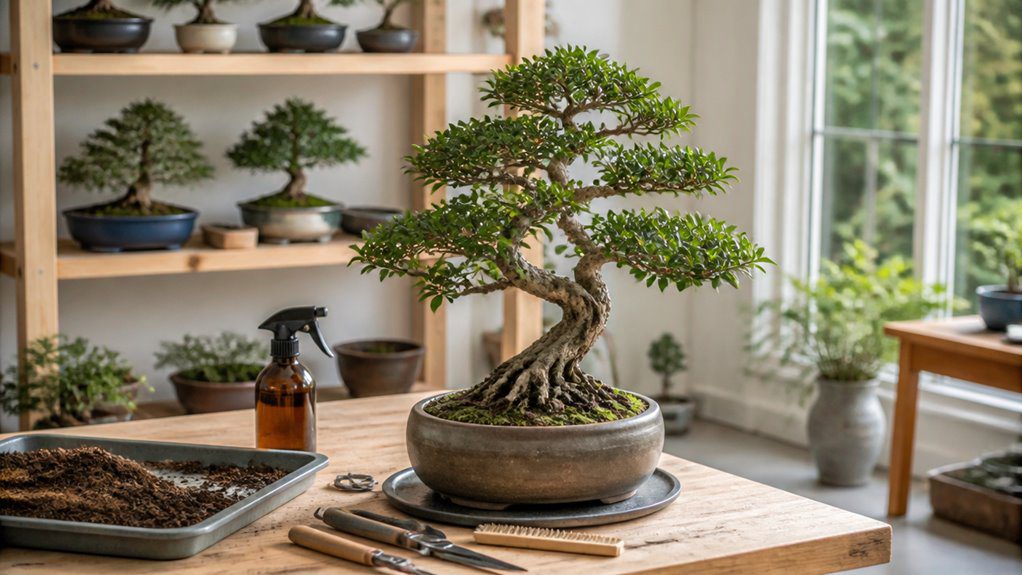
Since it’s best to repot your bonsai every two years, timing is everything. Repotting is safest in early spring, before new growth begins. Carefully remove your bonsai from its pot, trim excess roots, and use fresh, well-draining soil. Place it in a slightly larger pot, avoid fertilizing for a few weeks, and give your bonsai time to settle in. Happy repotting!
Protecting Your Bonsai From Pests and Diseases
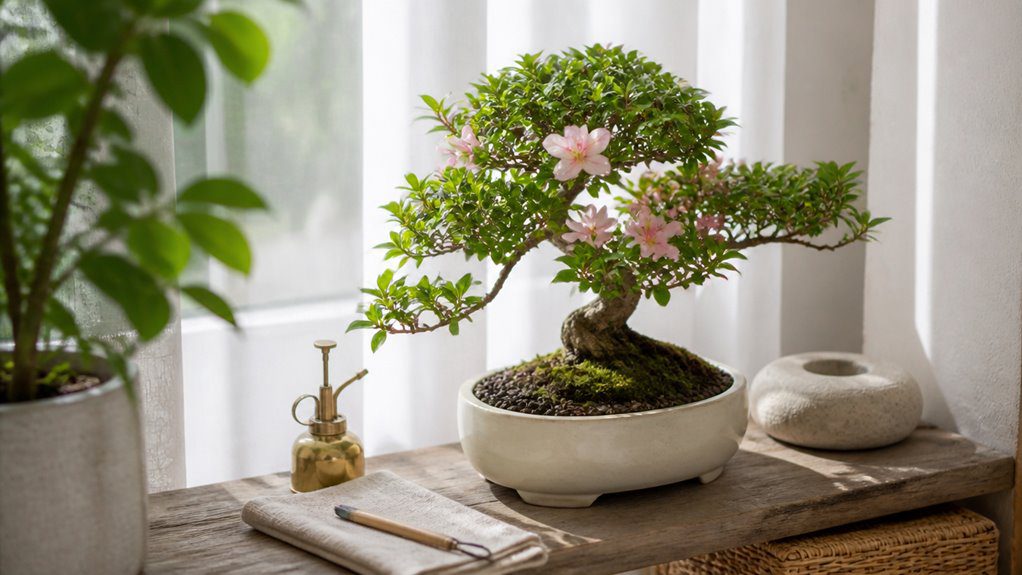
Keeping your bonsai healthy means watching out for pests and diseases. Practice good pest control by regularly inspecting your bonsai for pests like aphids, spider mites, and scale insects. Use organic or chemical treatments quickly to stop pests before they spread. Ensure good airflow, avoid overwatering, and keep your bonsai stress-free for a strong, pest-resistant tree.
Common Beginner Mistakes and How to Avoid Them
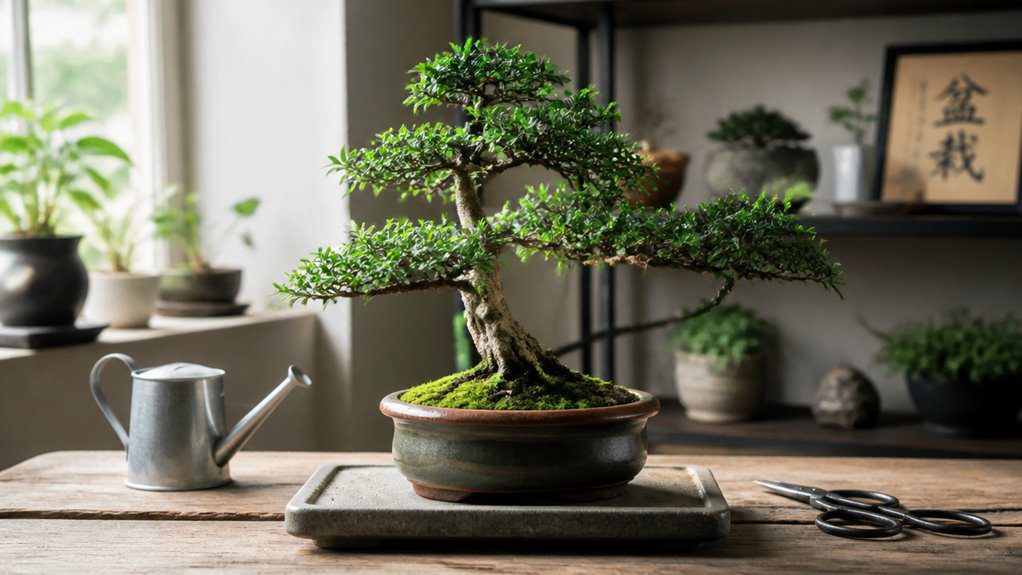
Many beginner bonsai owners make simple mistakes that can hurt their trees. Overwatering is a big one. Always check if the soil feels dry before watering again. Use well-draining soil and only water when needed. Don’t drown your bonsai; letting roots sit in water causes rot. Keep it safe, keep it healthy, and enjoy your tiny tree!
Resources for Learning Bonsai: Books, Courses, and Clubs
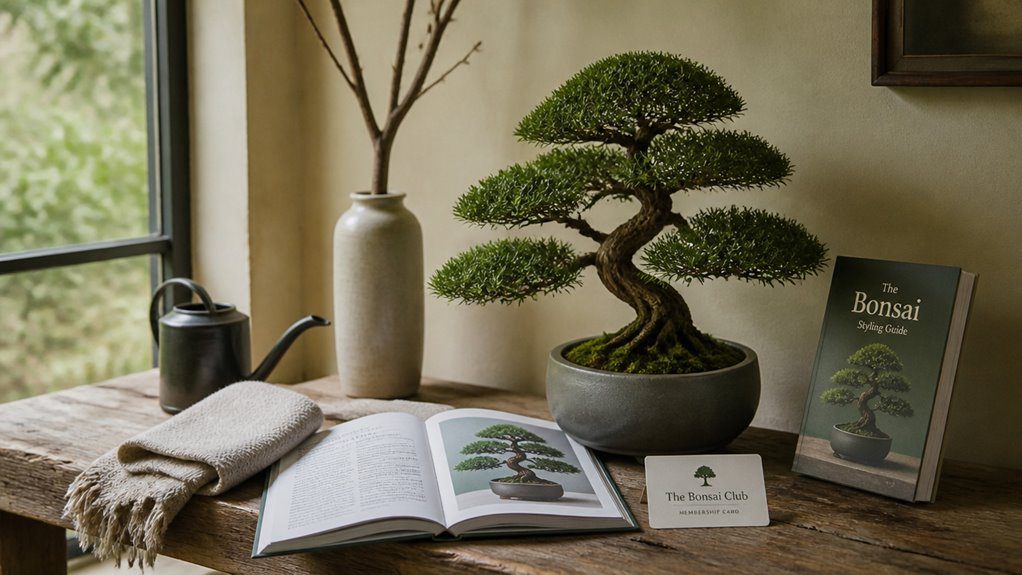
Learning about bonsai is easier when you have the right resources. Consider beginner-friendly books like “The Complete Book of Bonsai” or “Bonsai Basics” to build your knowledge. Enroll in courses from platforms like Udemy or Skillshare for step-by-step guidance. Joining local clubs or workshops keeps your learning fun and safe with expert mentors nearby.
Final Tips: Starting Your Bonsai Journey With Confidence
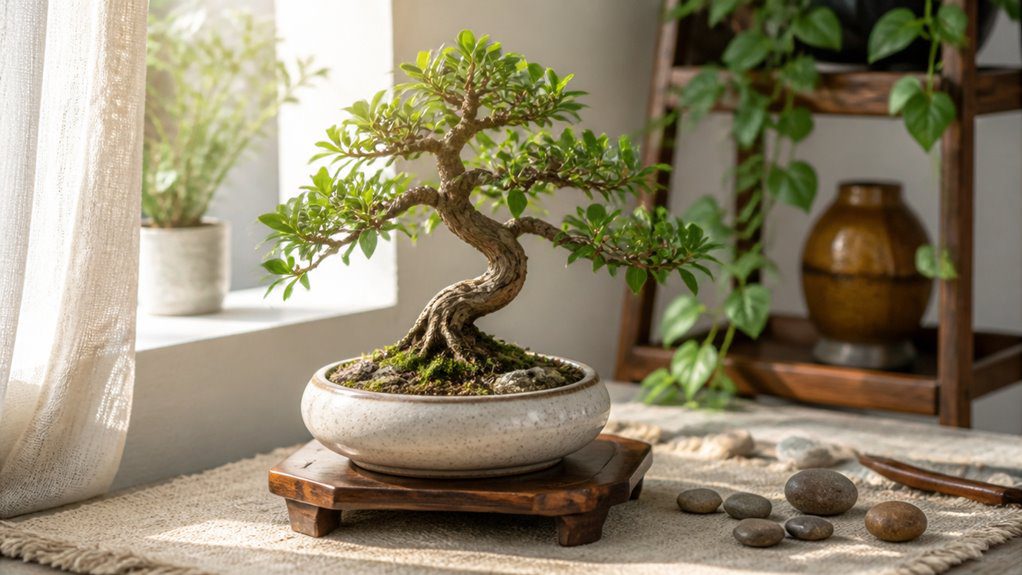
Starting your bonsai journey can feel both exciting and a little overwhelming at first. Choose the easiest bonsai, like Chinese Elm or Ficus, to build confidence early. Learn basic techniques, like pruning and watering. Start with pre-bonsai or nursery stock for quick results. Watch your plant grow and join online clubs for support, you’re on your way!
Final Takeaways
Starting your bonsai journey is exciting and fun! Pick a beginner-friendly tree like Ficus or Chinese Elm and keep caring simple. Remember, mistakes happen, just learn from them and stay patient. Think you’re ready to grow your tiny forest? With a little practice, you’ll create beautiful mini landscapes easily. Keep curious, keep learning, and most importantly, enjoy each step. After all, isn’t the best part of gardening watching your little tree grow?