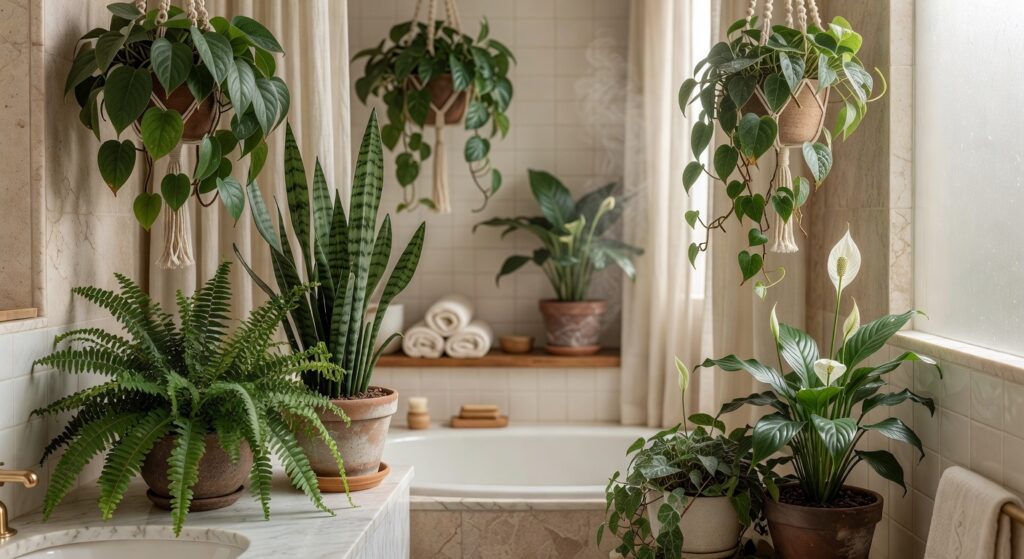
You keep your bathroom warm and steamy, perfect conditions for humidity-loving plants. These green companions thrive in indirect light and moist air, just like in tropical understories. Many remove toxins like formaldehyde and xylene from the air. Most need watering every 7–10 days, depending on light and season. Choose the right plant for your space, and you’ll enjoy cleaner air, low maintenance, and a calm, spa-like feel. Next, discover which plants handle low light and high moisture with ease.
Why Bathroom Plants Create a Spa-Like Oasis
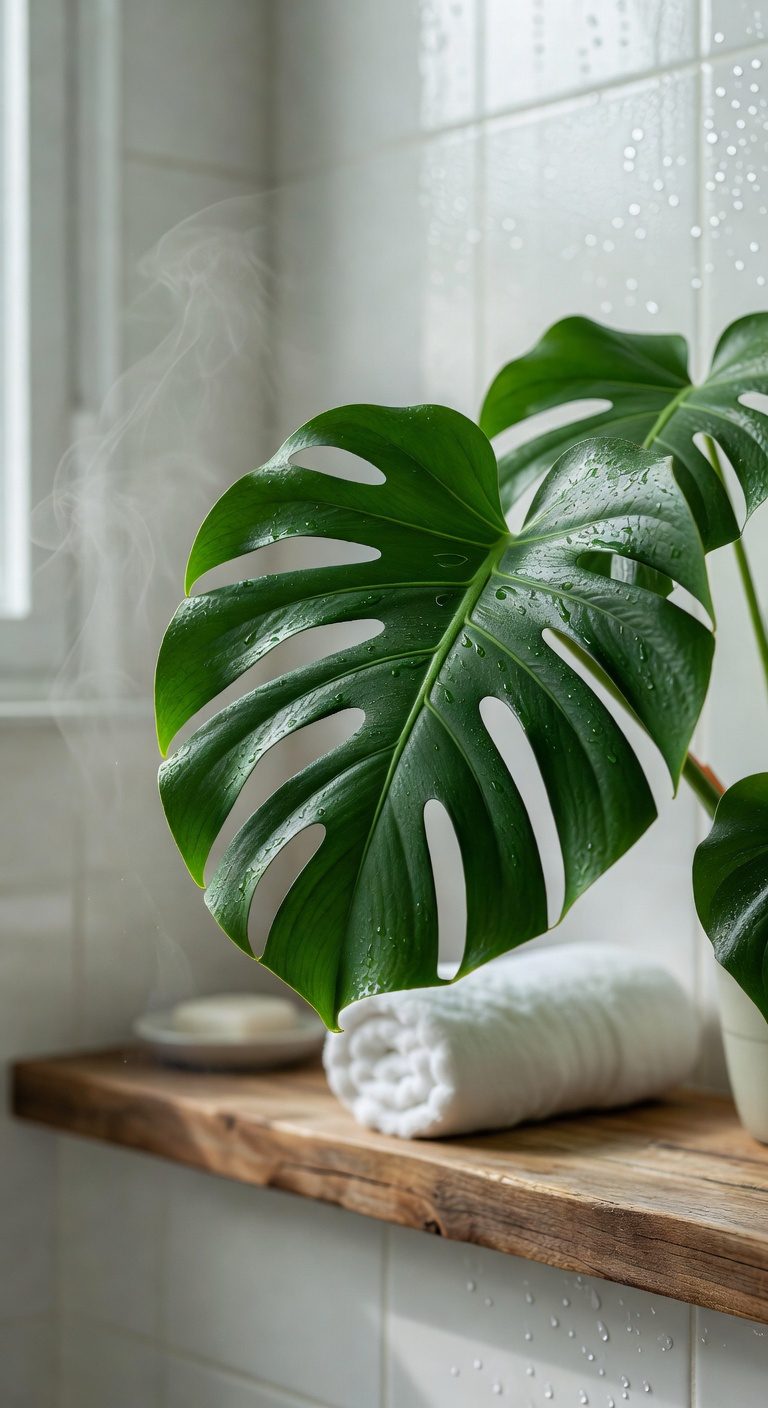
Why do some spaces feel like a personal retreat? You create mental relaxation by adding bathroom plants. Their presence boosts aesthetic appeal and promotes calm.
These green companions thrive in warm, humid air, common in bathrooms after showers.
Choose plants that fit your space and needs:
- *Pothos*: Grows 10–12 inches per month, tolerates low light.
- *Spider plant*: Reaches 12–15 inches wide, produces offsets monthly.
- *Peace lily*: Spans 18–24 inches, blooms yearly with bright indirect light.
Water every 7–10 days, depending on soil dryness. Use well-draining potting mix to prevent root rot.
Place near a window for indirect sunlight, or use a grow light (6–8 hours daily). Clean leaves monthly with a damp cloth to support photosynthesis. These plants also reduce anxiety through their calming presence, enhancing your bathroom’s wellness benefits.
You maintain safety by avoiding toxic species like dieffenbachia. These plants also contribute to reduction of airborne pathogens, enhancing both your bathroom’s safety and wellness benefits.
With routine care, your plants enhance mental relaxation and aesthetic appeal naturally.
How Humidity Benefits Bathroom-Friendly Plants
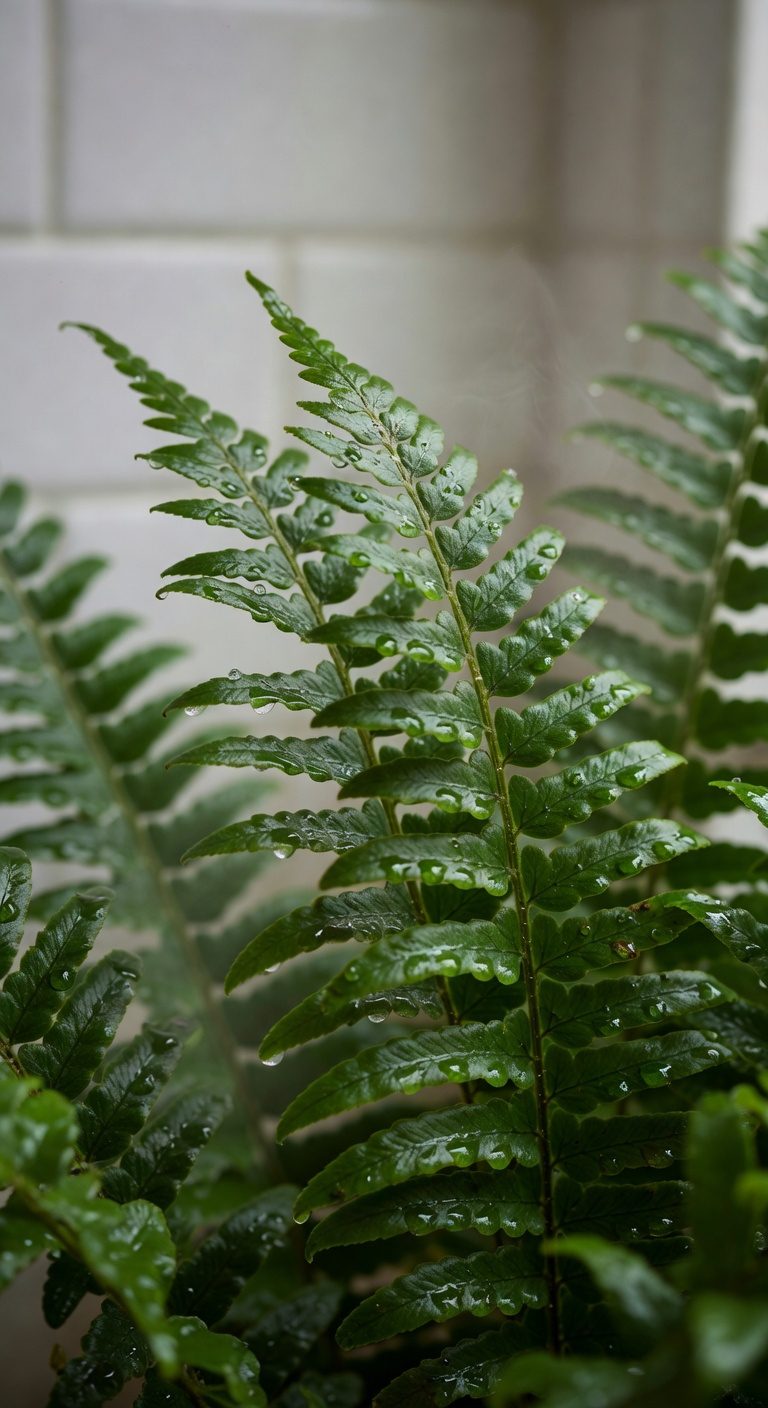
High humidity supports lush growth in bathroom plants by mimicking their natural tropical environments. You’ll see clear humidity benefits when leaves stay firm and green. Moist air reduces water loss through stomata, helping plants retain moisture between watering cycles. Ideal humidity levels range from 50% to 70% for most tropical species.
For effective plant care:
- Mist foliage every 2–3 days if humidity drops below 50%
- Use a hygrometer to monitor levels weekly
- Group plants to increase local humidity through transpiration
- Water when the top 1–2 inches of soil feel dry
Avoid standing water to prevent root rot. Wipe leaves monthly to support gas exchange. High moisture helps prevent spider mites, common in dry conditions. Regular cleaning plant leaves removes dust that blocks photosynthesis and maintains your plants’ appearance. Consider using a pebble tray hack to boost humidity levels without requiring daily maintenance or additional equipment.
With consistent humidity and proper plant care, your bathroom greenery stays healthy and safe.
Snake Plant: Tough and Stylish for Any Bathroom
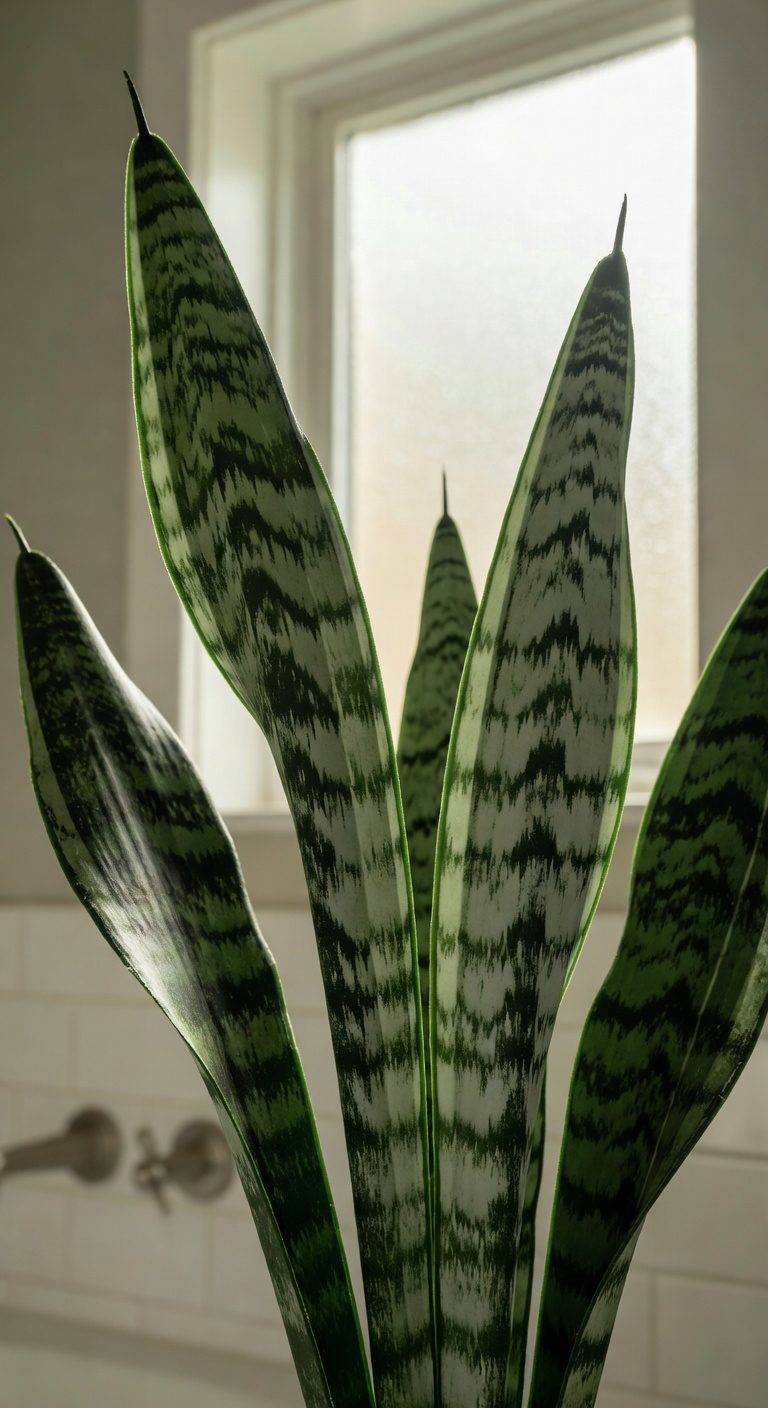
One of the easiest plants to keep alive in your bathroom is the snake plant (Sansevieria trifasciata), especially if you’re new to indoor gardening.
Snake plant care is simple: water every 2–3 weeks, less in winter. Let soil dry completely between watering. Use well-draining potting mix to prevent root rot.
Place in indirect light, though it tolerates low light. Most snake plant varieties grow 1–4 feet tall. Popular types include Laurentii (yellow edges), Cylindrica (round leaves), and Moonshine (silvery green).
Keep temperature between 60–85°F. Avoid cold drafts. Fertilize once in spring and summer with balanced 10-10-10 feed. Wipe dust from leaves monthly.
Snake plants purify air and need little attention. They’re non-toxic to pets in small amounts but best kept out of reach. Snake plants are perfect for low-light corners and also improve air quality in any room of your home.
With sturdy leaves and slow growth, they stay neat and safe in tight spaces.
ZZ Plant: Nearly Unkillable in Low-Light Bathrooms
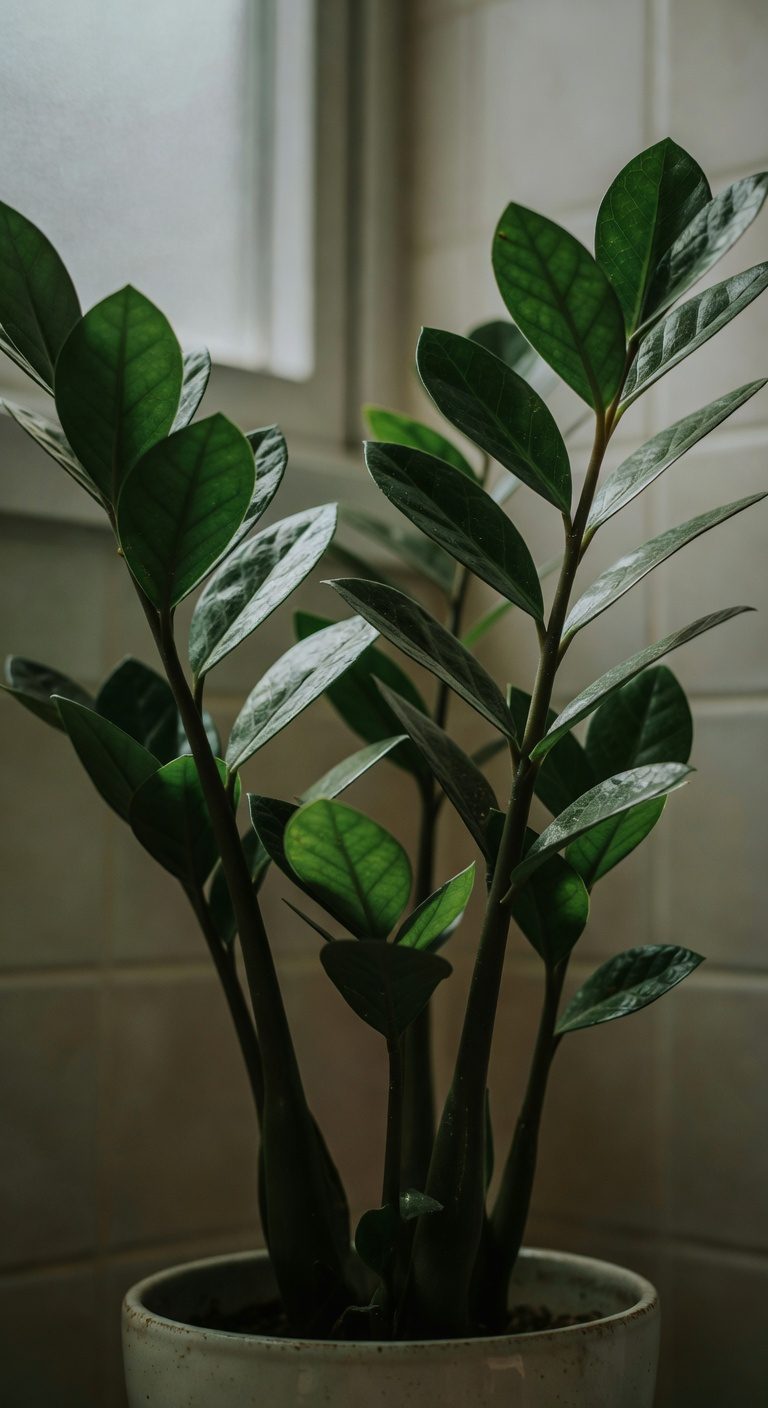
You can count on the ZZ plant (Zamioculcas zamiifolia) when your bathroom gets little natural light or you forget to water for weeks. This plant thrives due to its strong low light adaptation and built-in water storage.
Zz plant care basics:
- Water every 3–4 weeks; let soil dry fully between watering
- Ideal temperature: 60–75°F (16–24°C)
- Humidity: Tolerates average bathroom levels (40–50%)
- Soil: Use well-draining mix (peat, perlite, potting soil in equal parts)
- Fertilizer: Half-strength balanced feed every 6 months
Place it in a north-facing corner or away from windows.
Its glossy, dark green leaves grow upright, reaching 2–3 feet tall. Rhizomes store water, reducing rot risk.
Avoid cold drafts and standing water.
With minimal effort, it offers reliable greenery. You won’t need perfect conditions, just occasional attention.
Aloe Vera: Soothing Succulent for Steamy Showers
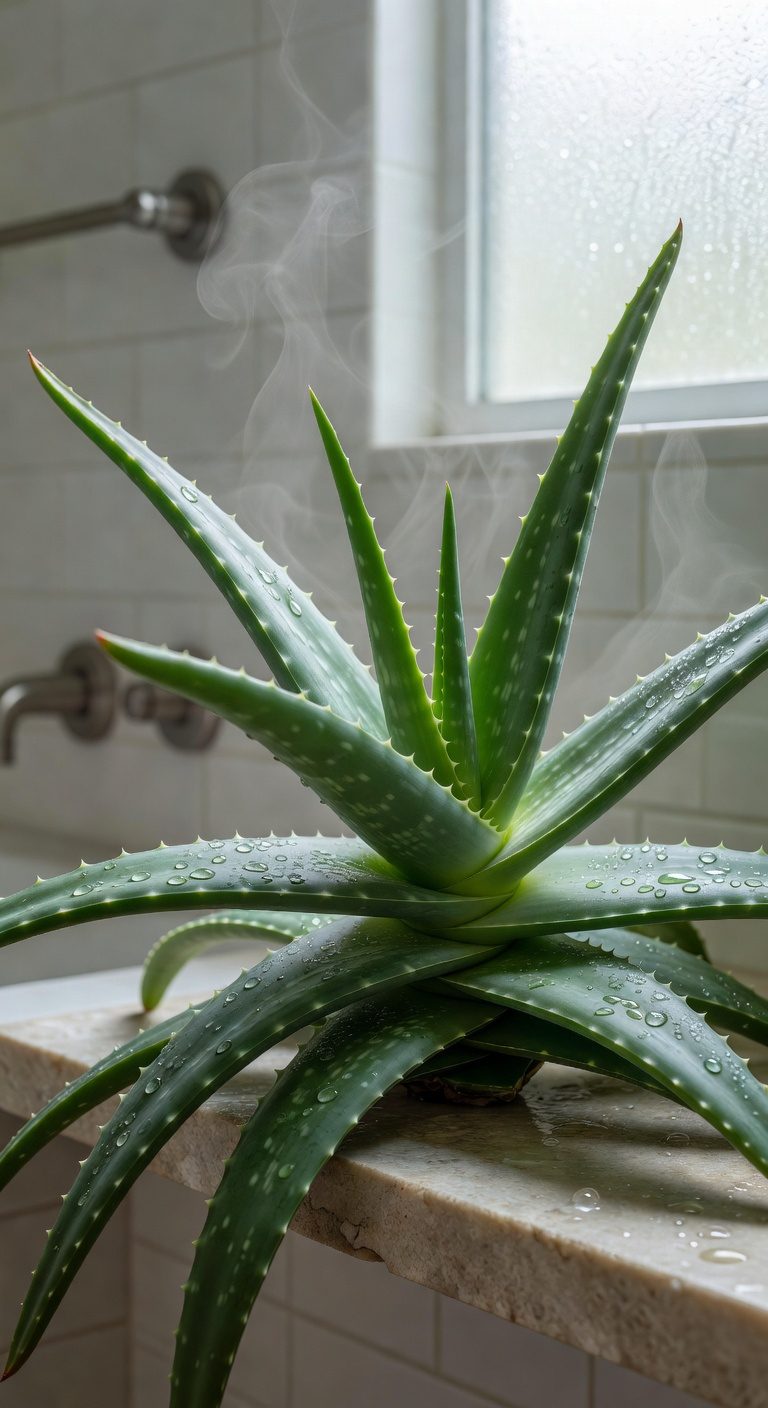
Aloe vera brings both beauty and utility to your bathroom, thriving in warm, humid environments created by daily showers.
Aloe Benefits:
The gel inside its leaves soothes minor burns and cuts, keep it within reach, but out of children’s grasp. Its clear, thick sap is non-toxic in small amounts but may irritate sensitive skin.
Aloe Care:
- Provide bright, indirect light near a window.
- Water every 3 weeks; use well-draining potting mix.
- Let soil dry completely between waterings.
- Ideal pot size: 6–8 inches with drainage holes.
- Ideal temperature: 60–75°F (15–24°C).
Rotate the plant weekly for even growth. Avoid overwatering, root rot is the most common issue. Trim brown tips with clean scissors.
With proper Aloe Care, your plant supports wellness and resilience. Aloe Benefits include both skincare and air quality improvement.
Peace Lily: Cleans Air in Humid Bathroom Corners
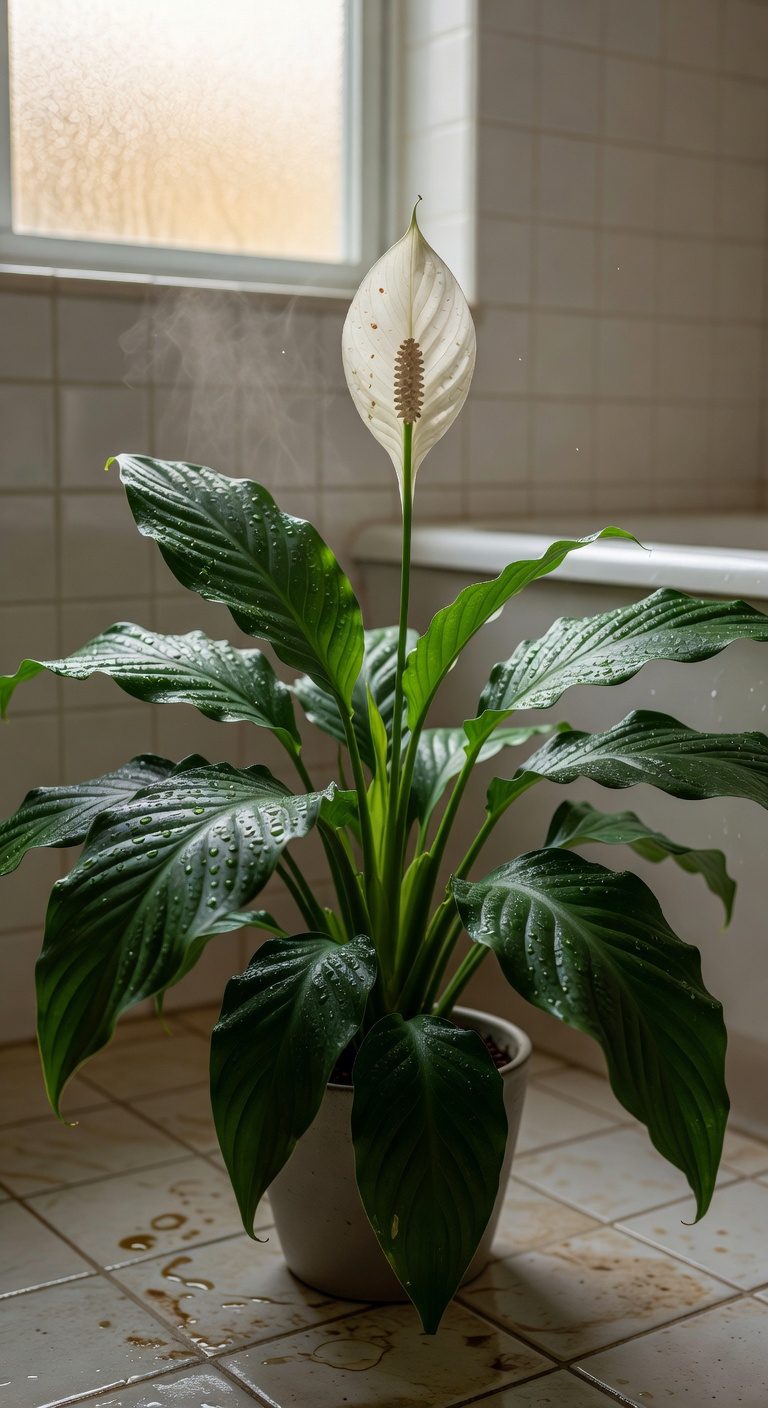
This elegant plant removes toxins like benzene and formaldehyde while thriving in low light and high humidity.
Benefits of peace lilies:
- Purify indoor air (removes airborne pollutants)
- Boost humidity via transpiration
- Safe for homes with children and pets (non-toxic if ingested)
- Low maintenance and long-lasting blooms
Care tips for peace lilies:
- Water once every 7–10 days, keeping soil moist but not soggy.
- Use well-draining potting mix with perlite.
- Place in indirect light (north-facing corners ideal).
- Maintain 65°F–80°F (18°C–27°C).
- Wipe leaves monthly to remove dust and improve photosynthesis.
Fertilize monthly with balanced 10-10-10 solution during spring and summer.
Trim yellow leaves at the base.
Repot every 1–2 years.
Monitor for brown tips, sign of low humidity or fluoride in tap water.
Use distilled water if needed.
Pothos: Fast-Growing Vine for Bathroom Shelves
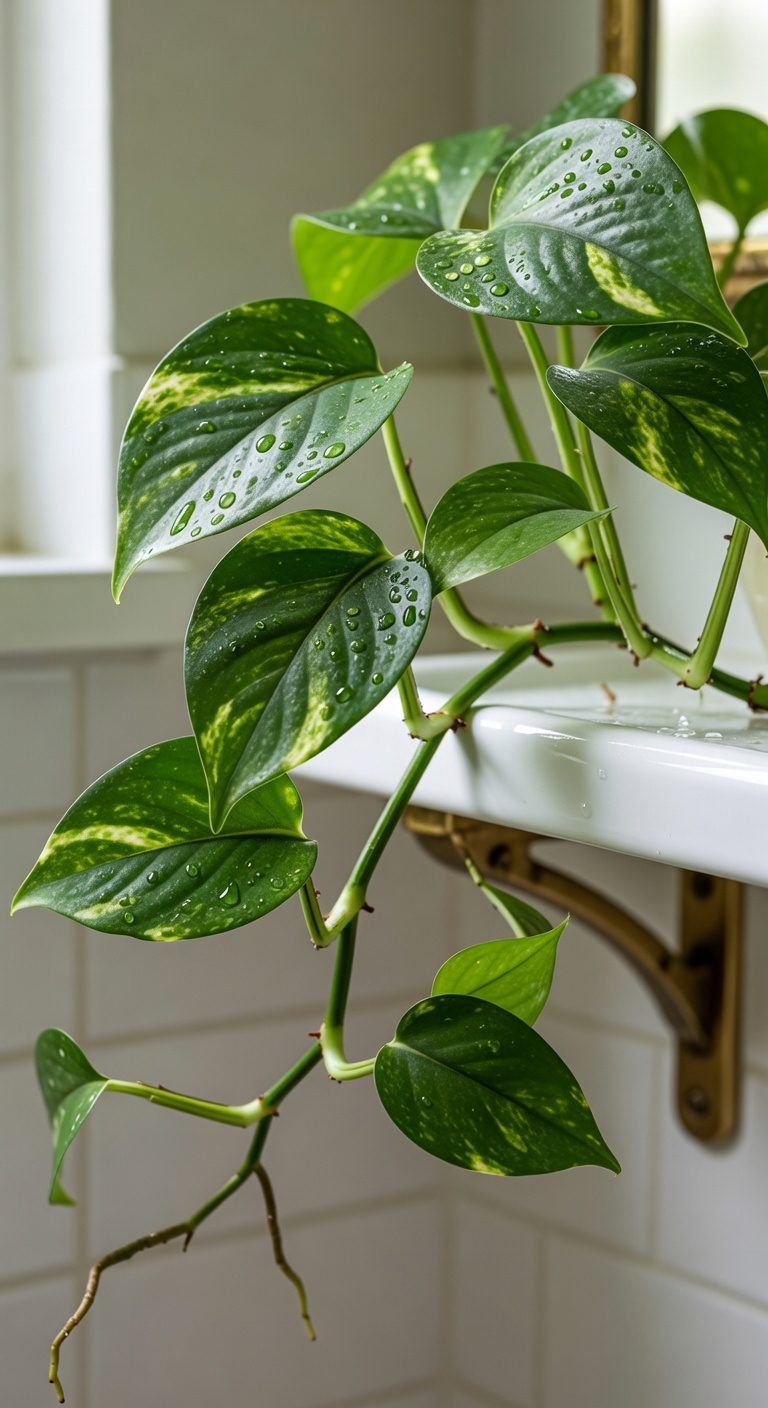
Though it thrives in low light, pothos grows faster and denser when it receives bright, indirect sunlight near a bathroom window. For optimal pothos care, water every 1–2 weeks, letting soil dry between watering. Maintain temperatures between 65–85°F; avoid cold drafts.
This plant suits shelves, hanging baskets, or mounted displays, its vines trail up to 10 feet. Use well-draining potting mix with perlite or orchid bark.
Pothos offers versatile use in small or large bathrooms. Its heart-shaped leaves purify air modestly, removing trace formaldehyde.
Fertilize monthly in spring and summer with balanced 10-10-10 liquid, diluted by half. Trim stems just above nodes to encourage bushiness.
Rotate the pot every few weeks for even growth. Wipe leaves with a damp cloth to remove dust.
Avoid overwatering; yellow leaves mean too much moisture. Keep out of reach of children and pets, pothos is toxic if ingested.
Spider Plant: Pet-Safe Purifier for Bright Bathrooms
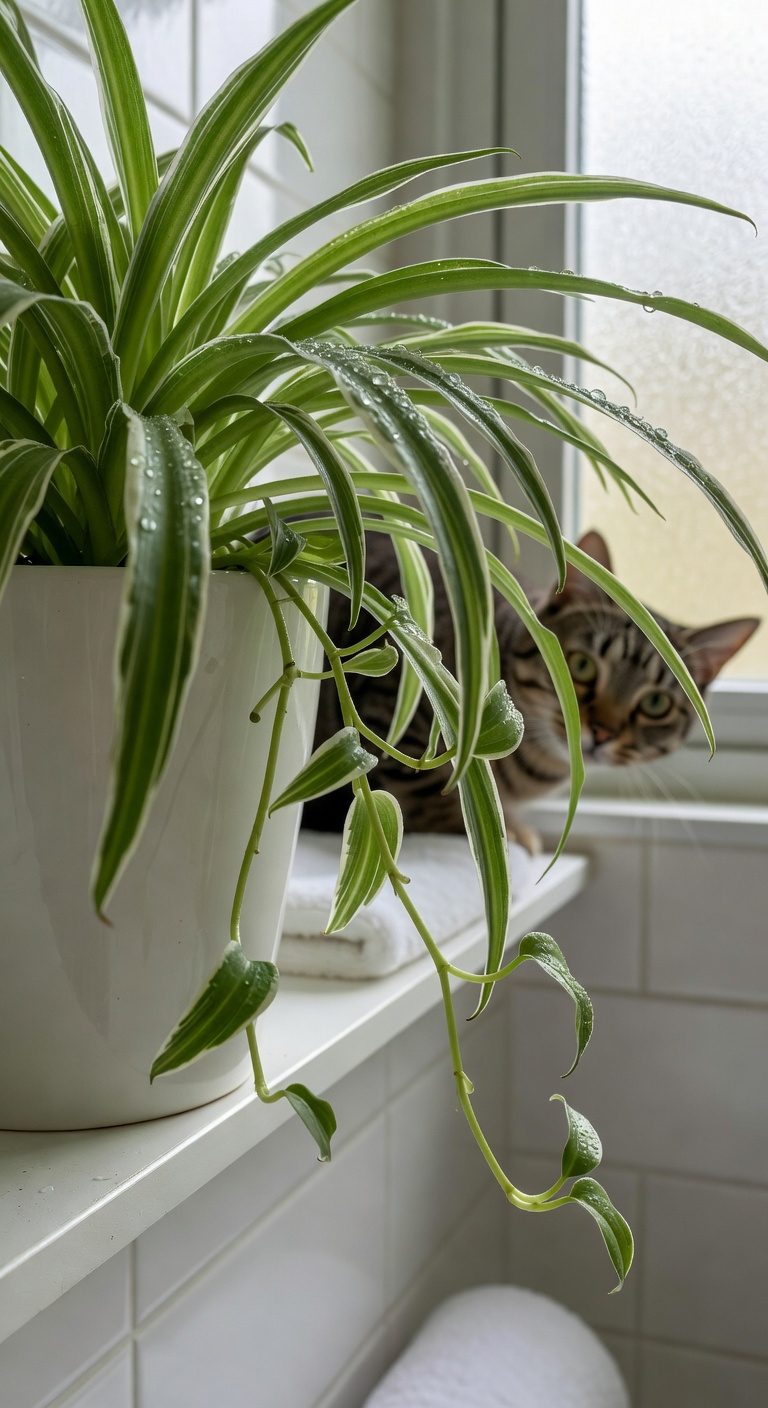
Bright, indirect light brings out the best in spider plants, making sunny bathrooms ideal for their growth. You’ll enjoy spider plant benefits like air purification and non-toxicity, safe around kids and pets. This plant removes pollutants such as formaldehyde and xylene.
For spider plant care, keep soil evenly moist but not soggy. Water every 7–10 days, depending on light and humidity. Let the top inch of soil dry before watering. Use well-draining potting mix with perlite or sand. Ideal temperatures are 60–75°F. Average humidity suits them well.
Fertilize monthly in spring and summer with balanced 10-10-10 fertilizer diluted to half strength. Brown tips may signal fluoride buildup, use filtered water. Repot every 2–3 years in spring.
Propagate plantlets in soil or water. With minimal spider plant care, you get lasting greenery and cleaner air, ideal for your safe, serene bathroom oasis.
English Ivy: Trailing Greenery That Loves Moisture
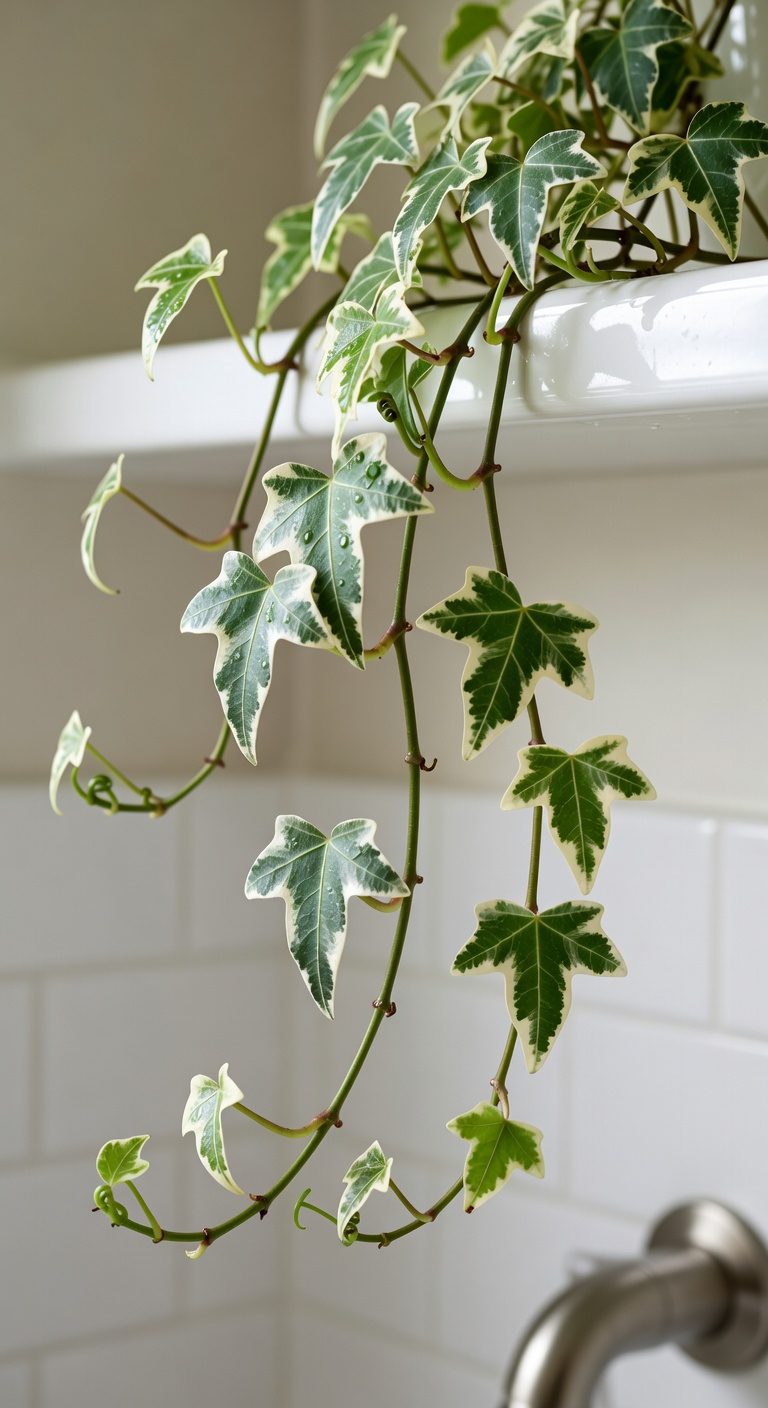
While you may overlook ivy as just a common vine, English ivy (Hedera helix) thrives in the humid air of your bathroom, especially near sinks or showers where moisture levels stay high.
English Ivy Benefits include natural air purification and mold reduction. It grows well in indirect light and stable temperatures between 60–70°F.
For English Ivy Care, water when the top inch of soil feels dry, about once every 7–10 days. Use well-draining potting mix to prevent root rot.
Feed monthly in spring and summer with balanced 10-10-10 liquid fertilizer diluted by half. Trim regularly to control growth and encourage bushiness.
Keep away from pets and children; it’s toxic if ingested. Place in a hanging pot or shelf to let vines trail safely. Avoid drafts and sudden temperature shifts.
With proper care, your English ivy stays lush and improves bathroom air quality year-round.
Boston Fern: Lush Filler for Humid, Bright Bathrooms
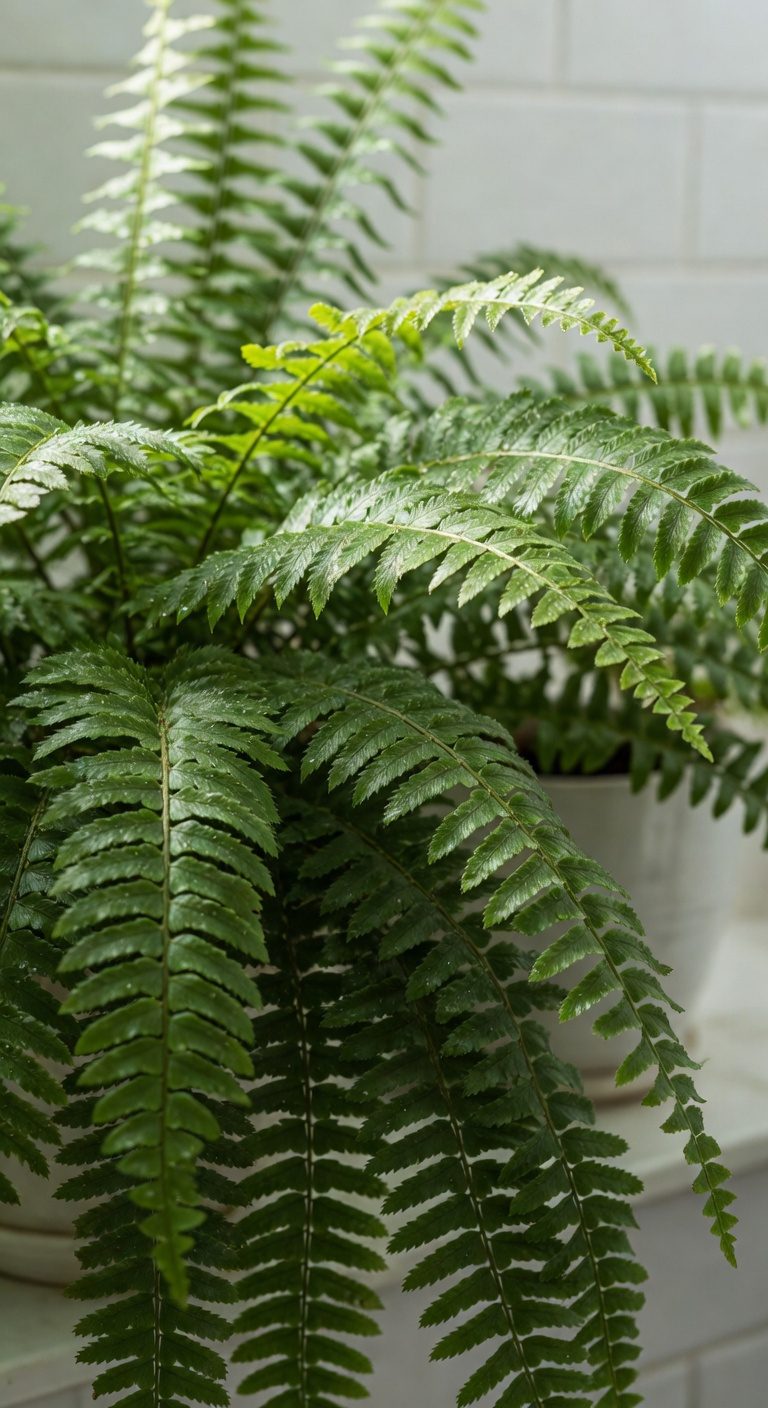
You kept your English ivy thriving in the steamy corners of your bathroom, and now you can expand that lush look with a Boston fern (Nephrolepis exaltata). This plant loves humid, bright spaces but avoids direct sun.
Boston fern benefits include natural air purification and humidity regulation. It removes formaldehyde and xylene from the air.
For Boston fern care:
- Keep soil consistently moist, not soggy. Water 2–3 times weekly.
- Use well-draining, peat-based potting mix.
- Maintain temperatures between 65°F and 75°F.
- Mist fronds daily or place on a pebble tray.
- Rotate monthly for even growth.
- Prune brown tips with clean scissors.
Place it in an east or north-facing bathroom window. Fertilize monthly in spring and summer with balanced 10-10-10 liquid feed. Repot every 1–2 years in spring. Safe for homes with kids and pets.
Maidenhair Fern: Delicate But Happy in Steam
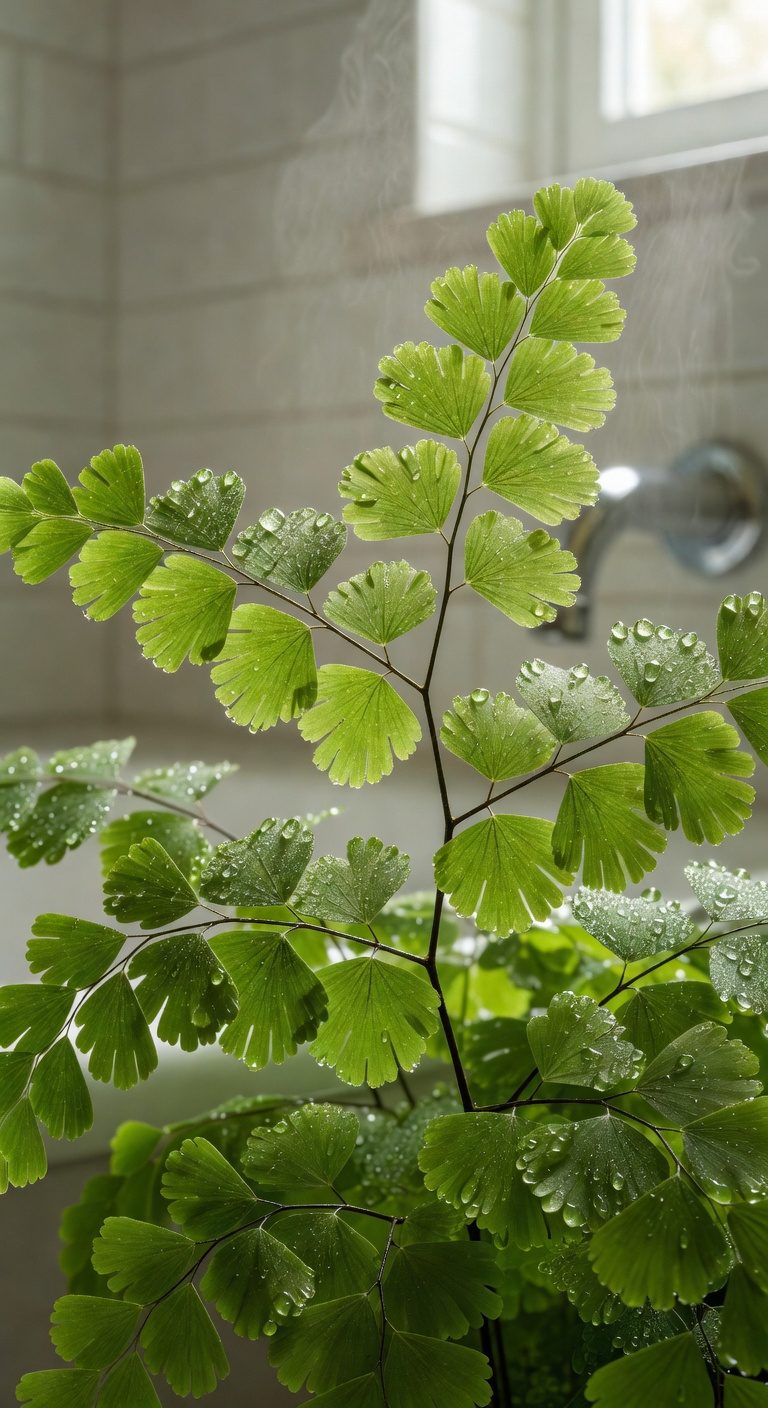
Delicate fronds define the maidenhair fern (Adiantum spp.), a graceful plant that thrives in the warm, humid air of your bathroom.
Light Needs:
Place near a north- or east-facing window. Avoid direct sun, it scorches leaves.
Water & Humidity:
Keep soil evenly moist. Use distilled or rainwater when possible. Mist leaves twice weekly. Daily steam from showers provides key steam humidity benefits, reducing drying.
Maidenhair Fern Care Schedule:
- Water every 2–3 days in summer, once weekly in winter
- Fertilize monthly with half-strength liquid houseplant food in spring and summer
- Trim brown stems with sanitized scissors
Ideal Conditions:
Temperature: 65–75°F (18–24°C). Humidity: 60% or higher. Well-draining potting mix with perlite.
Rotate pot weekly for even growth. With consistent maidenhair fern care, it stays lush and safe indoors.
Bird’s Nest Fern: Low-Light Tropical Bathroom Plant
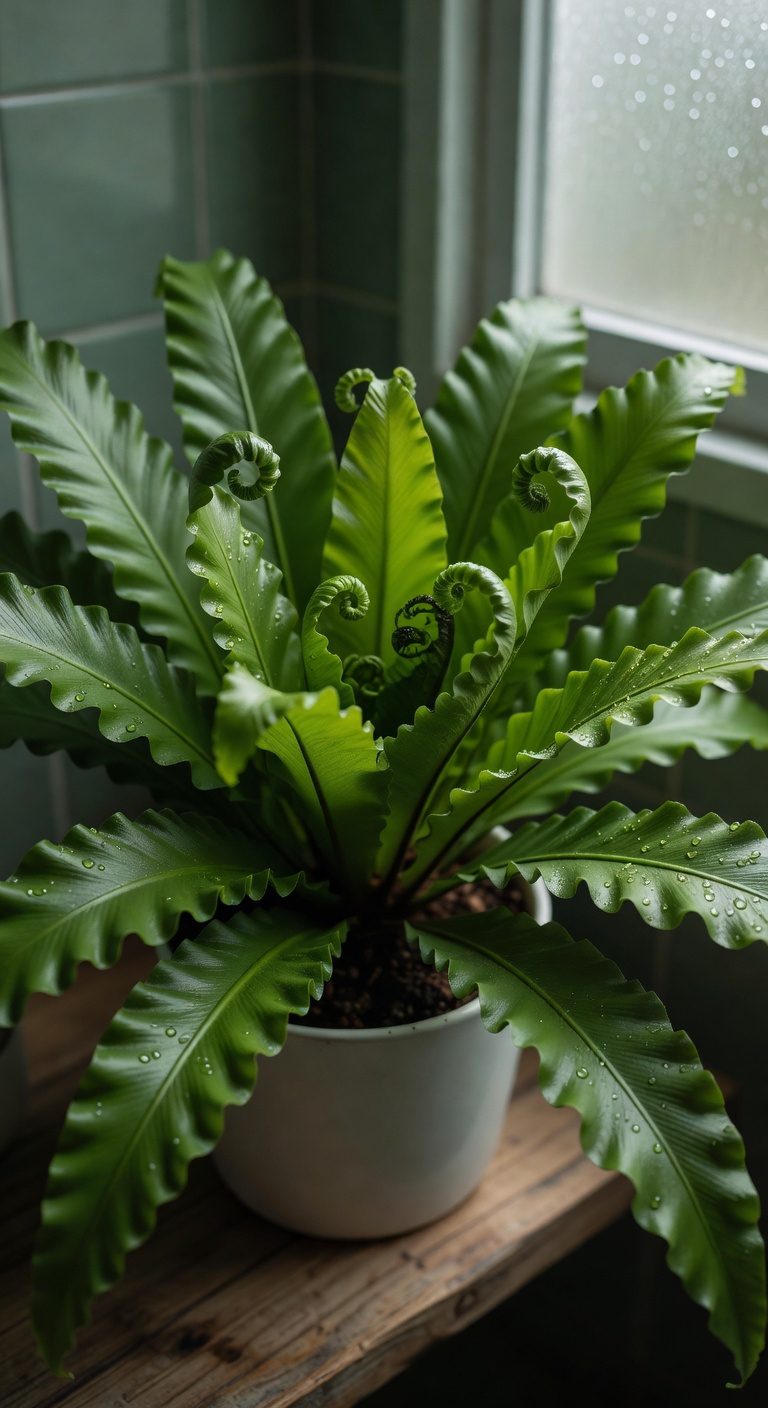
Bird’s Nest Fern (Asplenium nidus) brings a bold tropical look to your bathroom with its wide, spoon-shaped fronds that unfurl from a central rosette. This plant thrives in low to medium indirect light. It needs consistent humidity above 50%.
Bird’s nest benefits include air purification and easy maintenance. It grows up to 2–3 feet wide indoors. Use well-draining, peat-based potting mix. Keep soil evenly moist but not soggy.
For fern care:
- Water once weekly, more in dry months
- Mist leaves 2–3 times weekly
- Fertilize monthly in spring and summer with balanced 10-10-10 diluted to half strength
- Avoid direct sunlight and cold drafts
Rotate the pot monthly for even growth. Clean dust from fronds with a damp cloth. Remove brown or damaged leaves with sterilized scissors. Repot every 2–3 years in spring. This plant is non-toxic and safe around kids and pets.
Cast Iron Plant: Survives Neglect in Dark Bathrooms
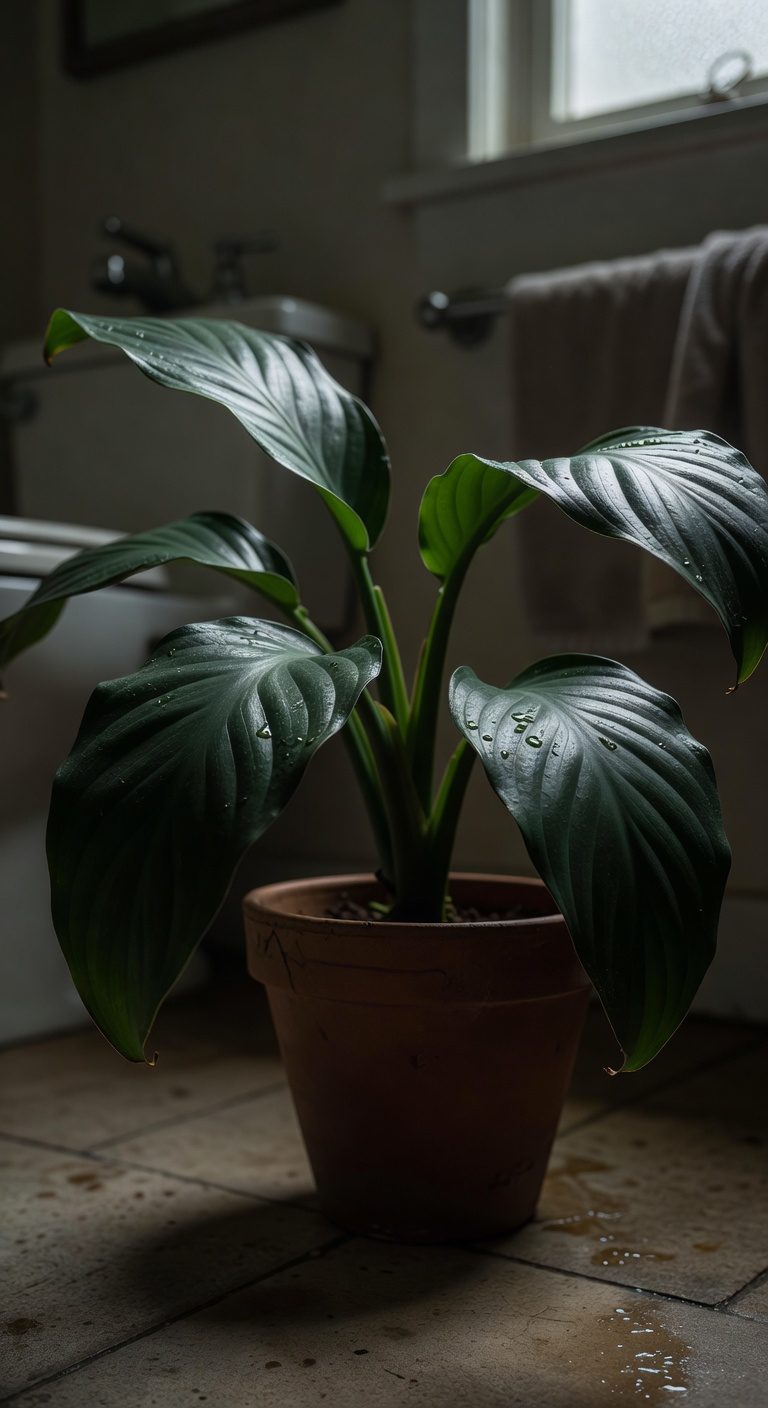
Even in the dimmest bathroom corner, the Cast Iron Plant (Aspidistra elatior) thrives with minimal care. You’ll value its low light tolerance and neglect resistance. This plant survives where others fail.
- Mature height: 24–36 inches
- Spread: 18–24 inches
- Growth rate: Slow
Water every 2–3 weeks. Let soil dry between watering. Overwatering harms it more than drought. Use well-draining potting mix. Repot every 2–3 years, spring preferred.
Ideal temperature: 60–75°F. Avoid cold drafts.
Humidity of 40% or higher supports healthy leaves. Wipe leaves with a damp cloth monthly to remove dust.
Fertilize once in spring with balanced 10-10-10 formula, diluted to half strength. No fertilizer needed in fall and winter.
It’s non-toxic to pets. No pruning required. Brown tips signal overwatering or low humidity. Cut only if necessary.
You can trust this plant to stay safe and steady.
Chinese Evergreen: Colorful, Low-Light Bathroom Foliage
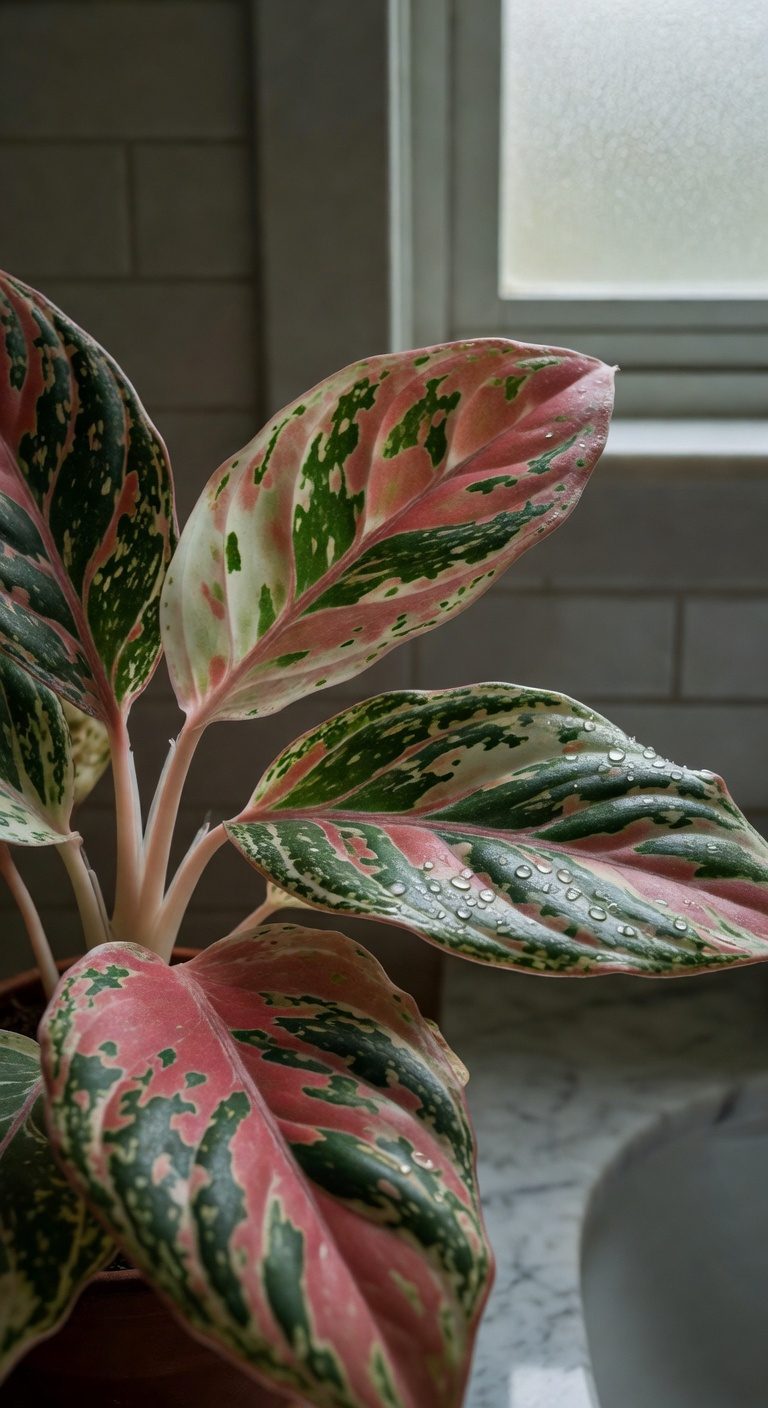
Colorful foliage meets resilience in the Chinese Evergreen (Aglaonema). This plant thrives in low-light bathrooms with stable temperatures between 65–80°F.
Choose from many colorful varieties, like ‘Silver Queen’ or ‘Red Annie’, which add subtle vibrancy without overwhelming your space.
Light Needs:
Place 3–6 feet from a north or east window. Avoid direct sun, it scalds leaves.
Watering Schedule:
Let the top 1–2 inches of soil dry between waterings. Typically, this means watering every 7–10 days.
Maintenance Tips:
Wipe dust from leaves monthly with a damp cloth. Repot every 2–3 years in spring using well-draining potting mix.
Humidity Preference:
Thrives in 50–60% humidity, ideal for most bathrooms.
Keep it away from pets and children; it’s toxic if ingested. With these steps, your Chinese Evergreen stays lush and safe.
Bromeliad: Eye-Catching Bathroom Plant That Traps Water
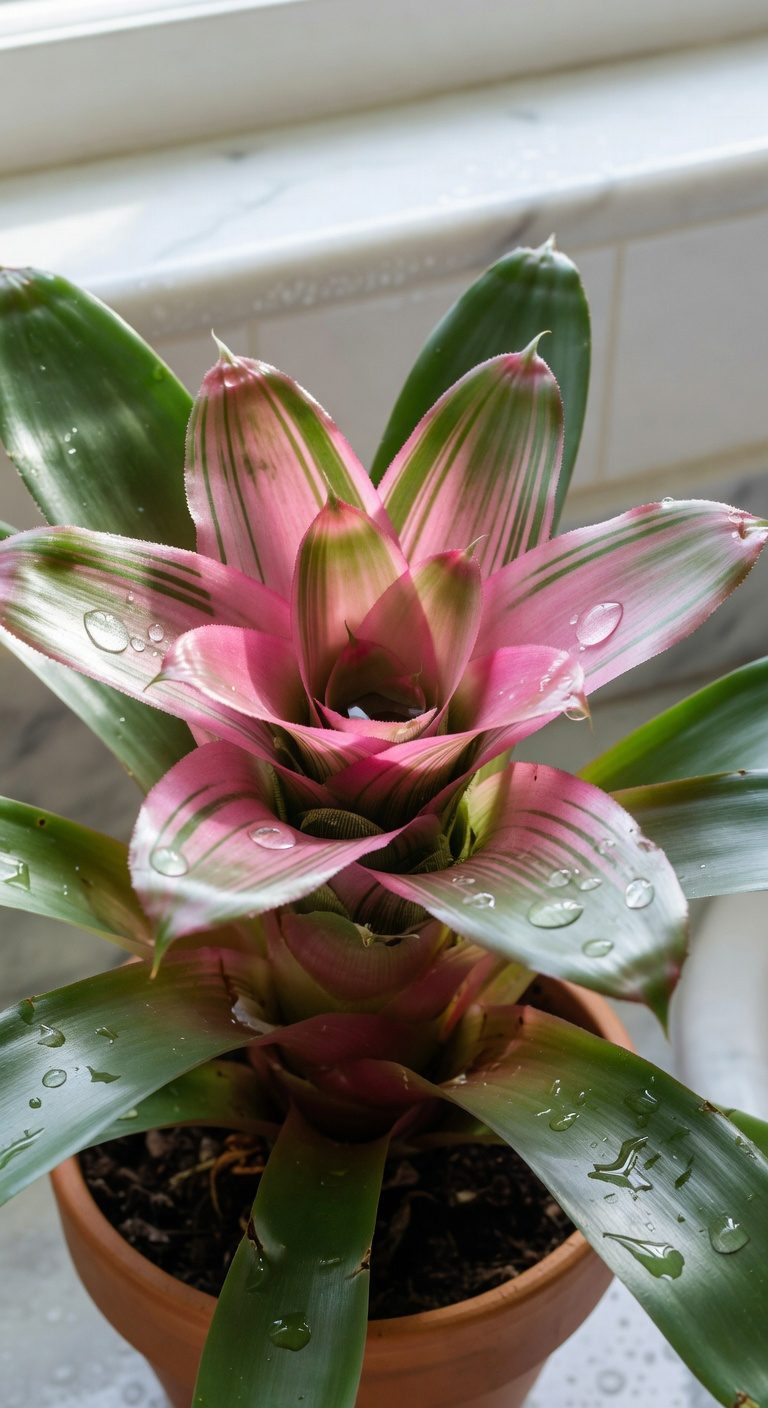
You can continue building your bathroom’s plant collection with the bromeliad, a striking choice that stands out with its stiff, arching leaves and central cup that stores water. This central cup provides natural water retention, reducing root dependence on soil moisture.
For proper bromeliad care, fill the cup one-third full with distilled or rainwater every week. Empty and refill it monthly to prevent stagnation. Keep soil lightly moist but well-drained.
Ideal light is bright, indirect exposure, place near an east-facing window. Temperature should stay between 60–80°F. Humidity above 50% supports healthy growth. Avoid cold drafts and direct sun.
Use a balanced, diluted fertilizer every six weeks during spring and summer. Repot every 2–3 years in a mix of perlite, bark, and peat. With reliable water retention and simple bromeliad care, it thrives safely in consistent bathroom environments.
Orchid: Graceful Bloomer for Humid Bathrooms
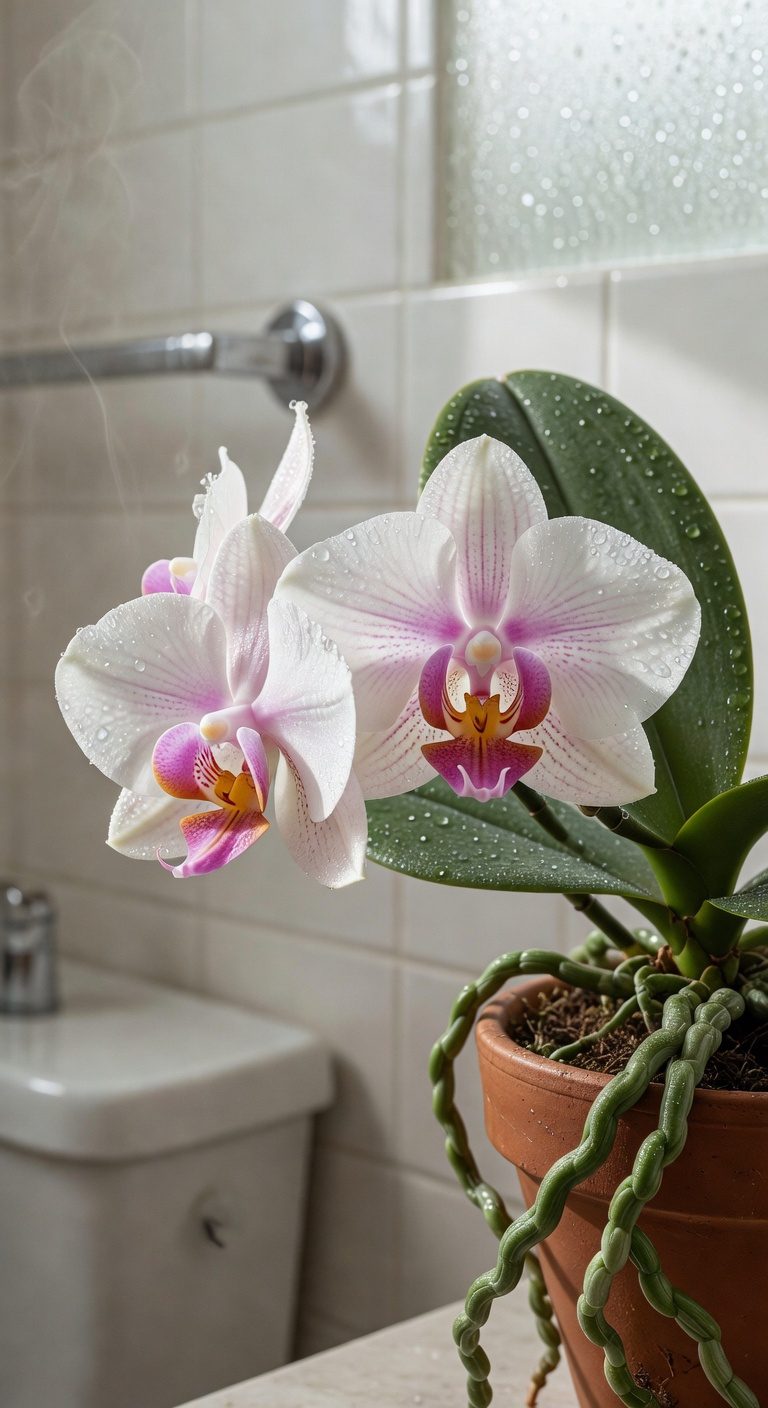
Graceful blooms define the orchid, a humidity-loving plant perfect for bright bathrooms.
You benefit from its elegant appearance and low risk of mold or pests when cared for properly. Orchid care is simple with attention to light, water, and air flow.
Place your orchid near an east- or west-facing window.
It needs 6–8 hours of indirect light daily.
Water once every 7–10 days.
Use room-temperature water. Pour until it drains through the bottom. Let the pot dry slightly between waterings.
Bathroom humidity of 50–70% supports strong growth.
Avoid cold drafts and standing water.
Repot every 1–2 years in orchid mix (bark, perlite, charcoal).
Use a pot with drainage holes.
Fertilize monthly with balanced 20-20-20 fertilizer at half strength.
Reduce in winter.
With proper orchid care, blooms last 6–10 weeks.
Reed Palm: Mini Tree That Thrives in Damp Bathrooms
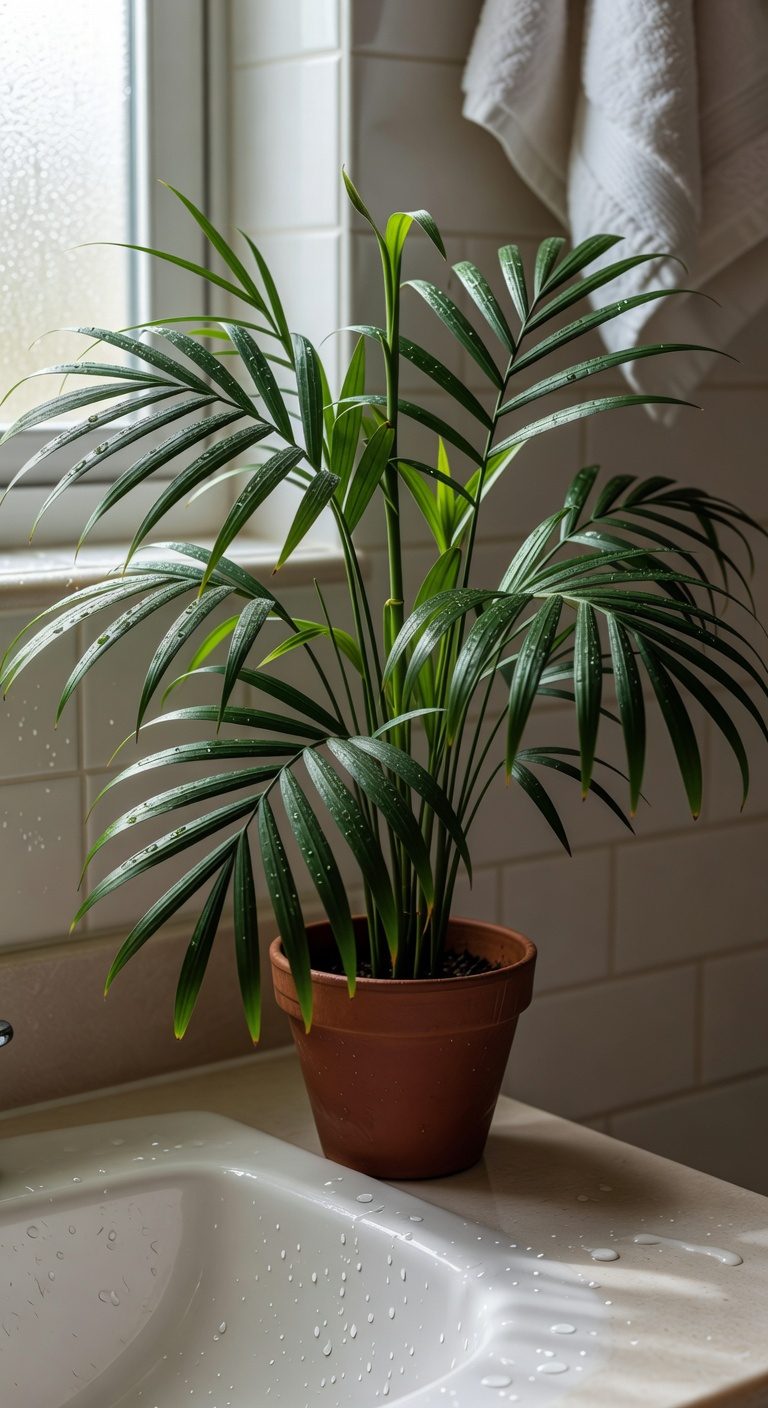
A slender silhouette with feathery fronds defines the reed palm (Chamaedorea seifrizii), a compact houseplant ideal for damp bathrooms. It thrives in low to medium light and tolerates shade.
Bathroom humidity supports lush growth, ideal for steamy spaces with little airflow.
For proper reed palm care:
- Water when the top inch of soil feels dry (about once every 7–10 days).
- Use well-draining potting mix to prevent root rot.
- Keep temperatures between 65°F and 80°F (18°C–27°C).
- Mist leaves occasionally to boost moisture retention.
- Fertilize monthly in spring and summer with balanced liquid feed (10-10-10 NPK).
Avoid cold drafts and direct sunlight. This plant grows slowly, up to 6 feet tall indoors.
Wipe dust from fronds every few weeks. Repot every 2–3 years in spring. It’s non-toxic and safe around pets.
Let bathroom humidity do the work, you just maintain consistency.
Rubber Plant: Bold Statement for Medium-Light Bathrooms
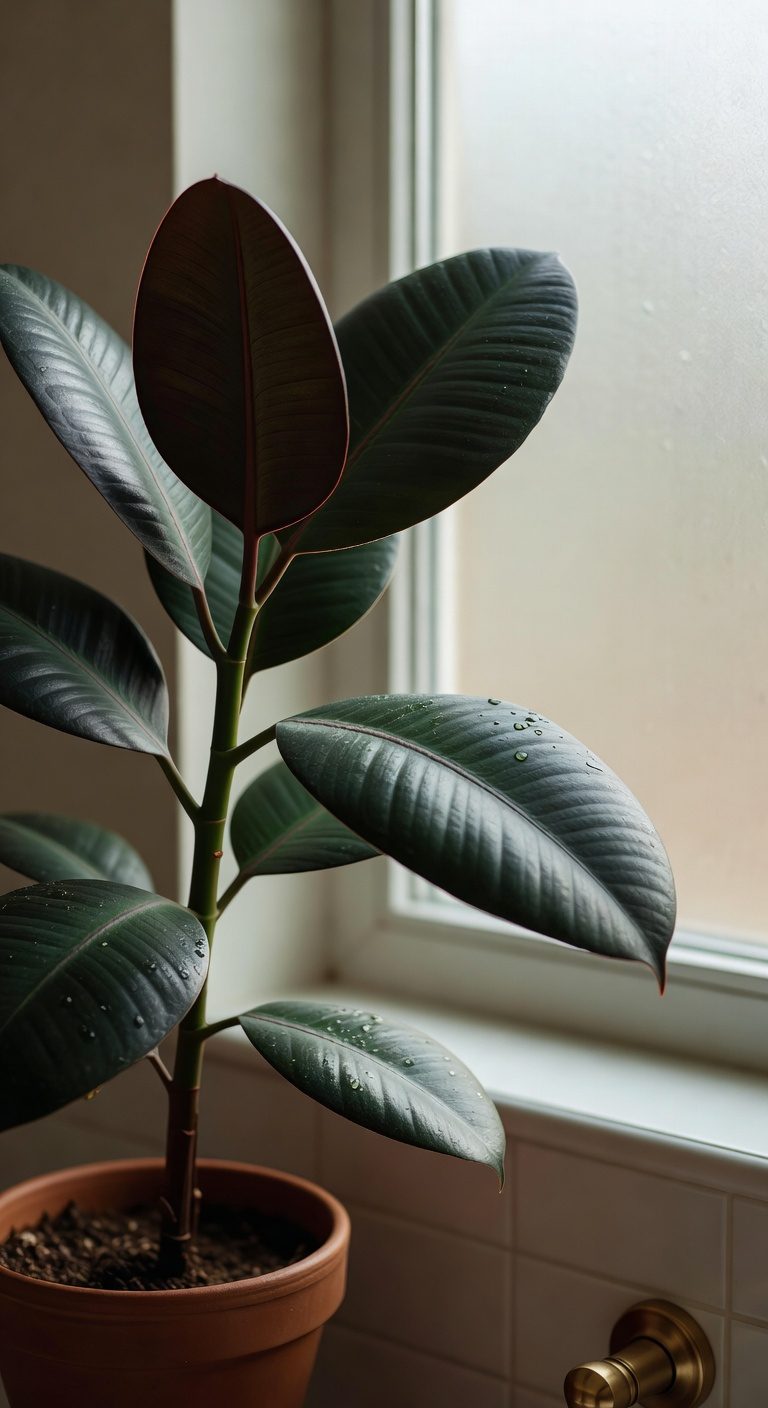
When placed in a bright bathroom with indirect light, the rubber plant (Ficus elastica) makes a bold, architectural statement. It thrives under medium bathroom lighting, avoiding harsh direct sun.
Rubber Plant Care Checklist:
- Water every 7–10 days, letting soil dry 1–2 inches deep between watering.
- Use well-draining potting mix with perlite (1 part perlite to 3 parts soil).
- Keep temperatures between 60–75°F; avoid cold drafts.
- Wipe leaves monthly with a damp cloth to remove dust.
- Rotate pot 90° weekly for even growth.
Low maintenance and naturally air-purifying, the rubber plant suits cautious beginners. It grows 6–10 feet tall indoors with proper rubber plant care.
Always check bathroom lighting levels first, east or north-facing windows work best. Avoid placing near showers with scalding steam.
This plant adds calm, structured greenery without risk.
Anthurium: Waxy Flowers in Warm, Humid Bathrooms
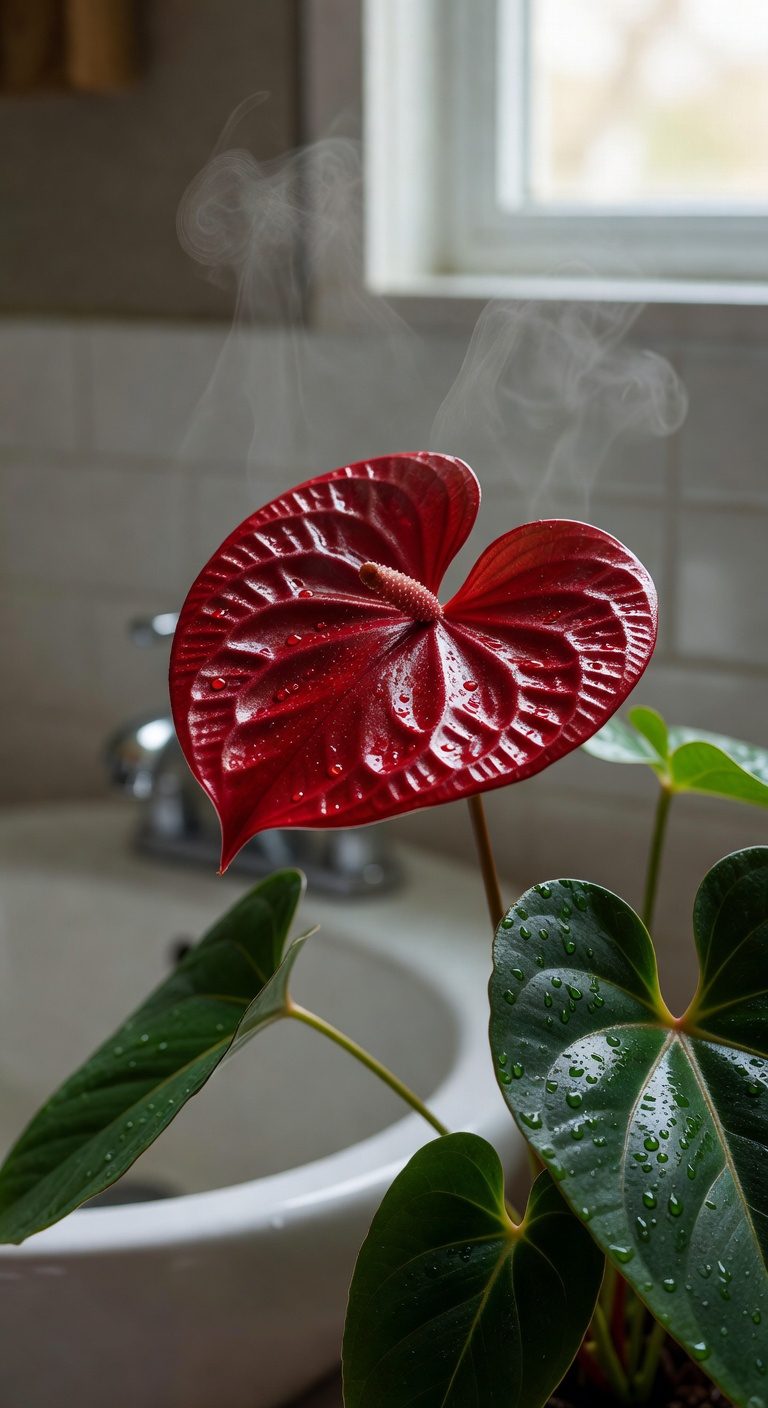
Because it thrives in high humidity and warm temperatures, the anthurium (Anthurium andraeanum) is ideal for bathrooms with consistent moisture and indirect light.
Humidity Preferences:
Maintain 60–80% humidity. Use a humidifier or place the pot on a pebble tray with water. Avoid cold drafts and sudden temperature drops.
Anthurium Care:
Water every 7–10 days, letting the top 1 inch of soil dry first. Use well-draining potting mix with perlite or orchid bark. Feed monthly with balanced 20-20-20 fertilizer at half strength.
Light & Placement:
Provide bright, indirect light. East or north-facing windows are safest. Direct sun burns leaves. Rotate the plant weekly for even growth.
Waxy red or pink spathes bloom for weeks. Remove spent flowers with clean scissors. Dust leaves gently. Keep out of reach of pets, it’s toxic if ingested.
Philodendron: Easy-Care Bathroom Climber or Trailer
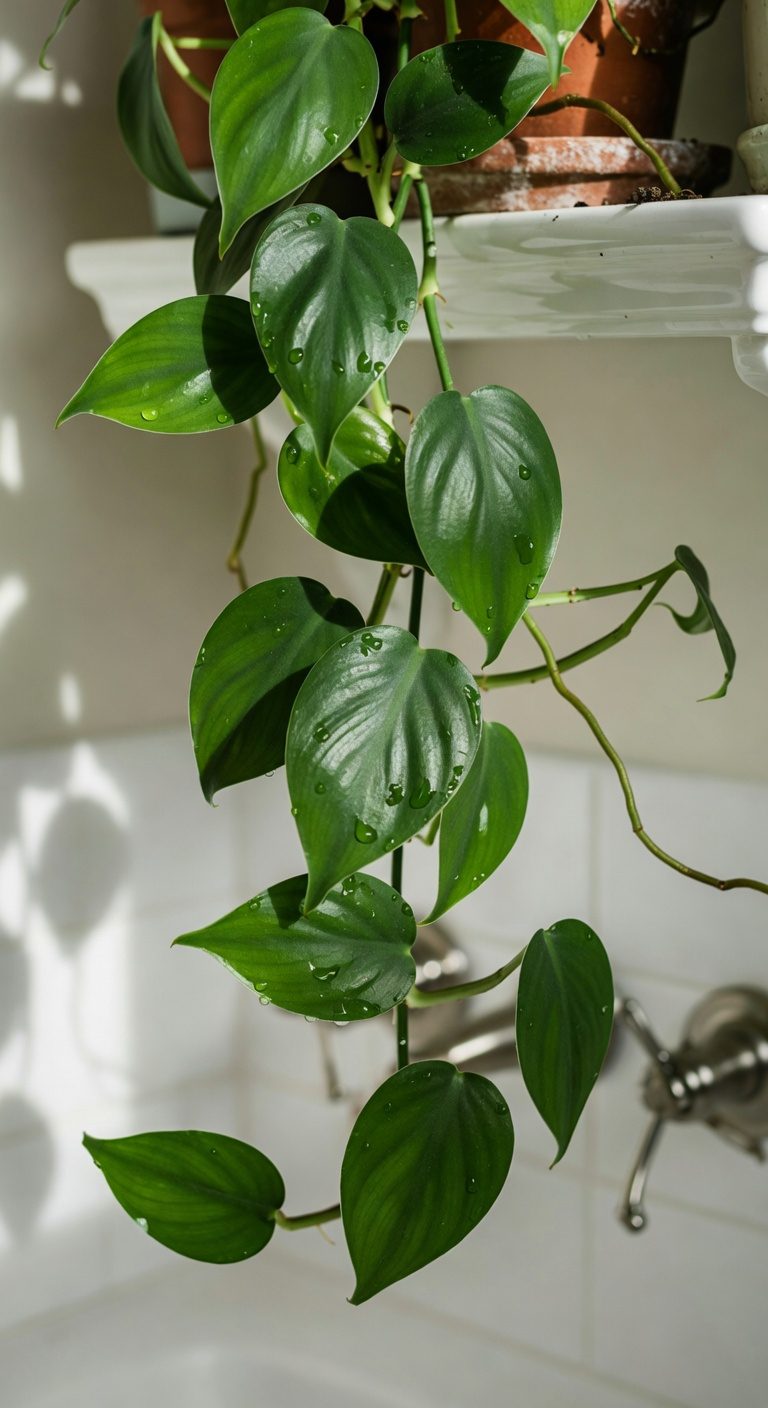
You can keep your bathroom lush with minimal effort by choosing the right plants, and philodendrons fit the bill perfectly.
Philodendron care is simple. Water every 1–2 weeks, letting soil dry between waterings.
Maintain consistent moisture without sogginess. Ideal humidity is 50–60%, common in bathrooms.
Use well-draining potting mix with perlite or orchid bark. Place in bright, indirect light, north or east windows work best.
Avoid direct sun to prevent leaf scorch.
Fertilize monthly in spring and summer with balanced 10-10-10 feed. Reduce in fall and winter.
Common Philodendron varieties include:
- *Philodendron hederaceum* (trailing)
- *Philodendron melanochrysum* (climbing, velvety leaves)
- *Philodendron micans* (soft, fuzzy foliage)
Most grow 1–4 feet long. Support climbers with moss poles. Trim to shape and promote bushiness.
Keep away from pets, plants are toxic if ingested.
Calathea: Striking Leaves Need Humid Bathrooms
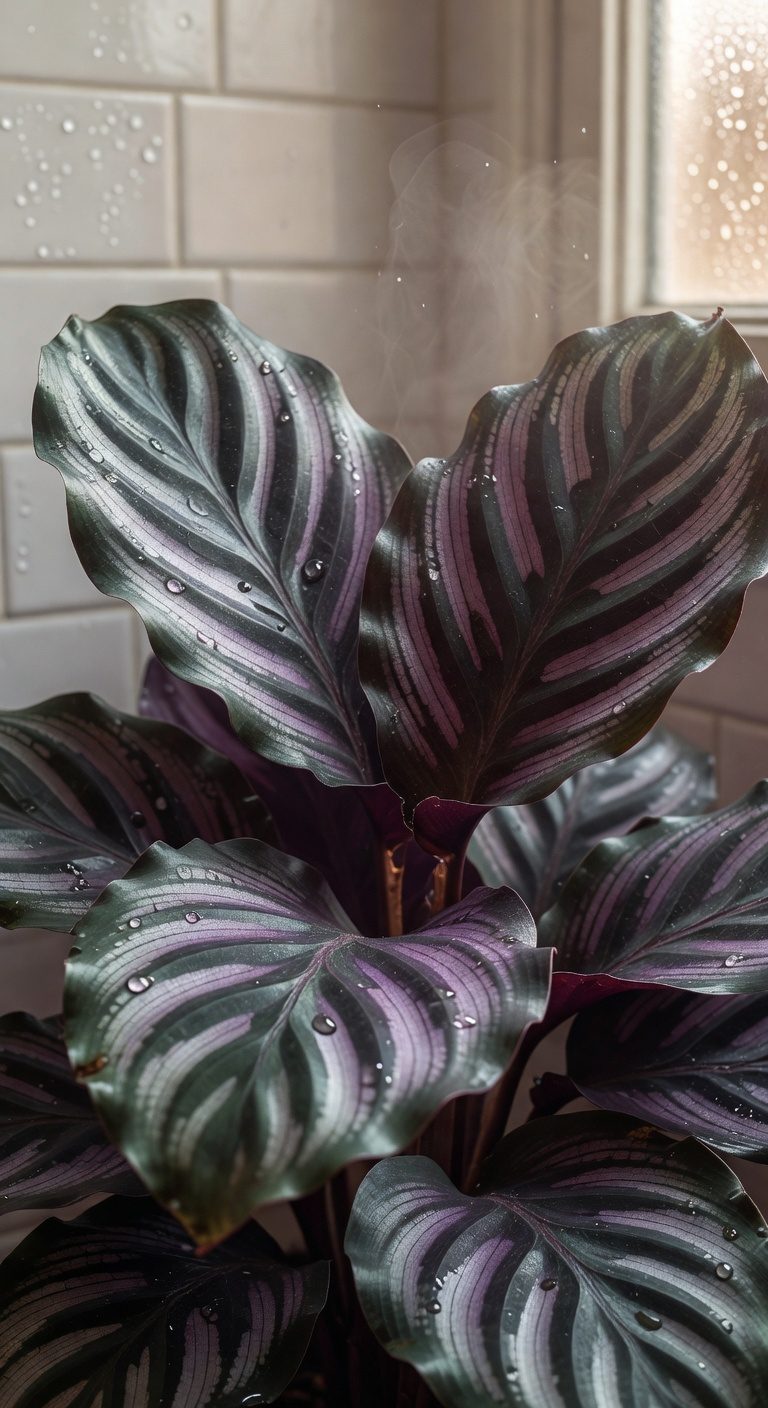
If you want vibrant, patterned foliage in your bathroom, calathea is a top choice that thrives in high humidity. Calathea humidity needs are high, aim for 60% or more. Use a hygrometer to monitor levels. Group plants or run a small humidifier to maintain conditions.
For Calathea care, keep soil consistently moist but not soggy. Use distilled or filtered water, chemicals in tap water harm leaves. Water every 7–10 days, depending on light and airflow.
Place in bright, indirect light, like near a north-facing window. Rotate weekly for even growth.
Avoid cold drafts and sudden temperature shifts. Ideal temps are 65–80°F (18–27°C).
Remove dust gently with a damp cloth. Clean leaves absorb light better.
Fertilize monthly in spring and summer with balanced 10-10-10 diluted to half strength. Stop in fall.
Watch for brown leaf edges, this signals low humidity or watering issues.
Air Plants: Soil-Free Displays for Creative Bathrooms
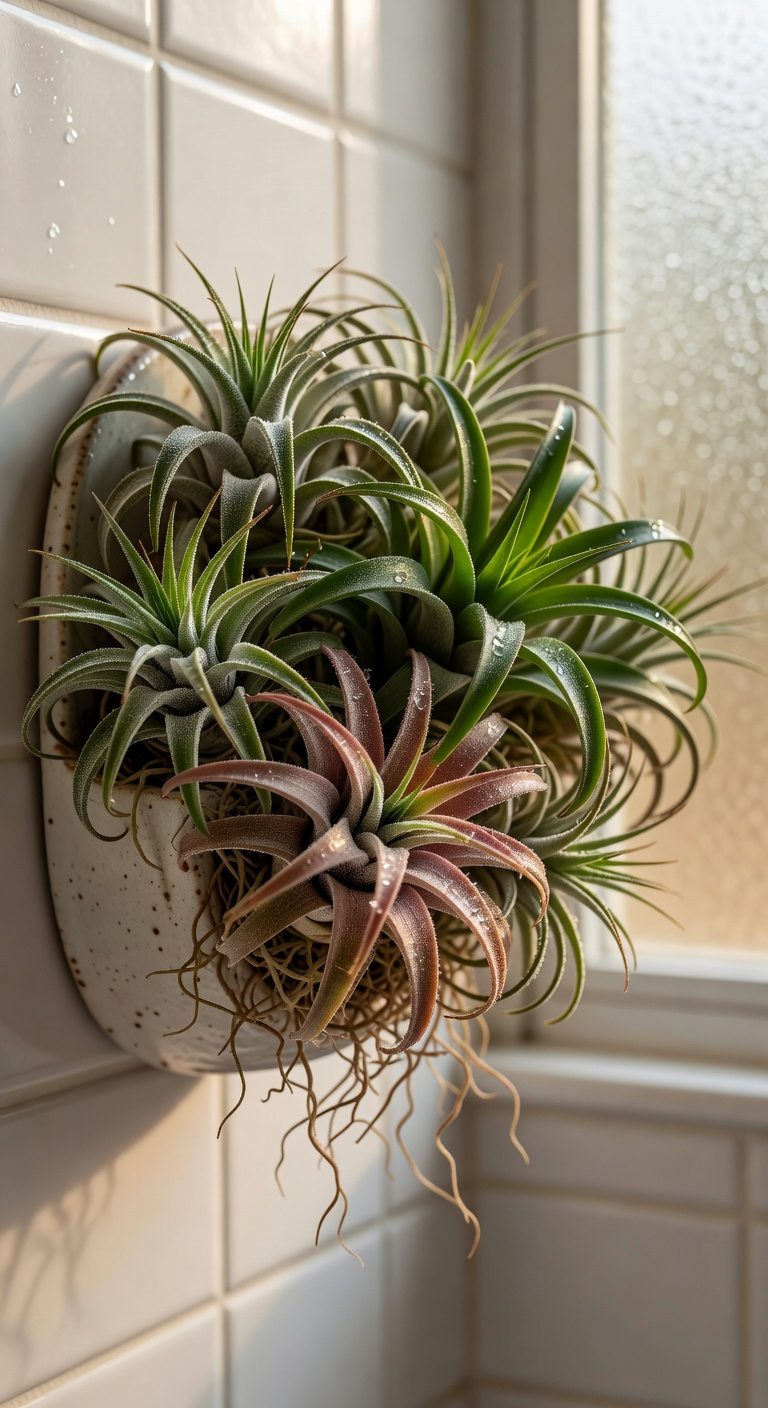
Wondering how to add greenery without pots or soil? Air plants are perfect. They absorb moisture and nutrients through their leaves, needing no soil.
For air plant care:
- Mist 2–3 times weekly with room-temperature water.
- Soak fully in water for 20–30 minutes every 1–2 weeks.
- Dry upside down on a towel for 1–2 hours after soaking.
- Place in bright, indirect light, no direct sun.
These plants thrive in average bathroom humidity. Keep them away from cold drafts or hot air vents.
Use creative displays like:
- Glass terrariums with pebbles.
- Seashells or driftwood mounts.
- Hanging wire holders near windows.
- Mini wall frames or ceramic cradles.
Choose open containers for airflow. Avoid sealed jars. Rotate every few days for even light.
With proper care, your displays stay healthy and safe year-round.
Leopard Plant: Shiny Leaves for Dark Bathroom Corners
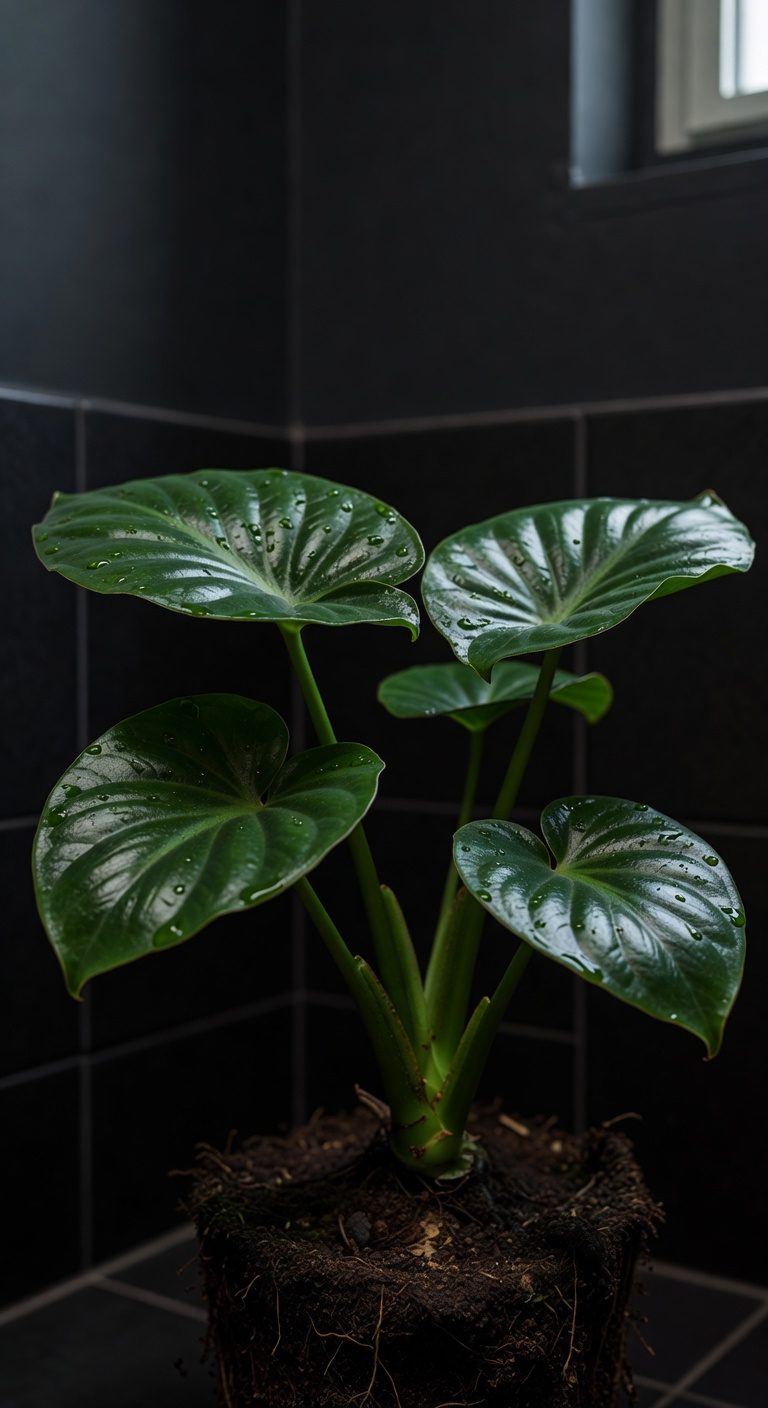
Though low light challenges many houseplants, the leopard plant thrives in dim bathroom corners. It’s ideal for dark corner design where few plants survive. Its large, heart-shaped leaves reflect minimal light, adding depth and calm.
For leopard plant care:
- Water every 7–10 days; keep soil evenly moist but not soggy.
- Use well-draining potting mix with peat and perlite.
- Maintain humidity above 50%; mist weekly if needed.
- Ideal temps: 60–75°F (15–24°C).
- Wipe leaves monthly to remove dust and boost light absorption.
Avoid direct sun, faded variegation means too much light. Brown leaf tips signal low humidity or irregular watering.
Place in a 6–8 inch pot with drainage holes. Rotate quarterly for even growth. Fertilize once in spring with balanced 10-10-10 diluted to half strength.
It’s non-toxic and stable, making it safe around children and pets.
Lucky Bamboo: Low-Tech Style Near Bathroom Sinks
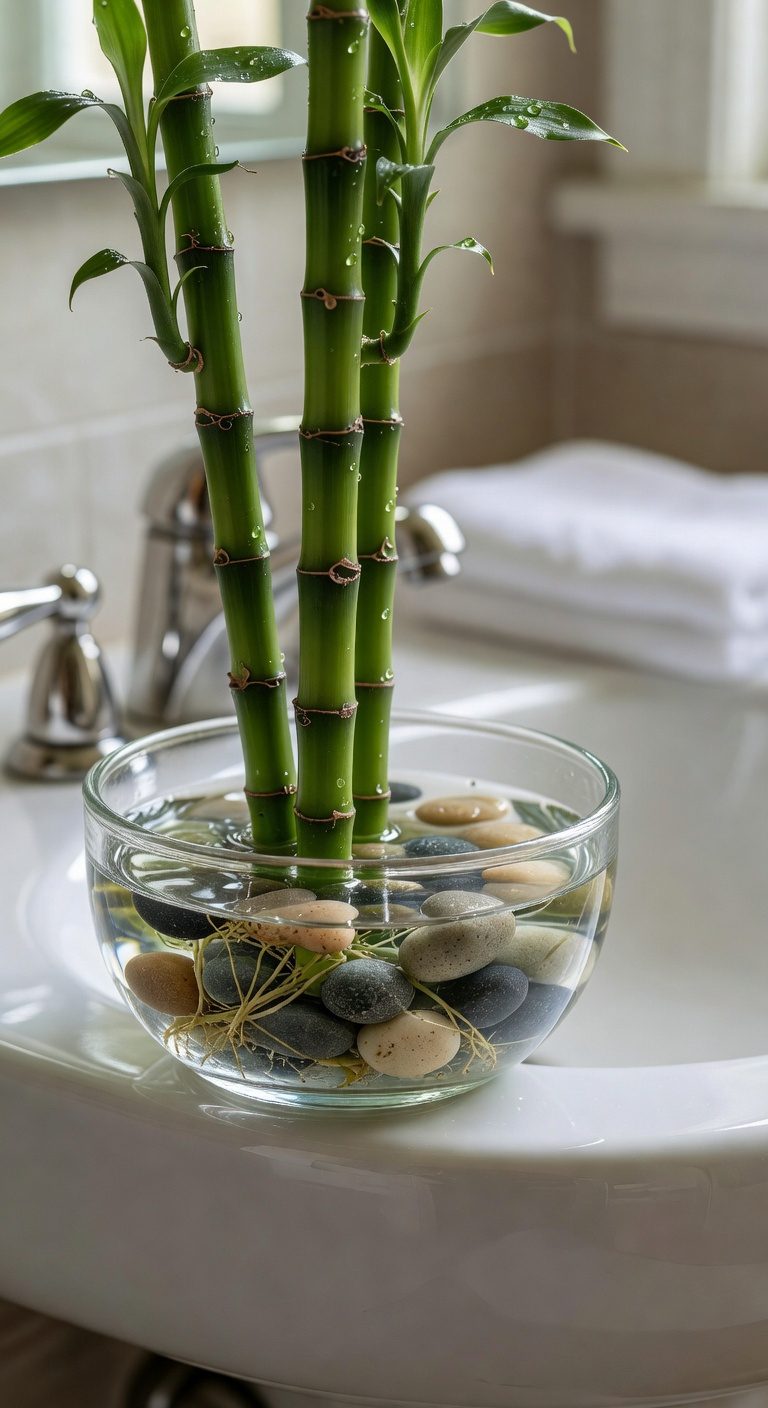
Near your bathroom sink, lucky bamboo brings an easy, clean look without needing soil or high maintenance.
Bamboo care:
- Use filtered or distilled water, changed weekly.
- Submerge roots fully, about 1–2 inches deep.
- Keep in indirect light, direct sun burns leaves.
- Trim yellow stalks at base with clean scissors.
- Optional: Add liquid fertilizer monthly, 1–2 drops.
Decorative placement:
- Choose transparent glass vases for a modern look.
- Place on countertops, ledges, or shelves near sinks.
- Match with neutral stones or pebbles for stability and style.
- Avoid cluttered zones to maintain airflow.
- Ensure the spot stays above 65°F.
Lucky bamboo thrives in humidity and low light, making it ideal for bathrooms. Its simple shape and upright growth add calm structure.
With basic bamboo care and mindful decorative placement, it stays safe, healthy, and soothing.
Croton: Vibrant Foliage for Sunny Bathroom Spots
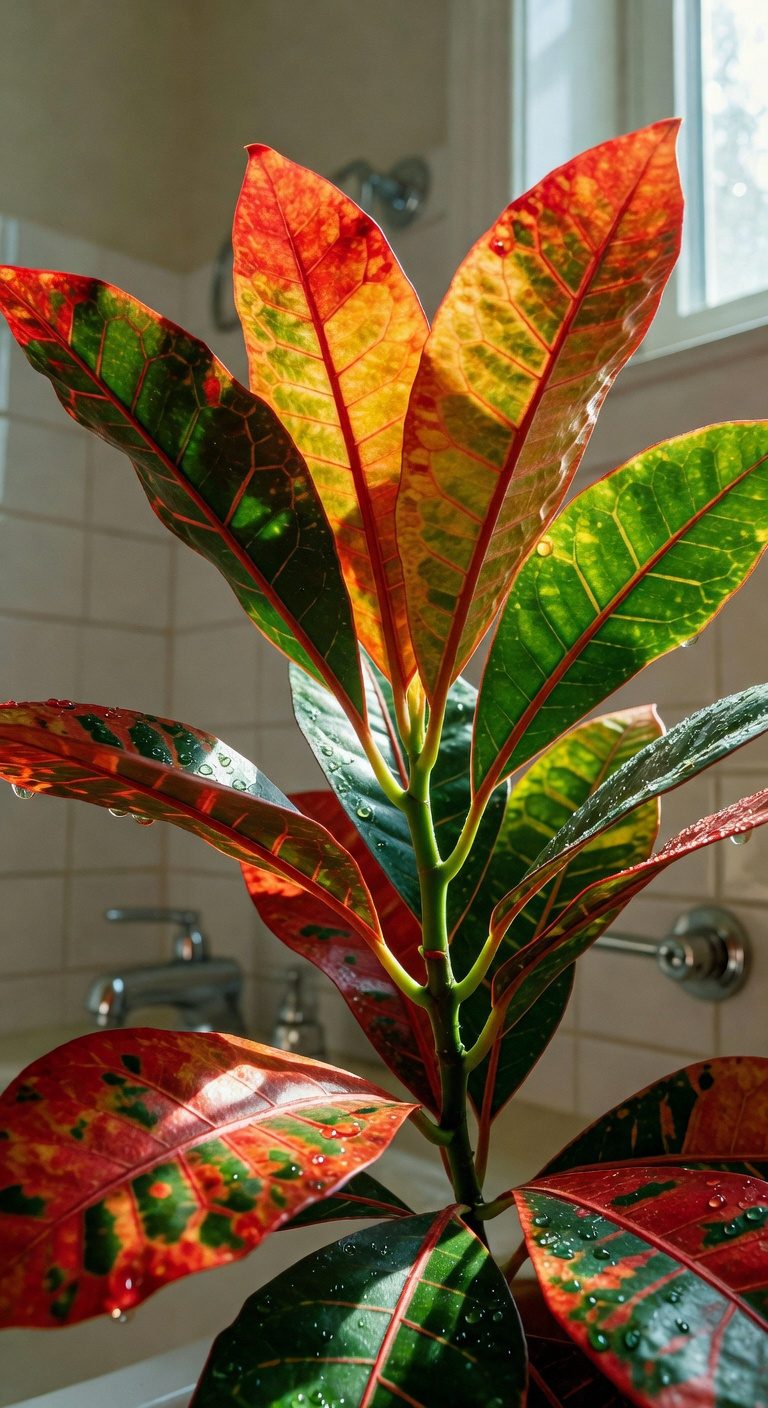
Color bursts across your bathroom walls when you grow a croton in a sunny spot. This tropical plant thrives in bright, indirect light. You’ll find many Croton varieties, like ‘Petra’ and ‘Mammy,’ each with bold red, yellow, or orange foliage. All are non-toxic to pets when kept out of reach.
For proper Croton care:
- Keep soil moist but not soggy, water every 5–7 days.
- Use well-draining potting mix with perlite.
- Maintain humidity above 50% with a small humidifier.
- Feed monthly with balanced 10-10-10 liquid fertilizer in spring and summer.
- Trim leggy stems at 45-degree angles to promote full growth.
Avoid cold drafts and sudden temperature drops. Rotate the pot weekly for even light exposure.
Watch for brown leaf edges, this means low humidity. Clean leaves gently with a damp cloth every two weeks. With consistent care, your croton stays vibrant and safe.
Final Takeaways
Turn your bathroom into a jungle paradise, thriving with green life. These 25 plants transform damp air into lush growth. Water every 7–10 days. Provide indirect light. Maintain 60–80% humidity. Snake plants survive months without care. ZZ plants endure low light, infrequent watering. Aloe vera heals skin, likes bright spots. Ferns demand misting twice weekly. Orchids bloom yearly with monthly feeding. Use 4-inch pots with drainage. Trim dead leaves monthly. Rot is rare, fatal. Prevent overwatering. Repot every 18 months.