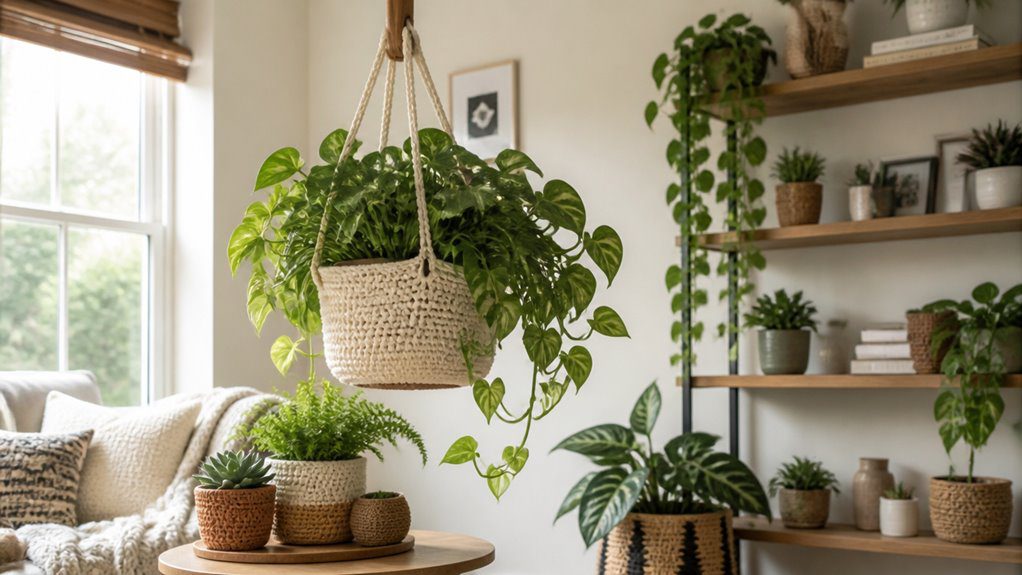
You’ll love turning yarn into tiny gardens that brighten any space. Start with soft cotton or acrylic for realistic leaves, then grab a hook, stuffing, and a few beads for texture. Try a quick succulent stitch, then move on to a spiky cactus that fits a tiny pot. Mix colors, add wire stems, and hang them on walls or shelves for a playful, low‑maintenance vibe. Ready to see how easy it is to grow your own crochet jungle?
Explore Current Crochet Plant Decor Trends
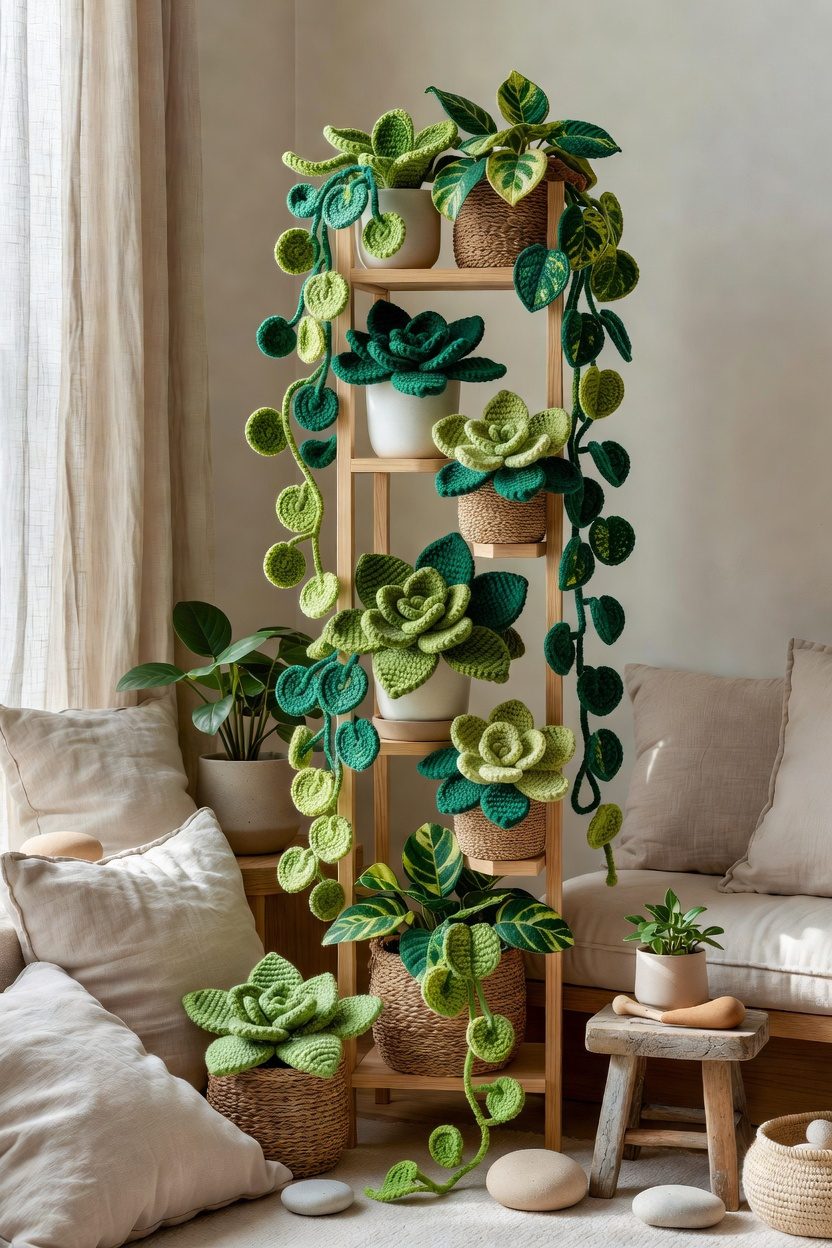
Crochet plant decor is blooming, and you can join the trend with just a few simple steps. You’ll notice realistic succulents, cacti, and leafy vines in many crochet plant patterns. Hang them, mount them, or place them in mini pots for safe, space‑saving décor. Choose bright colors, textured stitches, and eco‑friendly yarn. Add movable parts for playful, low‑risk fun. Incorporating plant care tips can enhance the realism and longevity of your crochet pieces, especially when emulating popular caring for and styling techniques used with live plants. Understanding indoor plant styling can inspire more authentic and visually appealing designs in your crochet projects.
Choose the Right Yarn for Realistic Crochet Plants
You’ve seen the trending succulents and vines, now let’s pick yarn that makes them look real. Choose cotton yarn for natural texture and shape retention. Try worsted‑weight for sturdy stems, and acrylic for bright, washable colors. Mix several green shades to add depth. Keep fibers soft, avoid toxic dyes, and test stretch before crocheting. Incorporate air-purifying plants into your designs for both style and health benefits. Additionally, selecting environmentally friendly natural fertilization methods can help your plants thrive and stay healthy. Stay safe, stay stylish.
Gather Essential Tools & Supplies for Plant Amigurumi
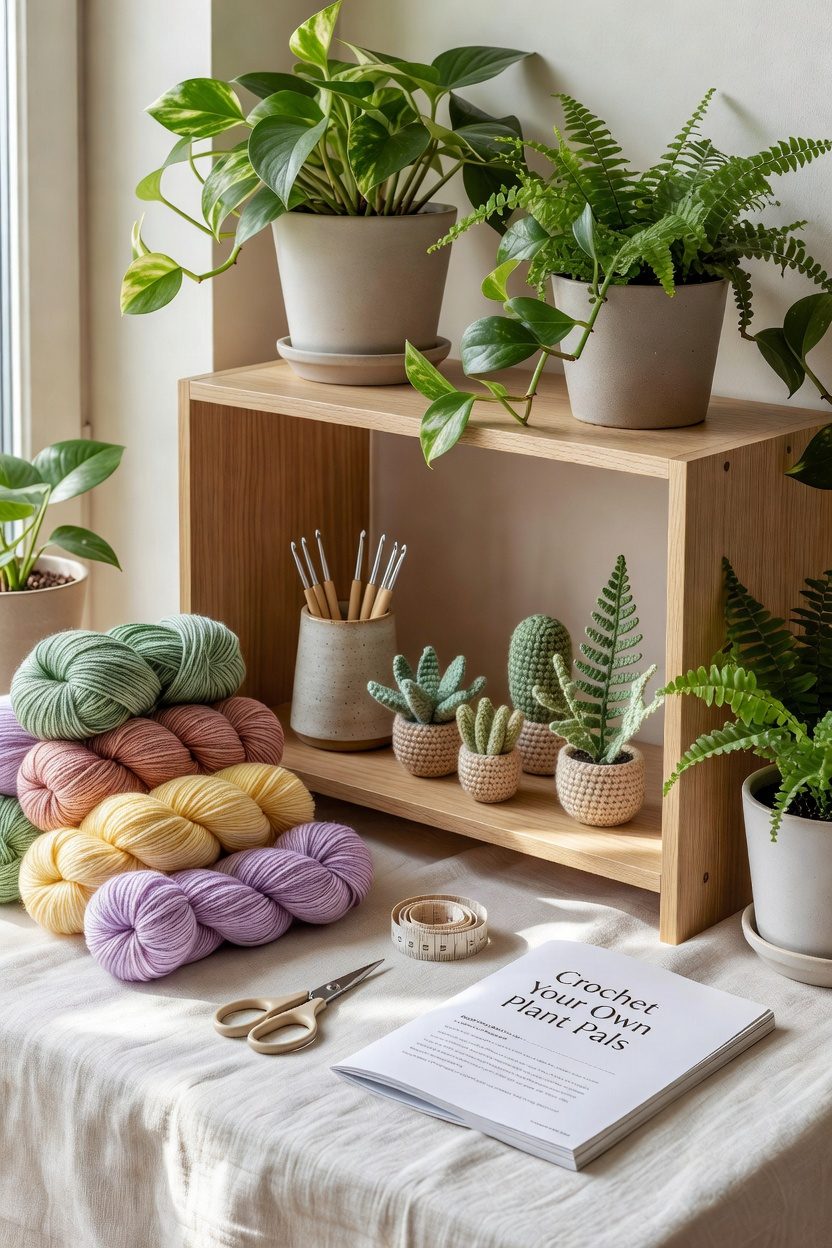
When you set up your plant amigurumi kit, gather a range of crochet hooks from 2.0 mm to 5.0 mm to match the yarn weight you’ll use. Choose green, brown, or bright yarn, keep scissors, a needle, and stitch markers handy. Add beads, wire, and small pots for decoration. Stock stuffing, keep tools organized, and enjoy safe, fun DIY plant decor crafting.
Try This Easy Succulent Crochet for Beginners
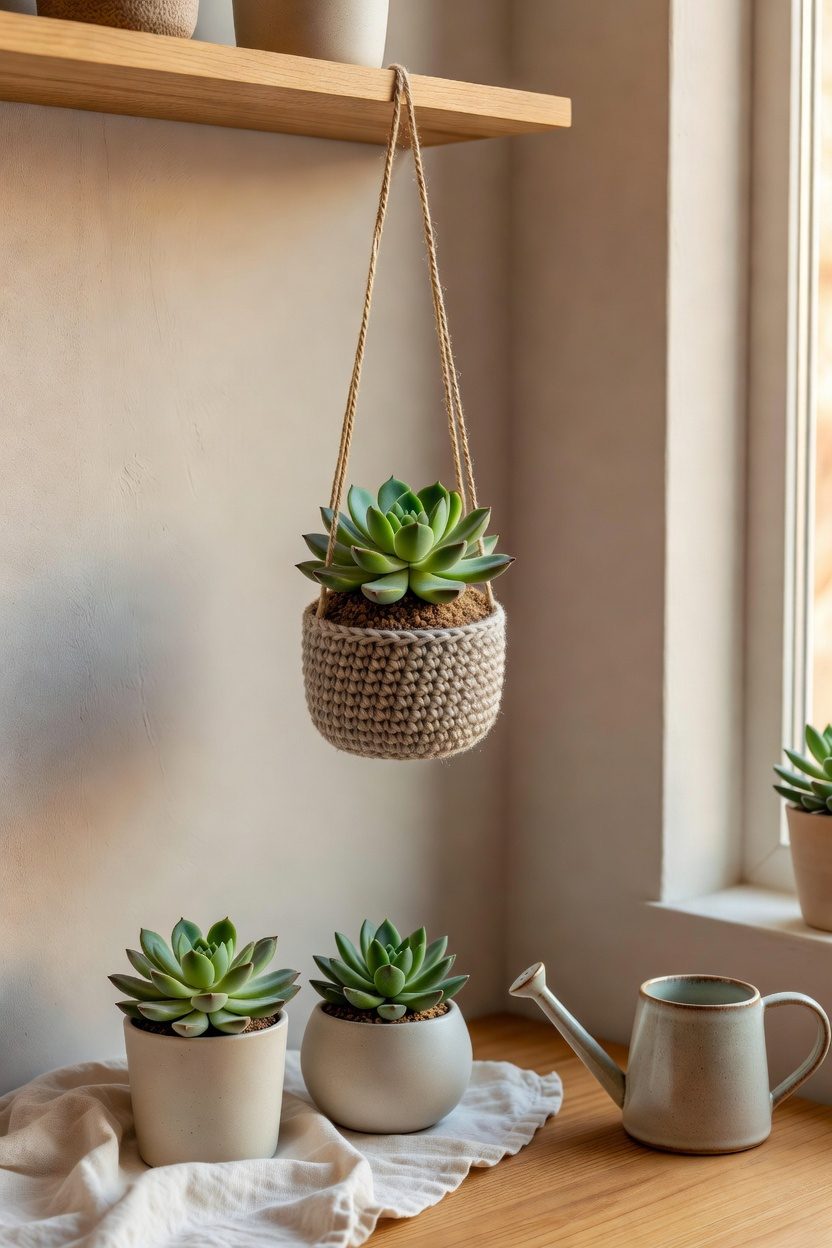
Ever wondered how to make a cute succulent that looks like a real plant without fuss? Grab cotton or acrylic yarn, a hook, and a few pipe cleaners. Slip single crochet stitches, then add a slip stitch to shape leaves. Keep stuffing light for a realistic texture. Insert wire to hold stems upright. Finish with a tiny green tip. Safe, quick, and fun!
Step‑by‑Step Cactus Pot Amigurumi Tutorial
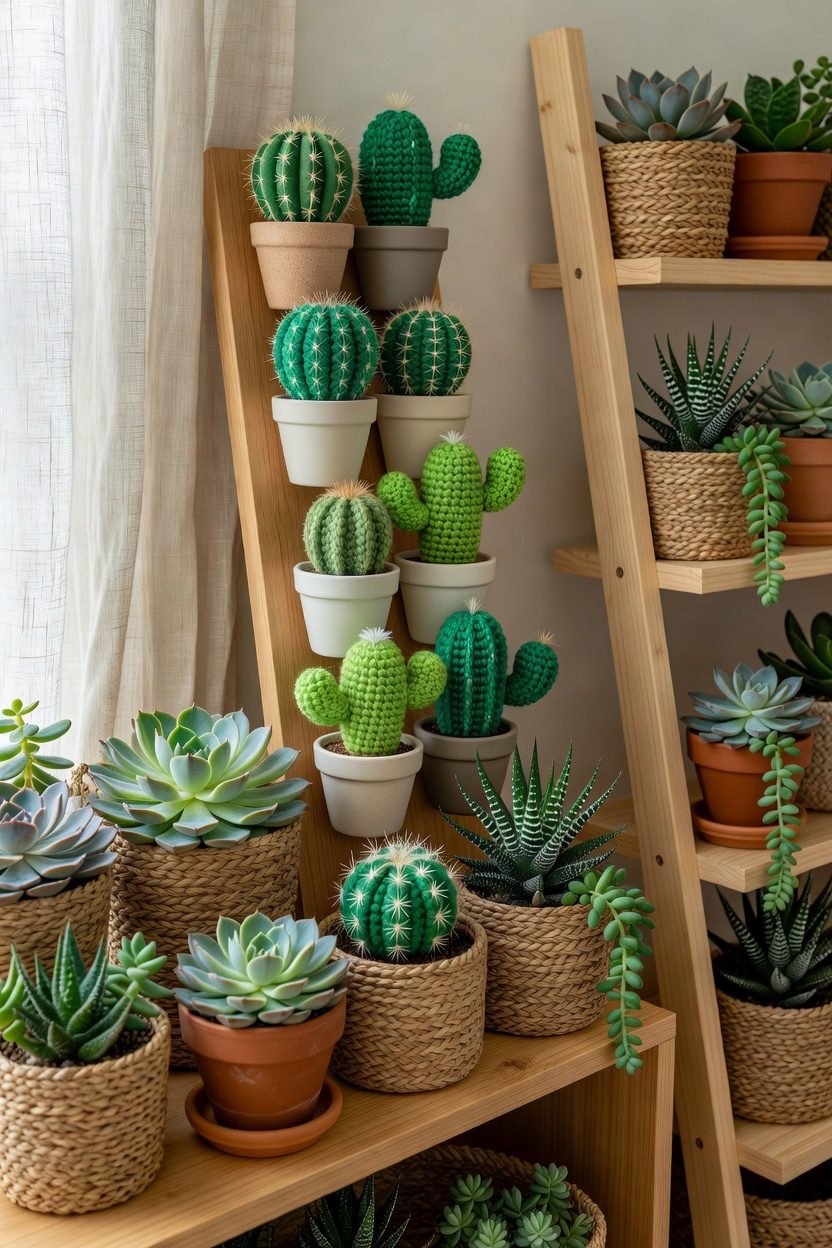
If you’re ready to turn a few skeins of yarn into a tiny desert scene, this cactus‑in‑a‑pot tutorial will guide you step by step. Gather green yarn, brown yarn, hook, stuffing, and needle. Crochet the cactus using single crochet and increase, then shape the pot. Attach cactus securely, add optional spikes, and finish with crochet hanging for display. Keep work tidy, use safe scissors, and enjoy your desert décor.
Craft a Miniature Potted Flower Bouquet
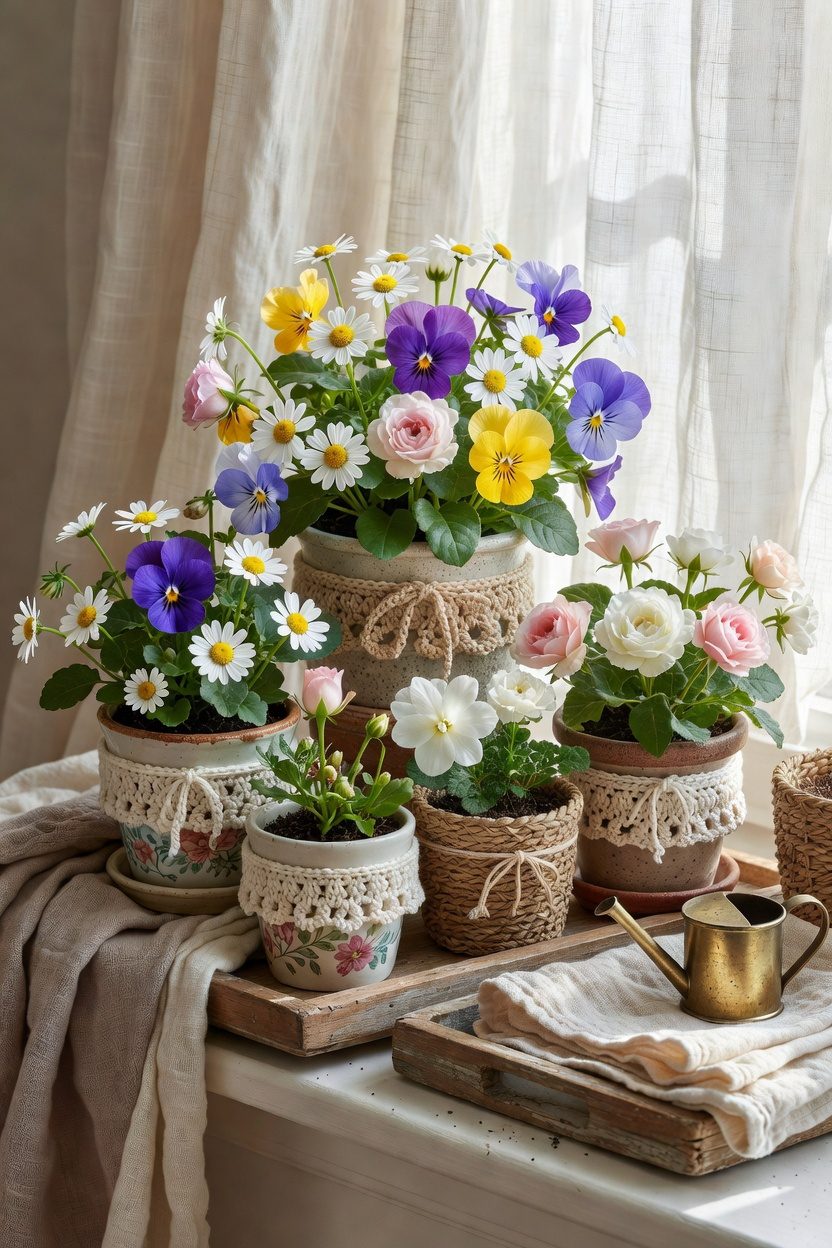
After mastering the cactus‑in‑a‑pot, you can easily switch to a bright, mini flower bouquet. Crochet single and double stitches to make tiny flowers, then slip them onto lightweight floral wire stems. Use colorful yarn to mimic real hues, vary sizes for depth, and attach each bloom to a small crocheted pot or leaf base. Tie stems together with yarn or ribbon for a charming crochet plant decor piece.
Add Seasonal Color With Color‑Changing Yarn for Crochet Plants
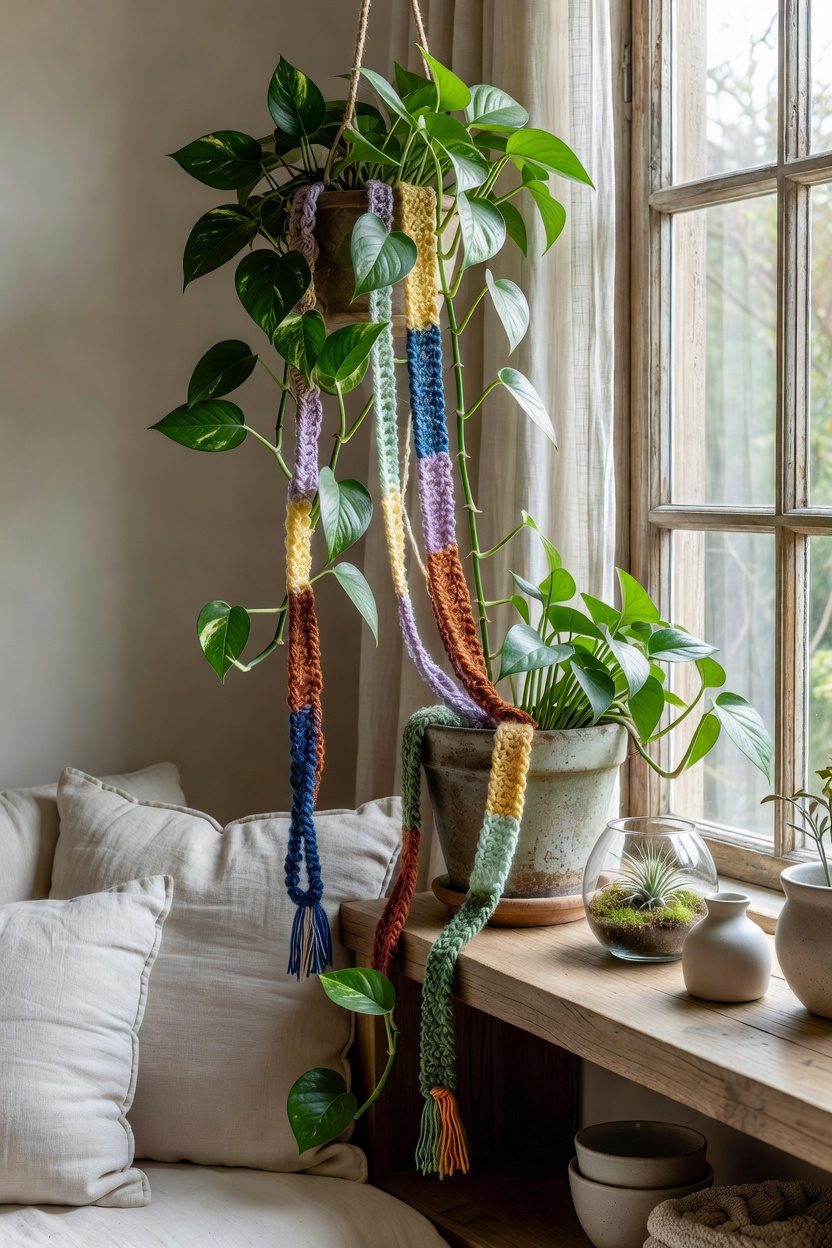
When you swap plain yarn for color‑changing skeins, your crochet plants instantly gain a seasonal vibe. Choose smooth gradient yarn to mimic spring buds or autumn leaves, then crochet leaf or petal sections in one go. The color‑changing yarn shifts tones gently, so you avoid frequent yarn changes. Keep stitches even, work safely with scissors, and enjoy realistic, lively foliage year‑round.
Make a Textured Leaf Appliqué for Garments
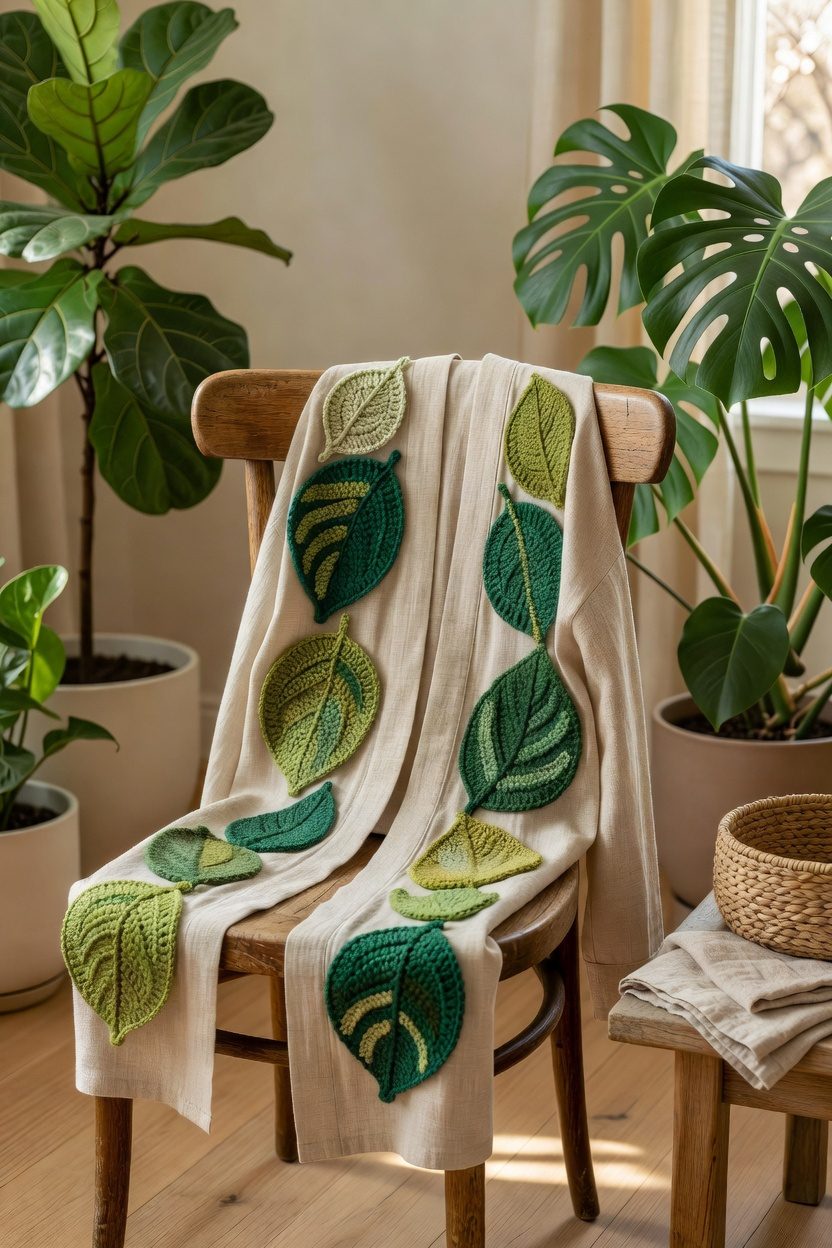
Swap the color‑changing yarn for a solid green shade, then start shaping realistic leaves with simple stitches. Use single crochet and double crochet for the base, add post stitches or puff stitches for texture, and experiment with green shades for depth. Follow pattern contours, then finish the leaf appliqué with a slip stitch or tiny embroidery. Sew it safely onto sweaters or scarves.
Create a Decorative Crochet Tree for Mantels
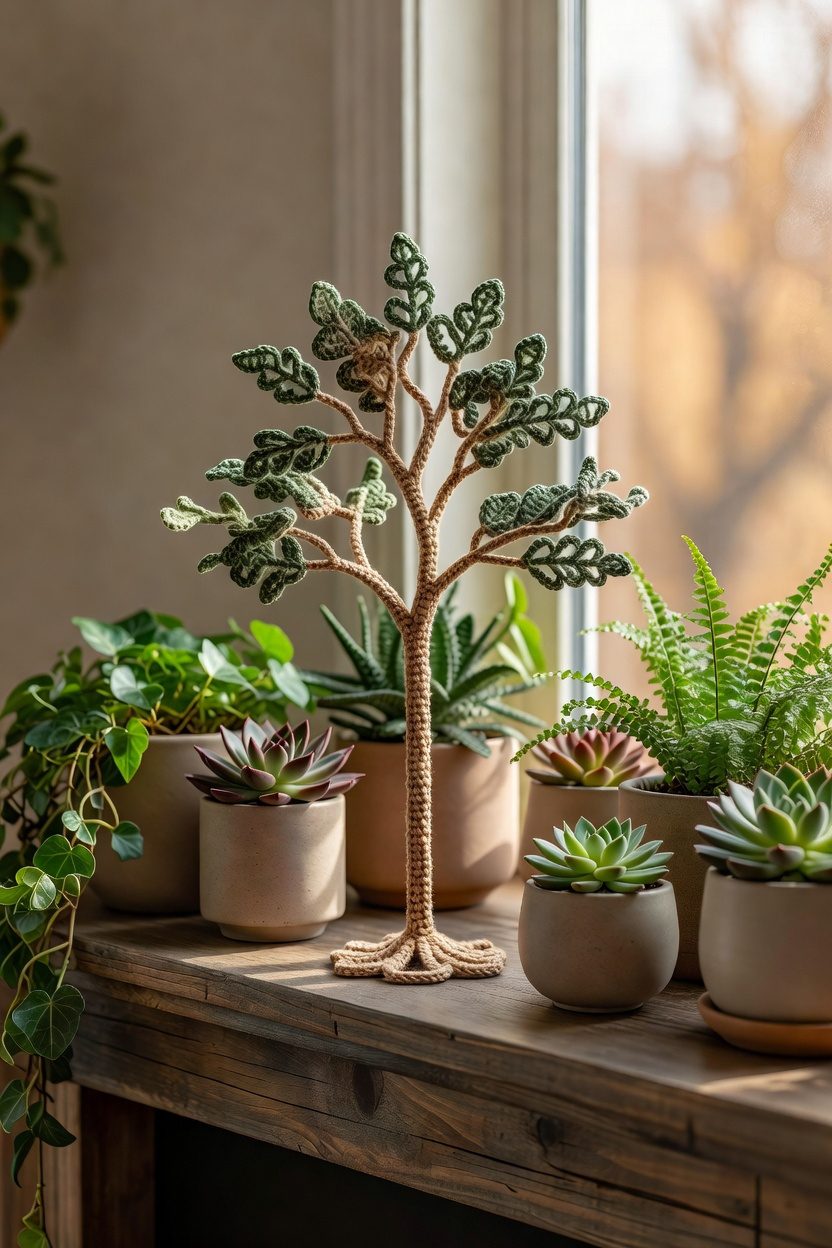
If you want a cozy mantel centerpiece, start by crocheting a sturdy trunk with brown chunky yarn. Add textured green leaves, using wire for shape and a weighted base for safety. Include tiny crocheted flowers or fruit for charm. Keep crochet trees balanced, secure, and eye‑catching. Enjoy your handmade mini‑forest, and watch it brighten any room.
Build DIY Crochet Plant Shelf Inserts for Organization
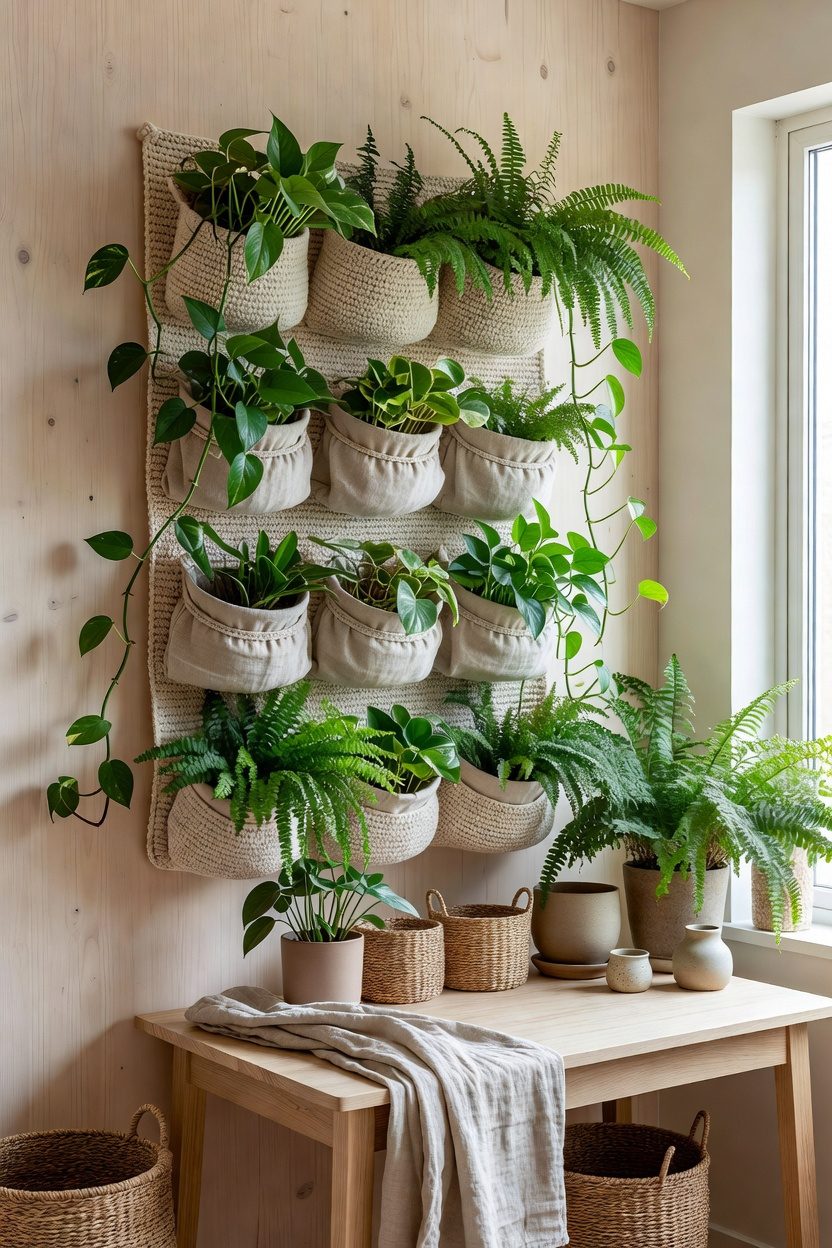
Because a well‑organized shelf looks better and helps plants thrive, start by picking a sturdy stitch like double or treble crochet. Choose breathable cotton or linen yarn to avoid moisture. Measure your shelf, then crochet plant shelf inserts to fit snugly. Add loops or ties for secure anchoring. Use openwork lattice for airflow and a tidy look. Enjoy safe, stylish organization.
Hang a Crochet Plant Hanger for Wall Décor
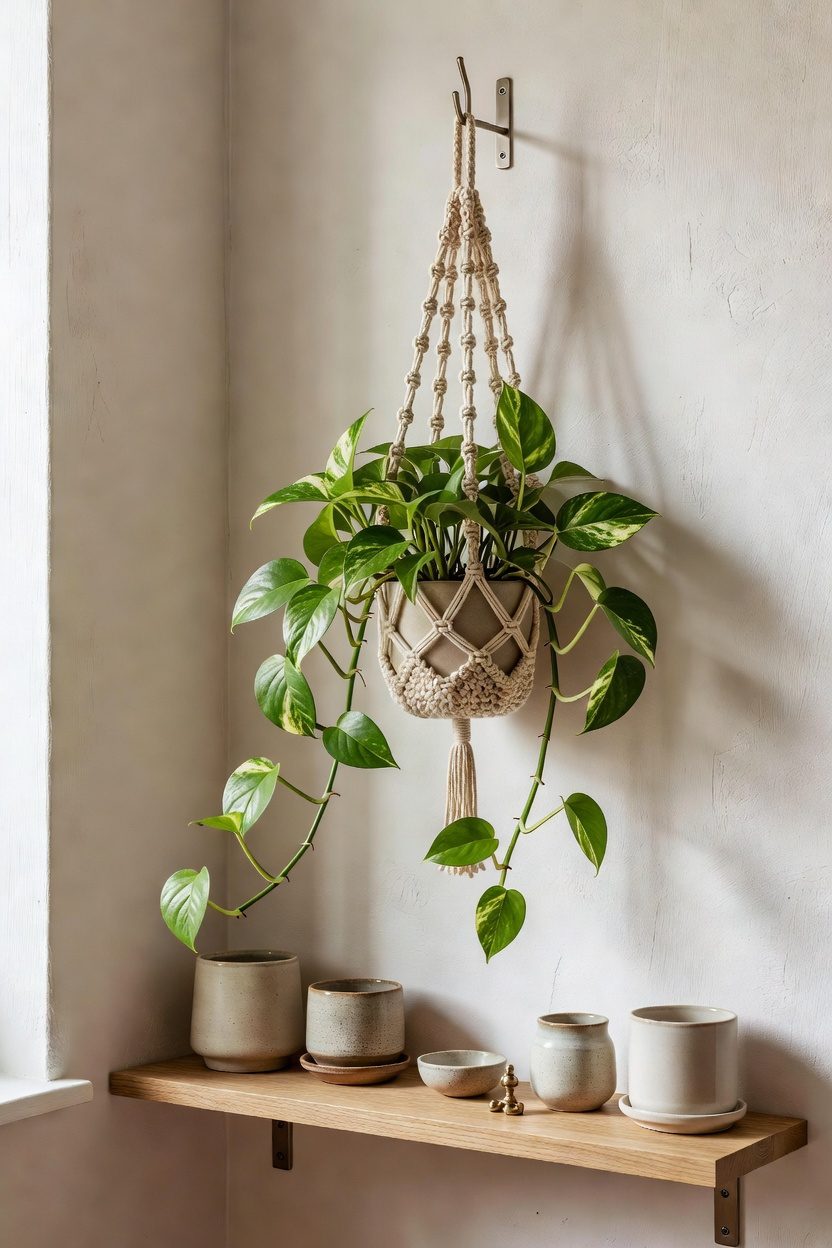
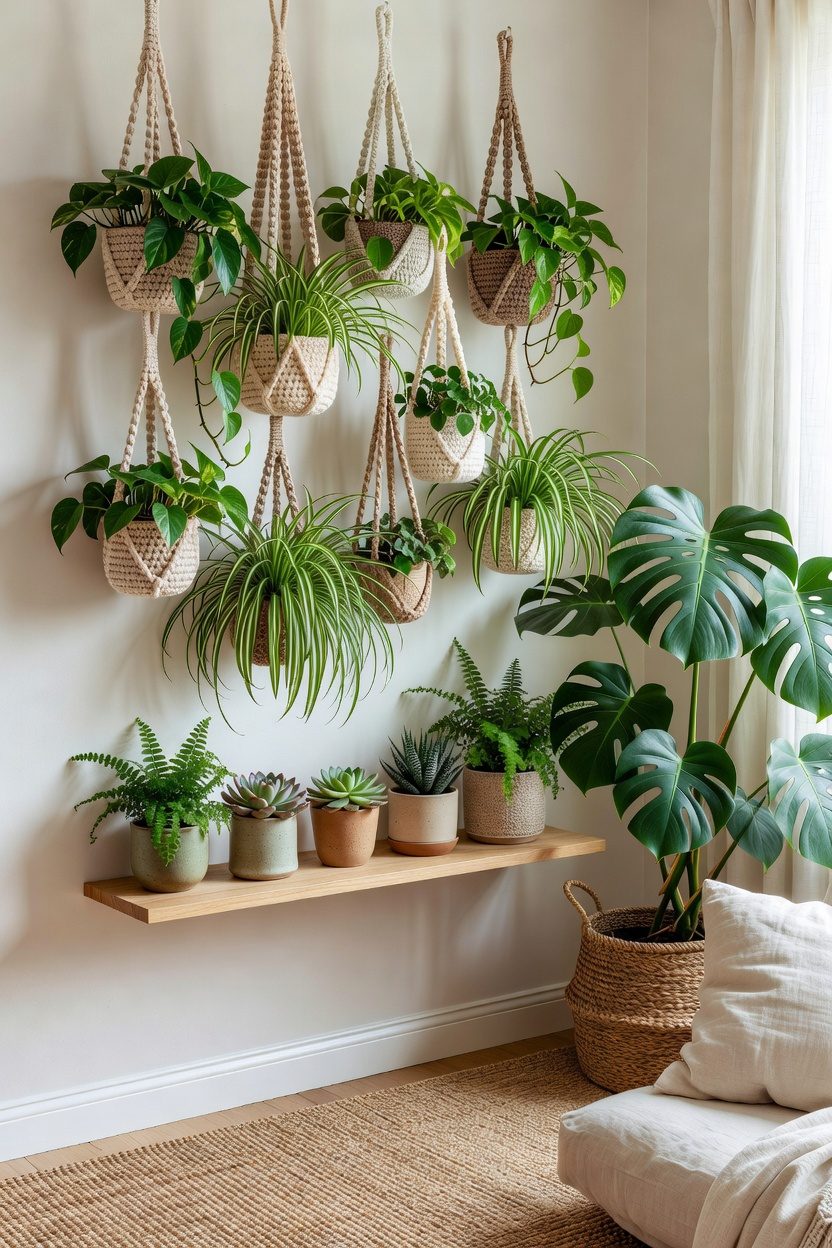
When you hang a crochet plant hanger on the wall, you instantly add a boho vibe and free up floor space. Choose sturdy cotton or acrylic yarn for safety, then measure the pot and adjust the chain length. Secure the hanger with a strong hook or wall anchor. Make sure knots are tight, weight is balanced, and the plant sits level. Enjoy the layered, vertical display.
Add Stitch‑Level Details to Crochet Plant Foliage
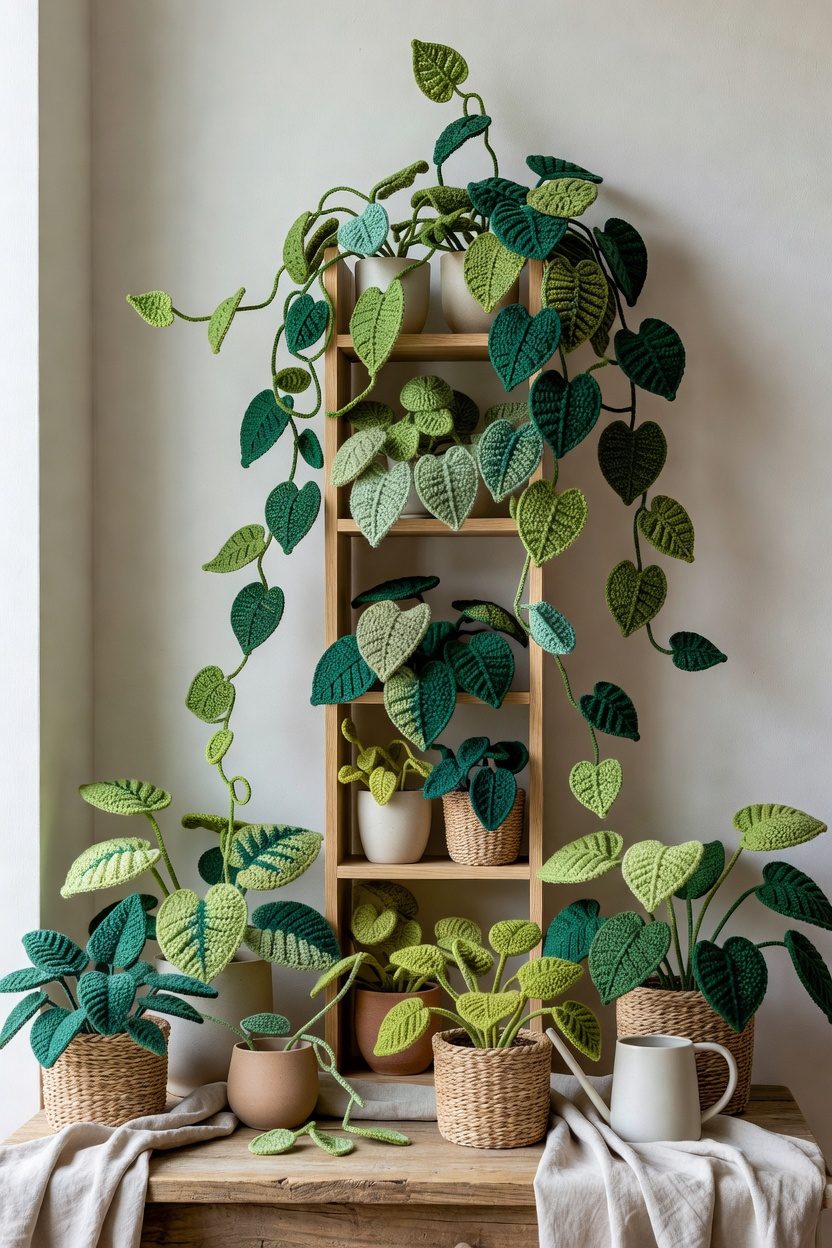
Even if you’re new to crochet foliage, adding stitch‑level details can instantly make your plant look more lifelike. Use bobble or popcorn stitches for texture, then switch yarn colors for veins on leaves. Try surface crochet or tiny sewing for serrated edges. Mix patterns within one leaf for natural variance. Keep tension even, colors consistent, and enjoy your vibrant, safe, handcrafted greenery.
Upcycle Fabric Scraps for Crochet Plant Pot Covers
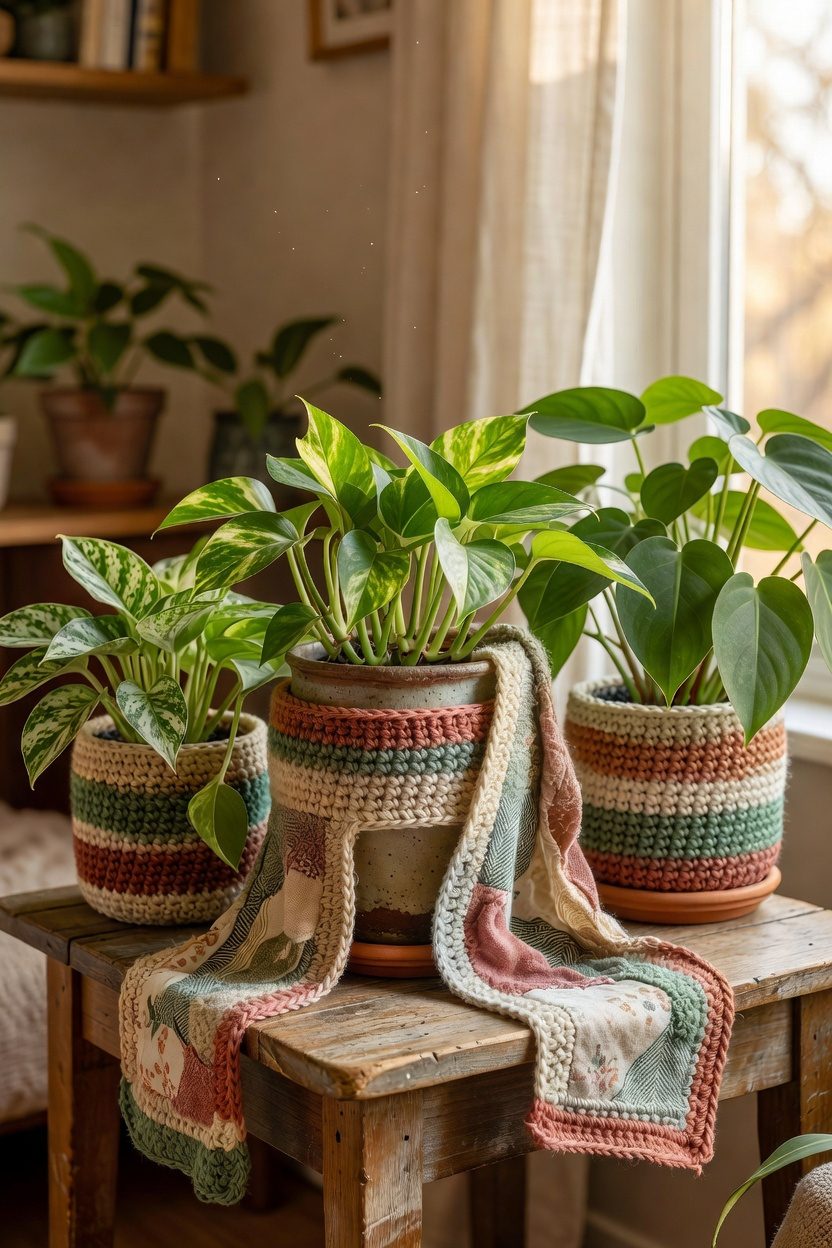
You’ve already given your leaves texture, so why not keep the eco‑friendly vibe by turning fabric scraps into stylish pot covers? Choose a tight stitch like single crochet for a safe, snug fit. Mix colors, add a button or bead, and secure edges. Keep the cover breathable, avoid toxic dyes, and enjoy a unique, sustainable look.
Design a Quick Crochet Daisy Accent for Home Accessories
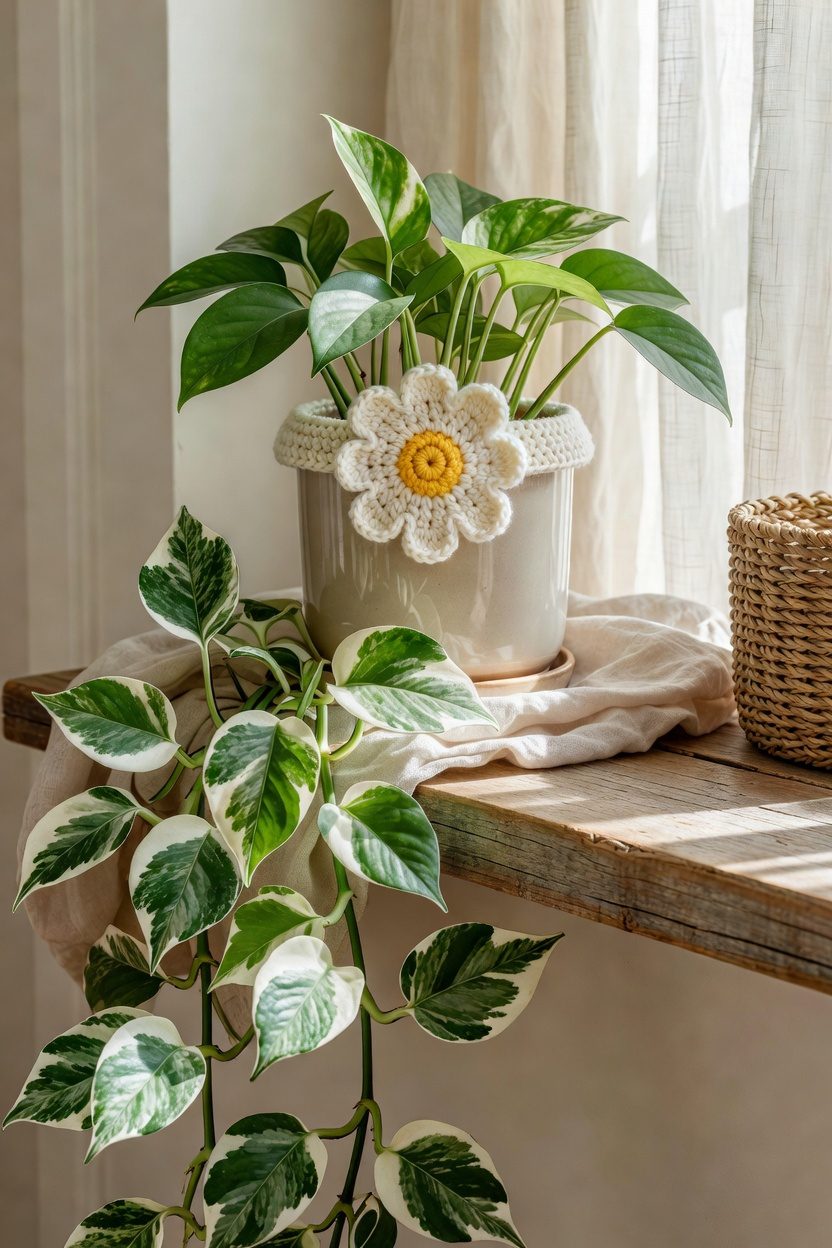
If you want a fast, happy splash of flower power, try a quick crochet daisy accent. Use bright yellow yarn for the center, white for petals, and work half‑double crochet and slip stitches safely. Attach to pots, pillows, or walls with a simple slip‑stitch seam. Blend multiple daisies for a garland, or add felt for texture. This easy crochet projects boost décor instantly.
Scale Up: Large‑Format Crochet Plant Installations
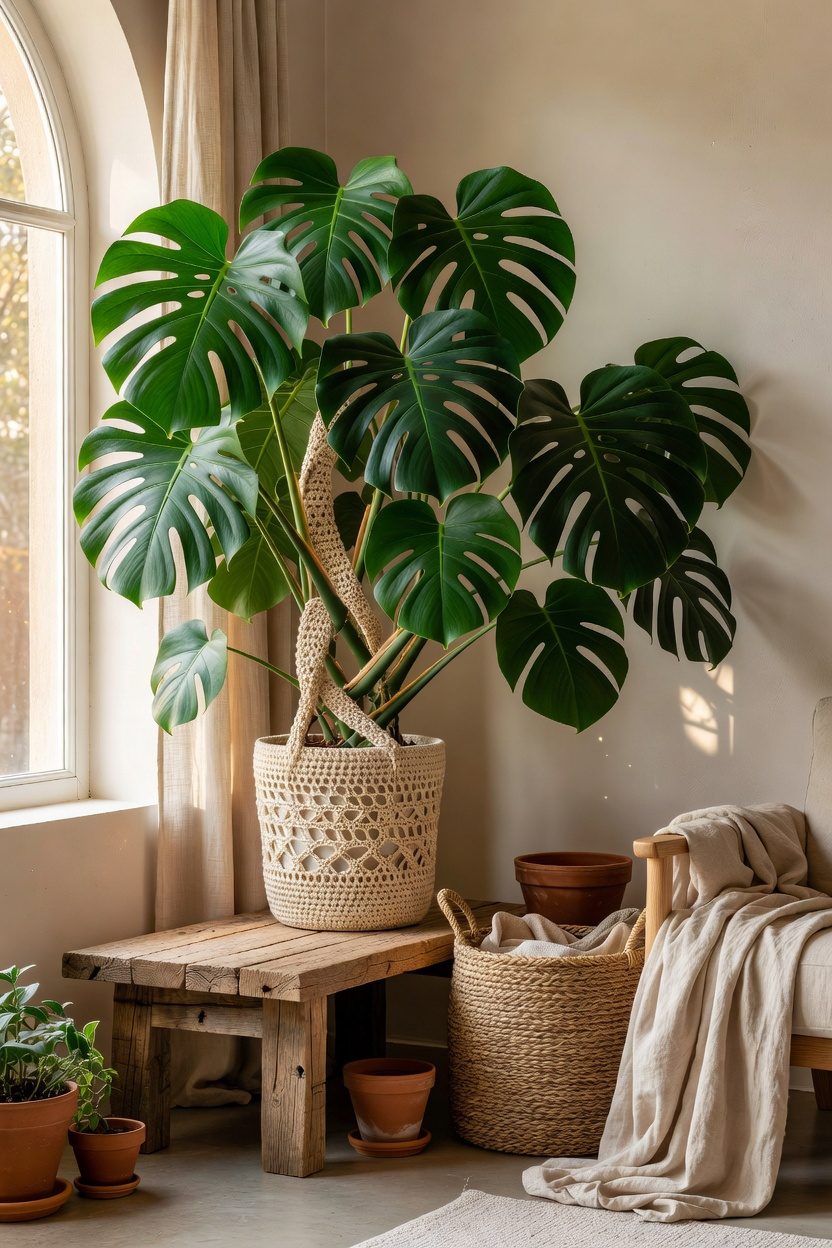
When you step up to a wall‑sized crochet garden, start by planning the layout on paper. Choose lightweight yarn, sketch freeform shapes, then map mounting points. Use sturdy hooks, secure anchors, and double‑check weight limits for safety. Layer foliage, add tapestry details, and attach pieces with clips or zip ties. This large‑scale approach creates a dramatic, safe, and stunning botanical feature.
Customize Plant Sizes With Adjustable Stitch Counts
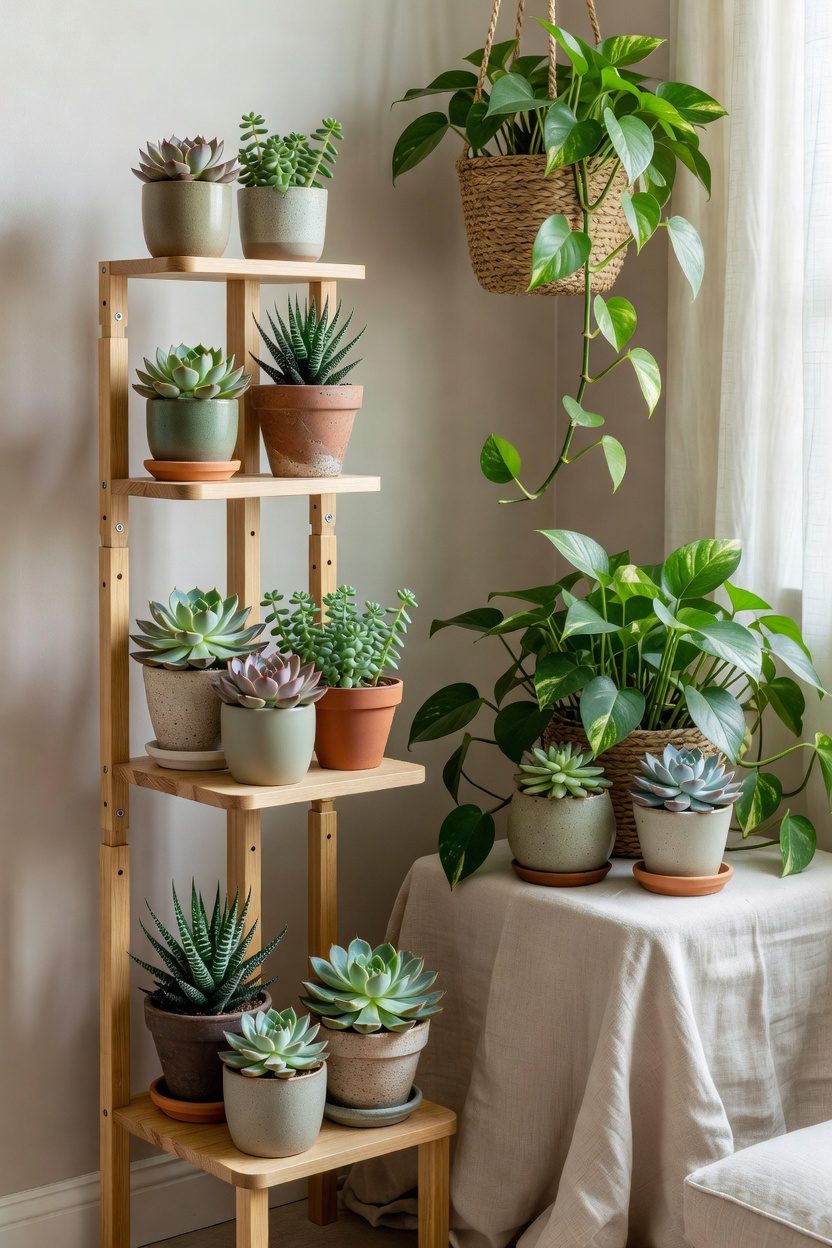
Adjust the stitch count each round, and you’ll easily resize any crochet plant. Start by counting stitches carefully, then add a few for a fuller look or drop a few for a compact mini. Keep a notebook to track adjustments, ensuring uniform size changes. Remember, adjusting stitch counts safely prevents uneven tension and keeps your plant sturdy for any décor. Enjoy your custom‑sized greenery!
Troubleshoot Common Shape Issues in Plant Amigurumi
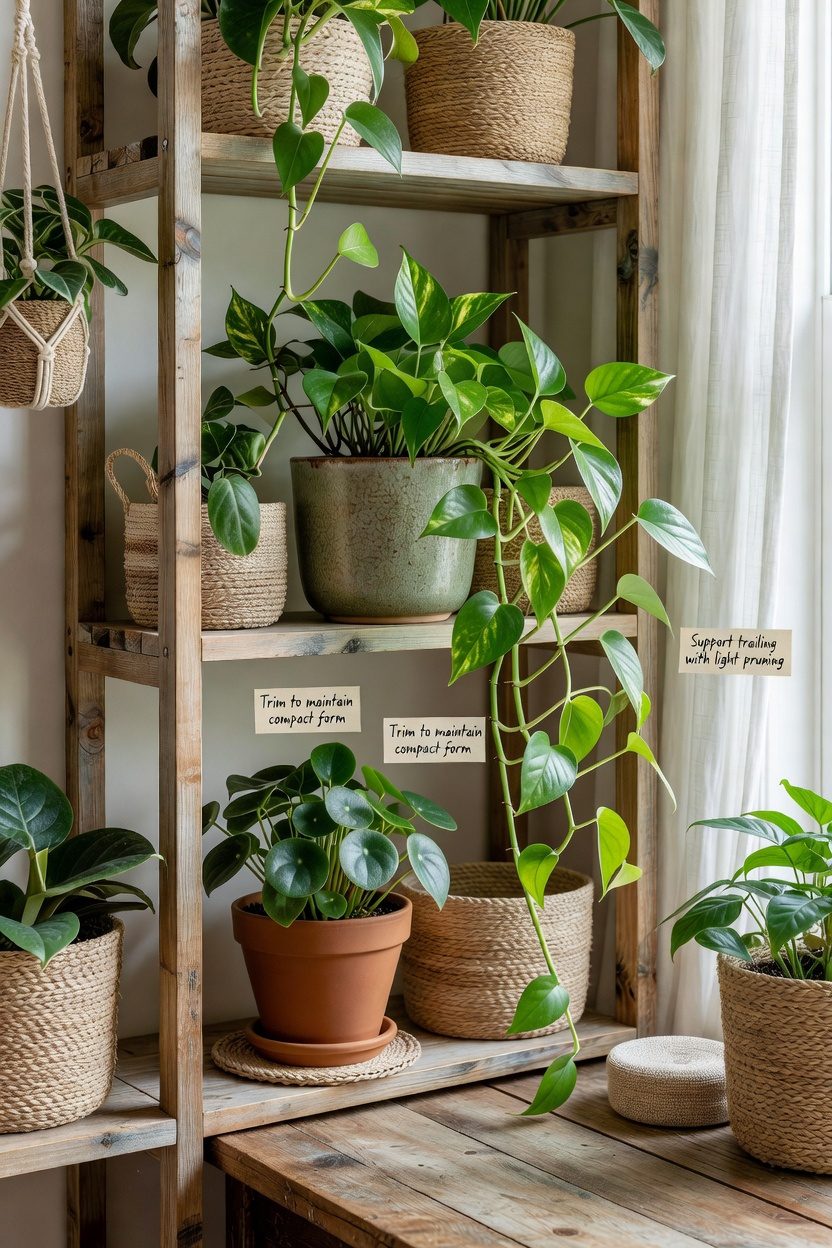
Even a tiny slip in tension can turn a cute leaf into a wonky wobble, so start by checking your grip and keeping the yarn steady. Follow stitch counts exactly, avoid over‑ or understuffing, and use consistent yarn weight. Apply tension control, gently reshape with extra stitches, and add supporting wire if needed. This amigurumi troubleshooting keeps crochet plant decor safe and shape‑distortion free.
Care for & Display Your Crochet Plants Long‑Term
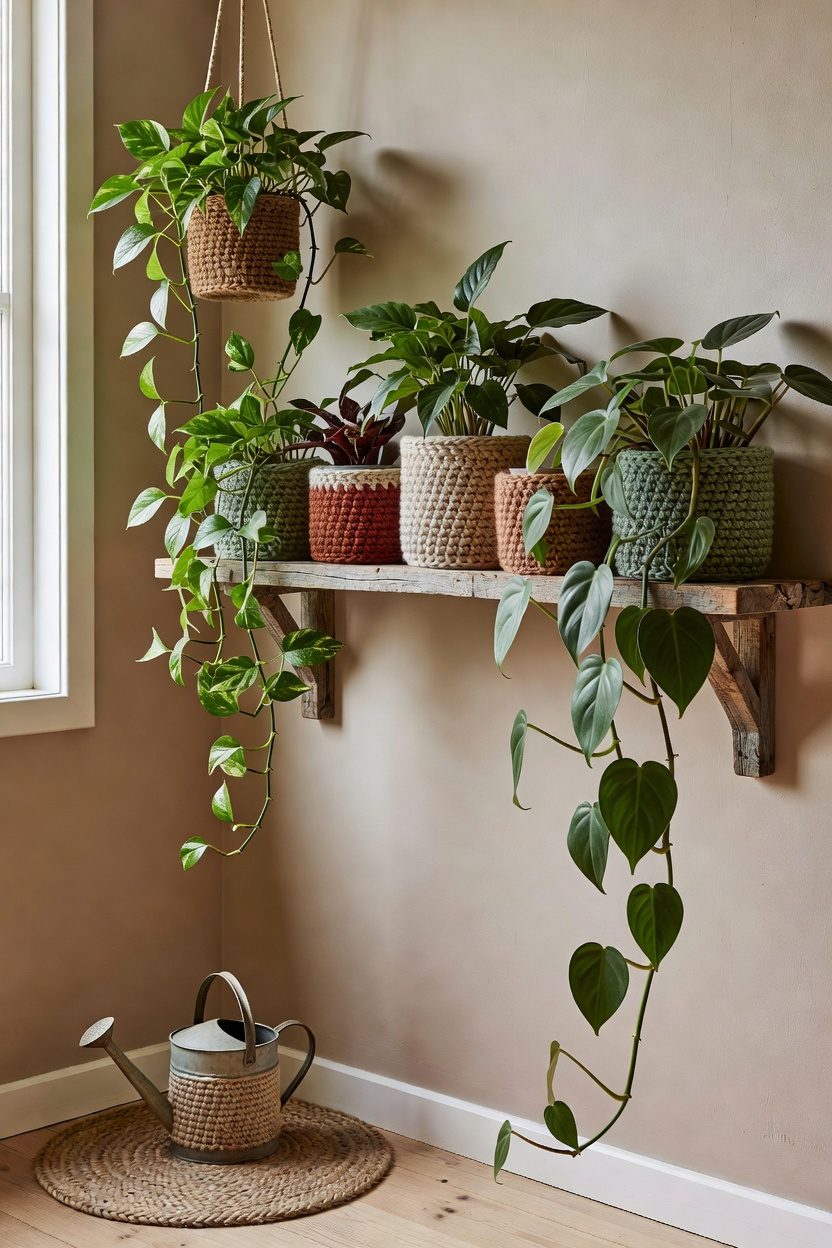
If you want your crochet plants to stay bright and sturdy for years, start with good yarn, cotton or acrylic resists fading and holds shape. Dust them gently, wash with mild soap occasionally, and keep them away from direct sunlight. Store in a cool, dry spot when not displayed. Reinforce stems with stiffeners or wire for lasting shape. Keep safety in mind, and enjoy your thriving décor.
Find Free vs. Premium Crochet Plant Patterns Online
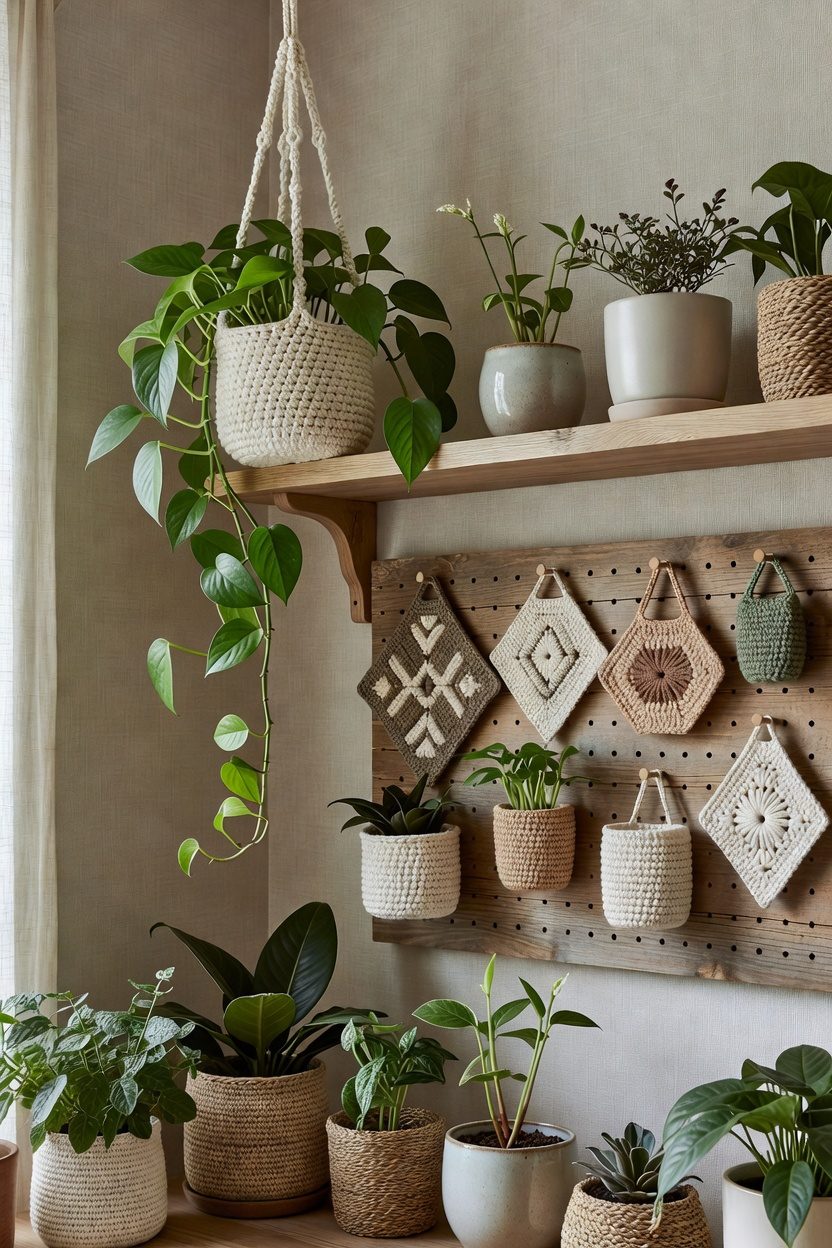
When you start hunting for crochet plant patterns, check both free and premium sources. Look at Ravelry, Pinterest, and craft blogs for free crochet patterns that suit any skill level. Browse Etsy or dedicated sites for premium patterns that include step‑by‑step guides, videos, and professional illustrations. Compare difficulty, style, and extra features before deciding. Stay safe, read reviews, and enjoy crafting!
Combine Crochet Plants With Mixed‑Media Wall Art
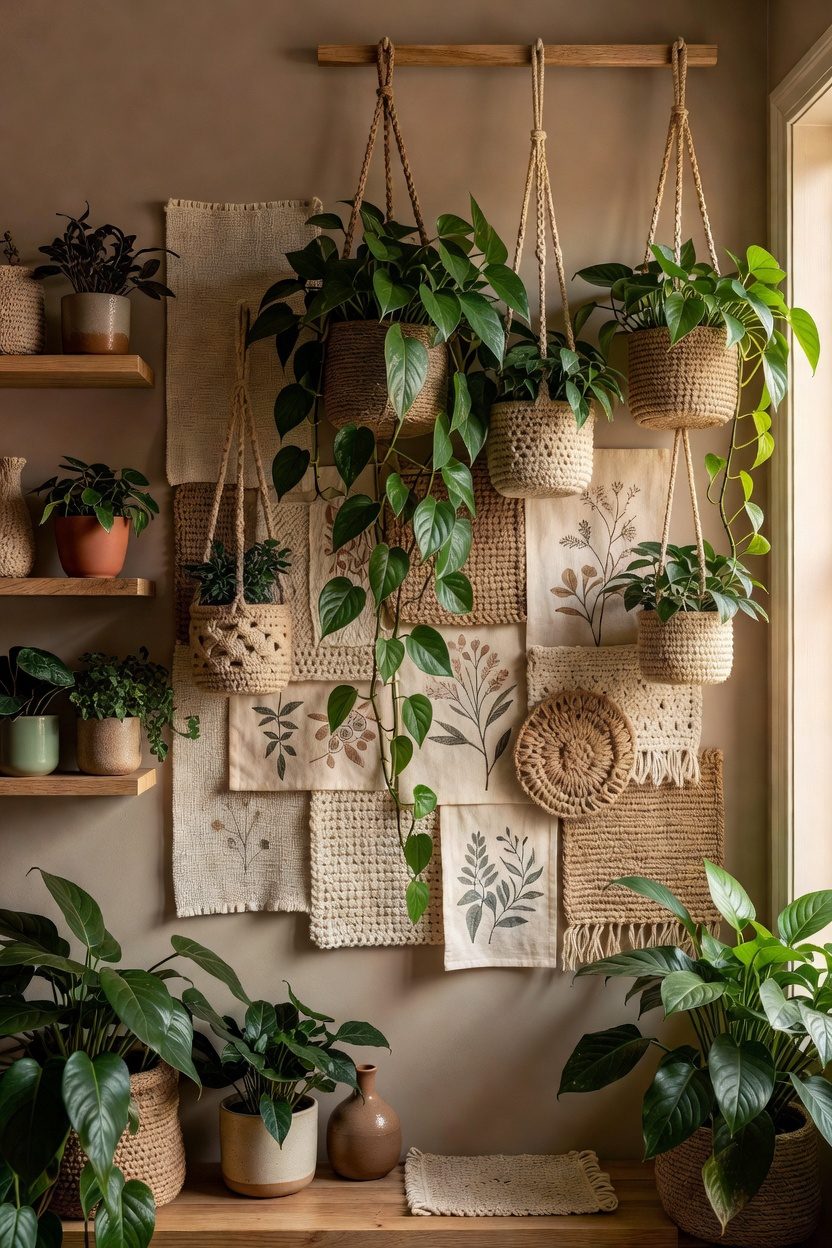
Mix crochet plants with painted or printed backgrounds, and you’ll get a lively, three‑dimensional wall piece that instantly lifts any room. Choose a sturdy canvas, attach crochet plants with safe glue, then layer wood, fabric, or pressed flowers for depth. Keep edges smooth, avoid sharp pins, and arrange clusters for a balanced, boho‑chic or minimalist look. Enjoy your safe, vibrant wall art.
Final Takeaways
You’ve learned how to turn yarn into thriving décor, mixing bright colors with sturdy stitches. Pair soft cotton with bold acrylic, add a bead here, a wire twist there, and you’ll get realistic succulents and playful cacti that never wilt. Hang them, mount them, or let them sit proudly on a shelf. Keep your tools handy, follow the simple steps, and enjoy a fresh, green vibe that’s both chic and budget‑friendly. Happy crocheting!