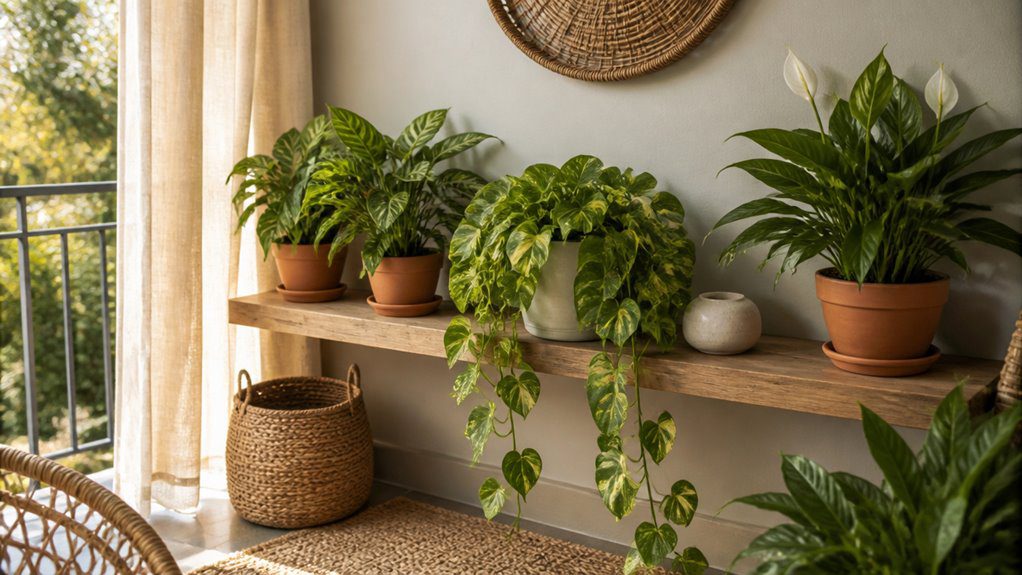
Did you know some plants can thrive in shade without much fuss? Many don’t need frequent watering, pruning, or fertilizing, perfect if you want a garden that’s easy to enjoy. In fact, choosing the right low-maintenance shade plants can turn a dull corner into a lush retreat with little effort. Curious how to pick the best ones? Keep exploring, these hardy options might just surprise you!
Why Choose Low-Maintenance Shade Plants?
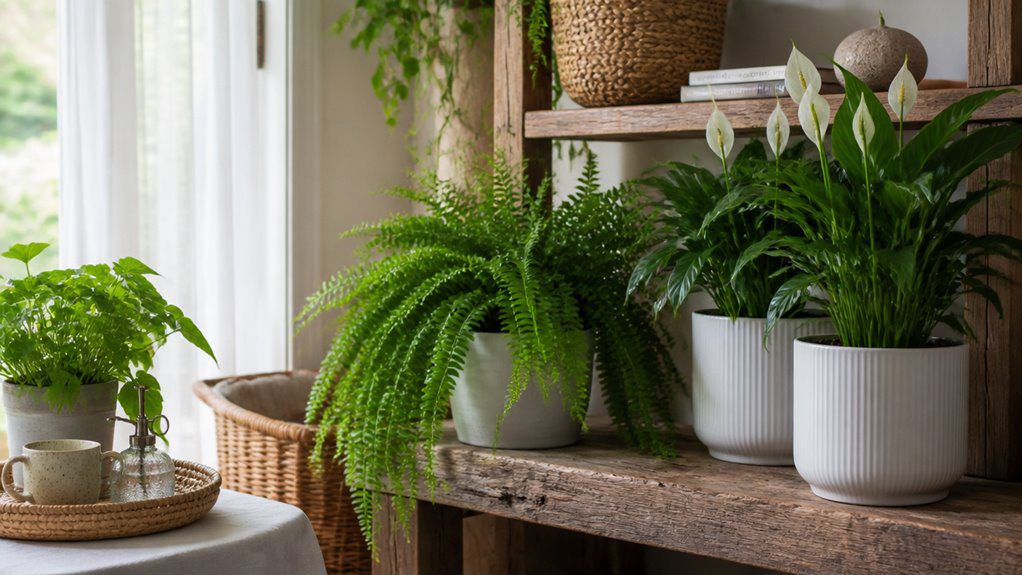
If you don’t have a lot of time or gardening experience, low-maintenance shade plants are a great choice. They need minimal effort, little watering, feeding, or pruning, so they’re perfect for beginners. Many are pest-resistant and thrive in shady spots, making your garden safer and easier to care for. Save time and enjoy a lush, attractive shaded space with these hardy plants. Incorporating plants like the Boston Fern or Calathea Orbifolia, which thrive in indirect light and require high humidity, can enhance your shaded garden area for optimal growth conditions. Additionally, choosing plants that are well-suited to ground cover plants can help create a beautiful, low-maintenance ecosystem that suppresses weeds and stabilizes soil.
How to Pick the Best Shade Plants That Need Less Care
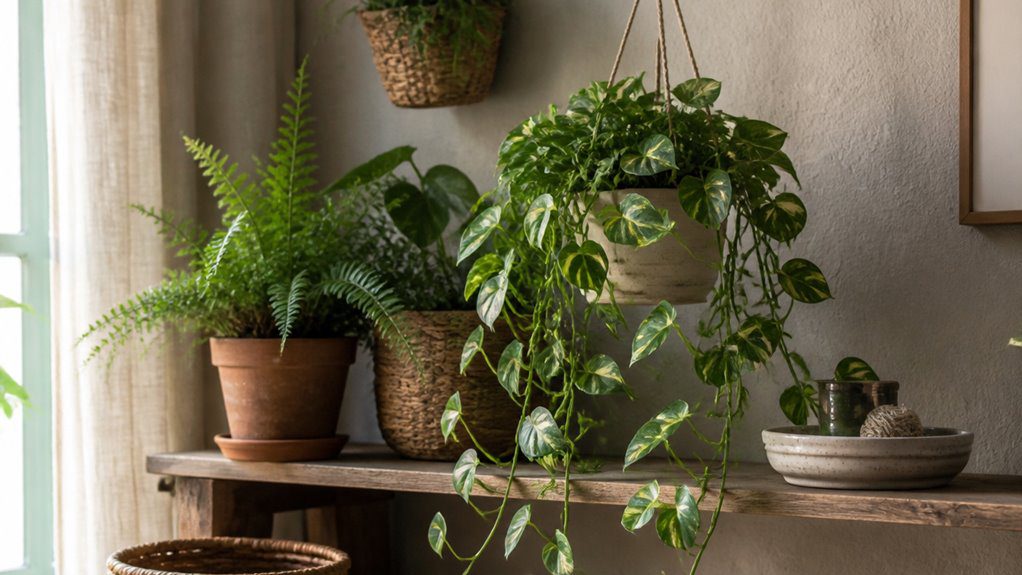
Picking the right shade plants that need less care is easier than you think. Choose shade-tolerant plants that grow well in moist soil. Look for low-maintenance options, like groundcovers and perennials, suited for your shade type. Use mulch to keep soil moist and reduce watering. Stick to plants that require less fuss, and you’ll have a lovely, stress-free garden! Incorporating colorful plants can add vibrancy without demanding extra attention. Selecting plants with shade tolerance and minimal maintenance can make gardening more enjoyable and less demanding.
Key Traits of Easy Shade Plants
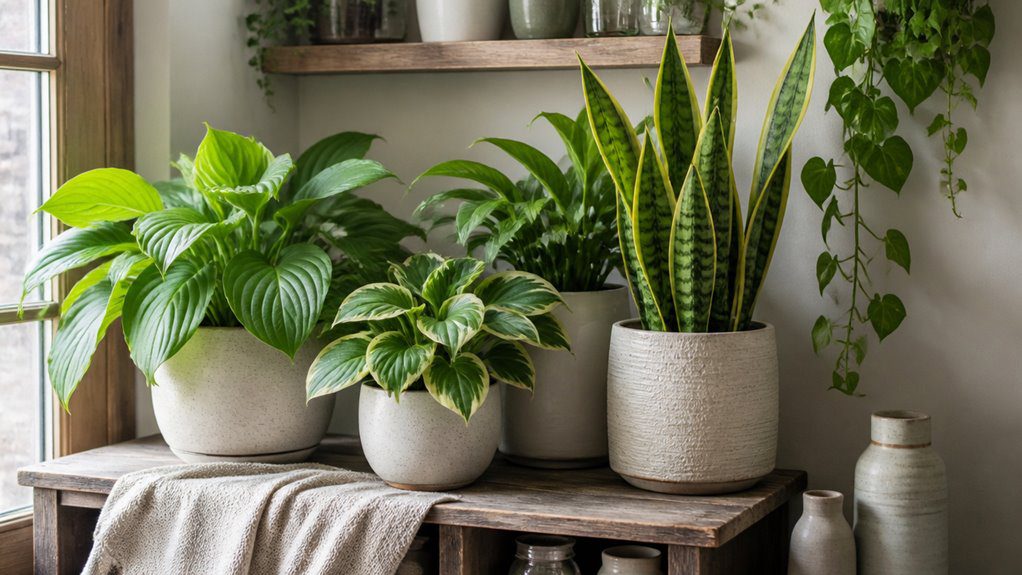
Easy shade plants share some key traits that make them perfect for low-maintenance gardening. Look for plants with heart-shaped leaves, which can add charm. They often grow well in dry shade, needing little water or fuss. These plants are resilient, long-lasting, and don’t require frequent pruning, making your gardening safer, easier, and more relaxed.
Abelia: A Versatile Shrub for Shady Spots
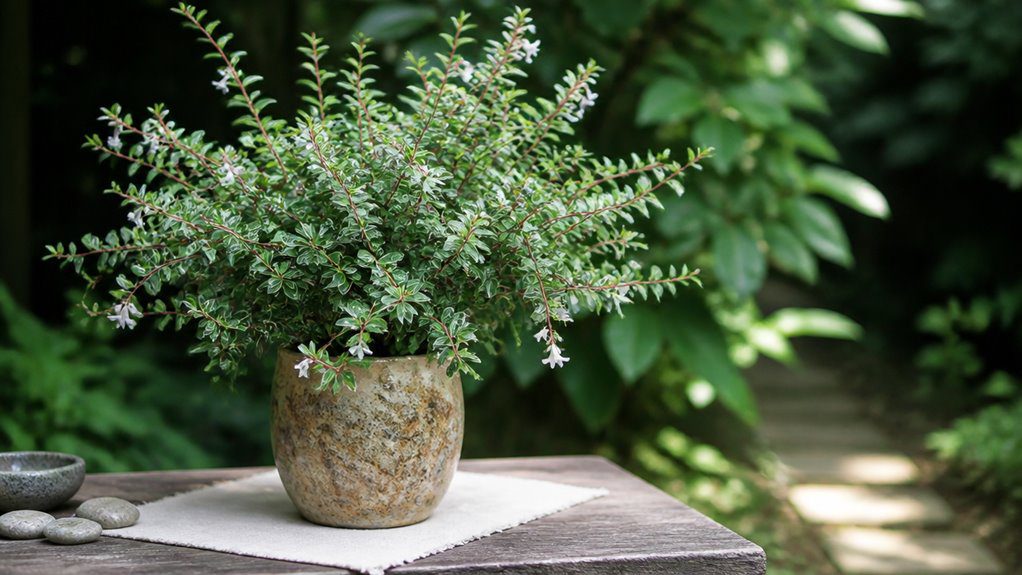
Abelia is a great shrub that works well in shady spots, but it can also handle some sun. Look for varieties like Funshine® or ‘Kaleidoscope’ with variegated foliage for extra color. Use it in hanging baskets or plant it as a versatile shrub. It’s low-maintenance, keeps its glossy leaves, and provides flowers from spring to fall.
Astilbe: Bright, Fluffy Flowers With Minimal Fuss
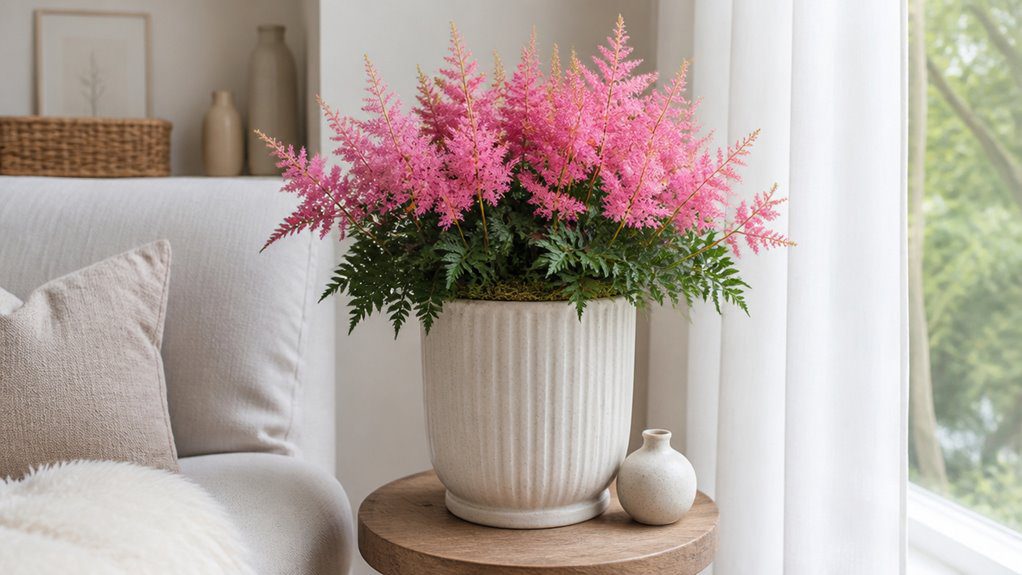
Astilbe adds soft, fluffy flowers to shady spots in your garden with very little effort. Typically, it grows about 1 to 4 feet tall and about 1 to 2 feet wide. It prefers moist, well-drained soil and partial shade. Once established, just water and prune lightly. Enjoy bright, airy blooms that brighten shady corners safely and easily!
Begonia: Colorful Blooms That Tolerate Dry Shade
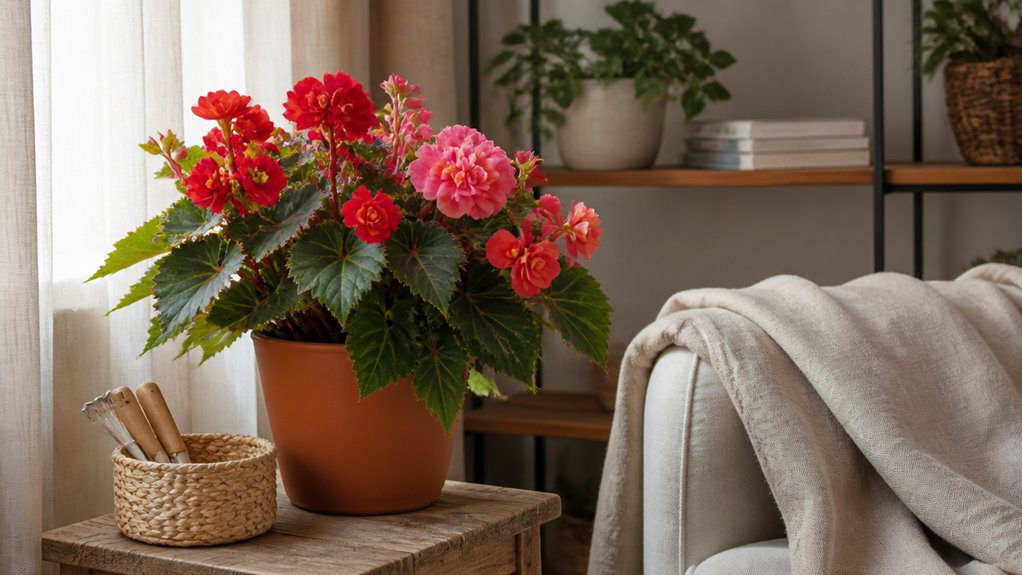
Begonias are perfect for shady spots that don’t get much sun, because they love dry shade. You can easily shade plant propagation by dividing or cuttings. They are tolerant of low light, making seasonal shade plant care simple. Water regularly, use well-drained soil, and enjoy their colorful blooms and decorative leaves. Begonias bring vibrant life with little fuss!
Bleeding Heart: Romantic Flowers for Partial Shade
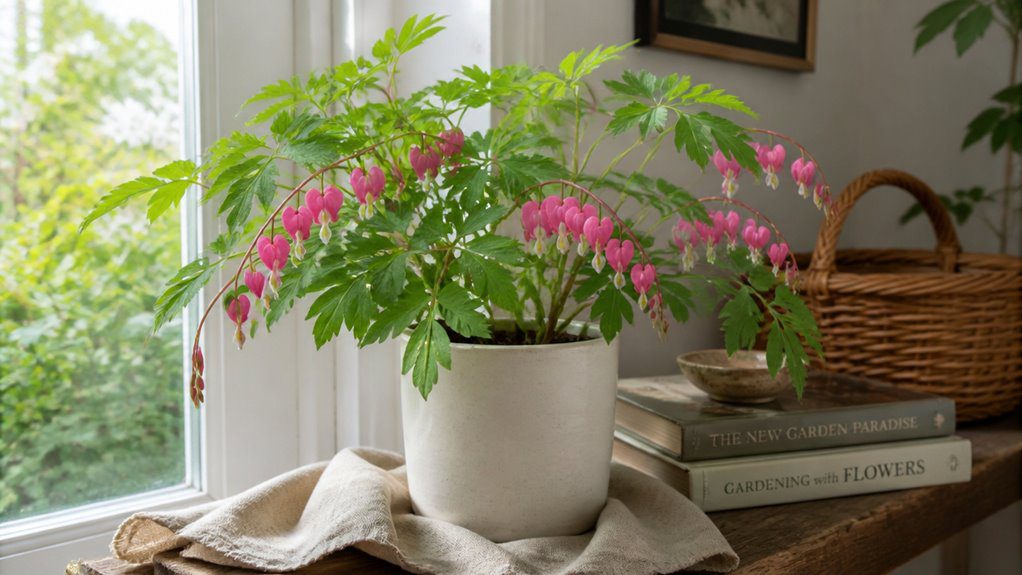
If you’re looking to add a touch of romance to shaded areas, Bleeding Heart is an ideal selection. Use a gentle garden layout with moist, rich soil.Prune carefully after flowering using simple techniques. Provide seasonal care by watering regularly and ensuring good drainage. This plant’s flowing, pink or white flowers make shaded spots feel charming and cozy. It’s an easy, lovely choice for partial shade gardens.
Caladium: Vibrant Foliage to Brighten Dark Corners
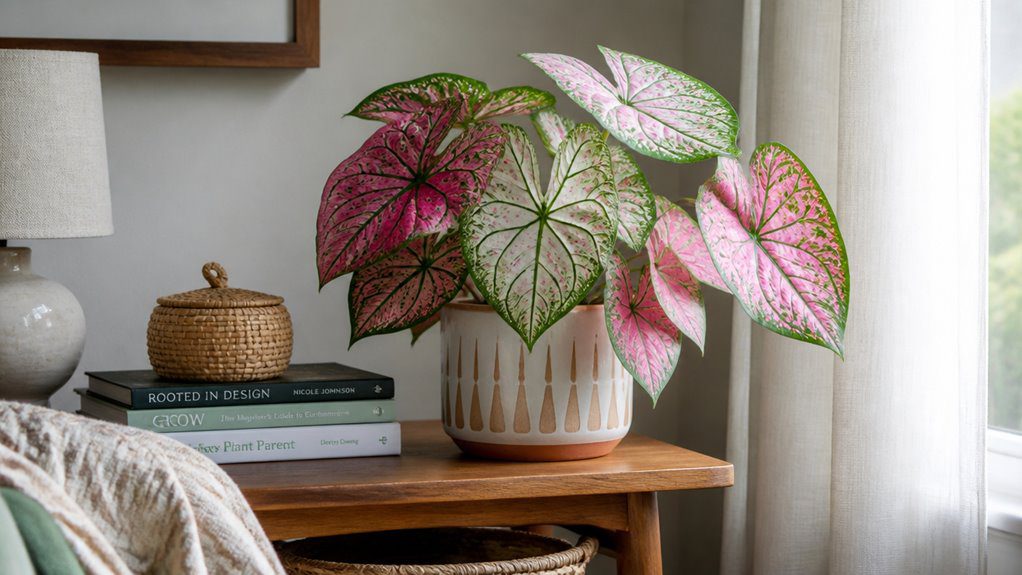
Caladiums are perfect for brightening up dark corners in your garden. They thrive in partial to full shade with warm temperatures and high humidity. Use companion planting to pair them with safe plants. Rotate seasonal plants regularly and check for pests to keep Caladiums healthy. Water regularly with well-draining soil for the best, vibrant foliage.
Coleus: Colorful Foliage for Easy Container Gardening
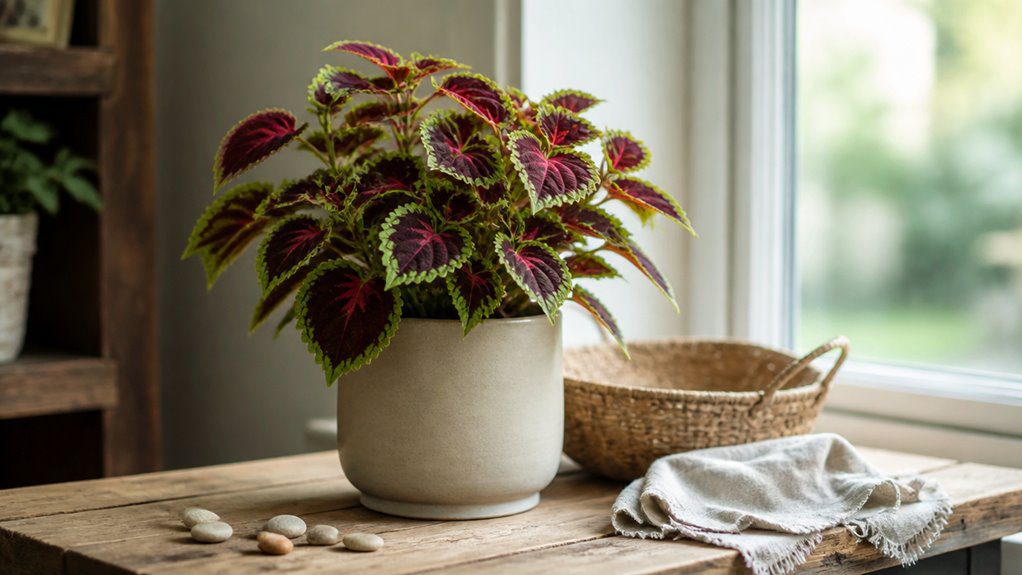
Coleus plants bring a splash of color to any garden, especially when you want eye-catching foliage. With their colorful foliage, they’re great for container planting. They tolerate some drought, but keep soil moist. Choose a spot with partial shade or sun, and you’ll enjoy easy, safe, low-maintenance beauty that brightens your garden without fuss.
Coral Bells: Stunning Foliage and Low Maintenance
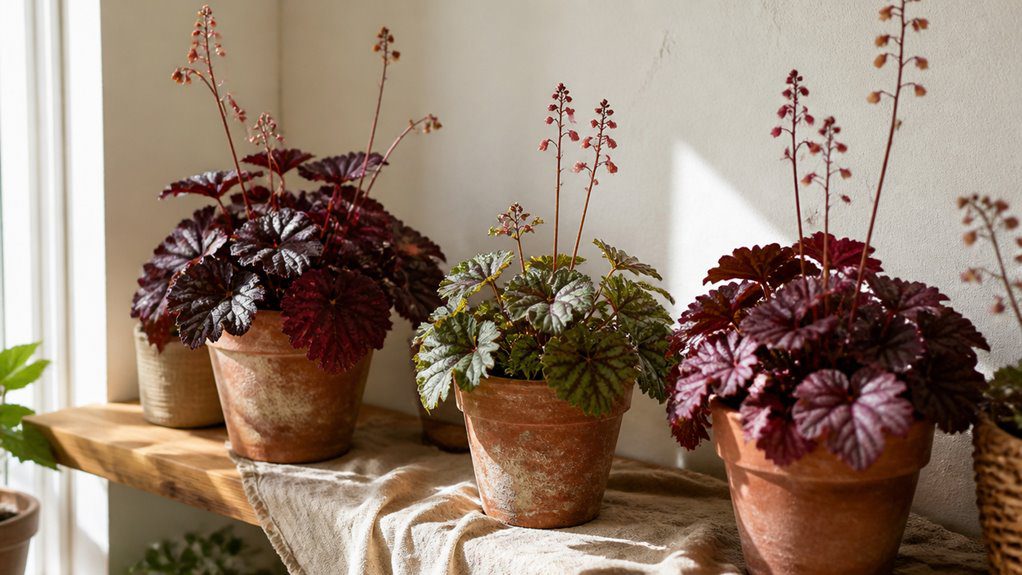
Coral Bells are fantastic plants for any garden, especially if you love colorful foliage that really pops. The diverse foliage colors range from lemon yellow to deep burgundy, adding a splash of life. They grow between 6 inches and 3-1/2 feet tall. Bloom timing is late spring to early summer with pink, white, or lavender flowers, creating seasonal cheer.
Deadnettle (Lamium): Silver Groundcover for Shade
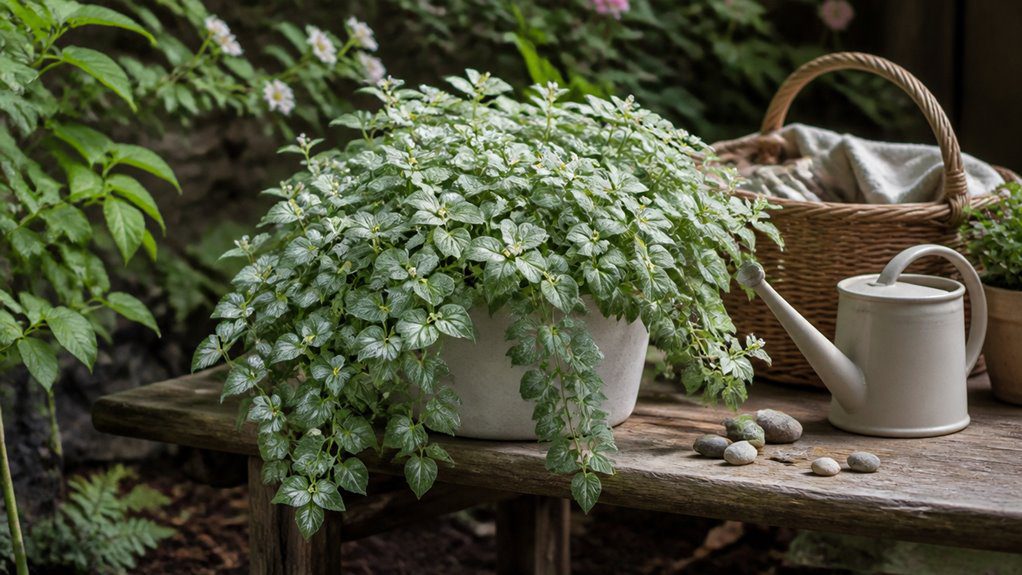
Deadnettle, also called Lamium, is a perfect groundcover for shady spots in your garden. Use pruning techniques to keep it neat and prevent it from spreading too much. Add soil amendment to improve drainage and health. Plant it with other shade lovers for good company. It’s safe, low-maintenance, and loves moist, well-drained soil, happy gardening!
Ferns: Lush, Low-Work Plants for Deep Shade
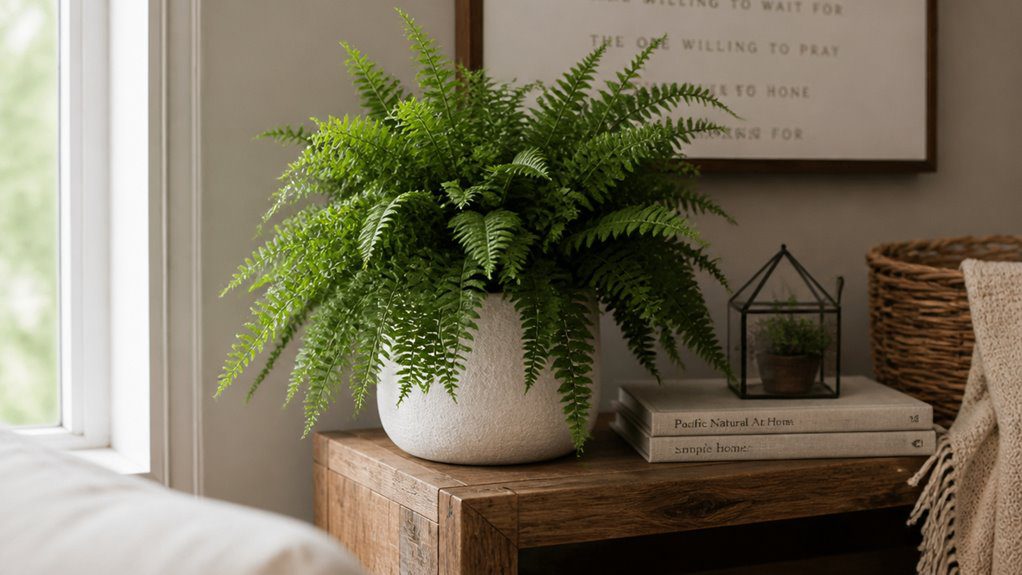
Ferns are a fantastic choice if you want lush greenery in deep shade without a lot of work. For easy fern care, pick types like Boston or maidenhair, known for their shade tolerance. An evergreen variety keeps your garden lively year-round. Just keep the soil moist and well-drained, and these low-maintenance plants will thrive with minimal effort and fuss.
Foamflower: Delicate Blooms and Decorative Foliage
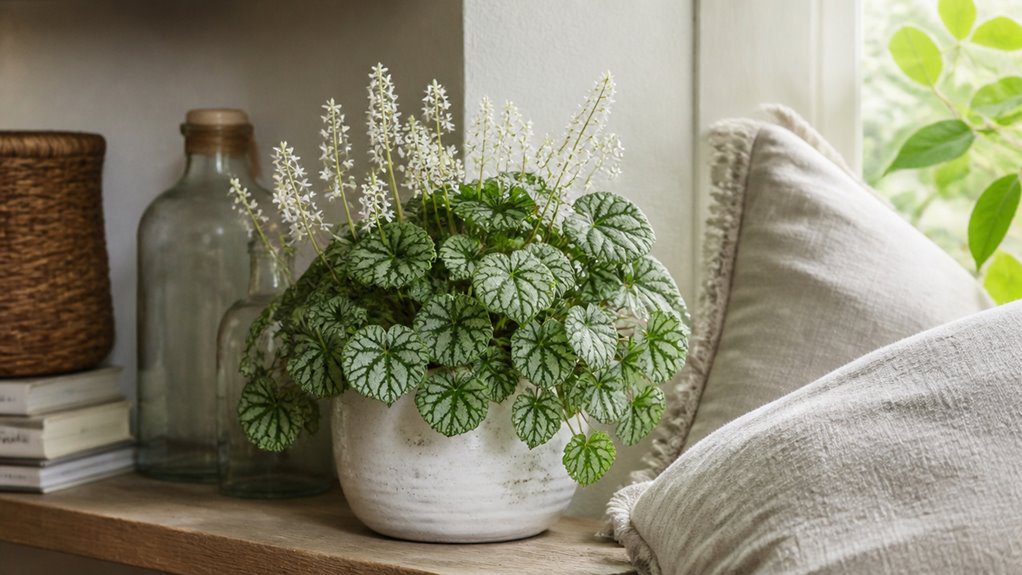
Ever want a plant that’s both pretty and easy to care for? Foamflower fits the bill. Its foliage patterning adds charm, with deep green or variegated leaves that show intricate markings. Bloom timing happens in spring, with delicate white or pale pink flowers. Growing just 6-12 inches tall, it’s perfect as groundcover in shaded spots that need little fuss.
Hosta: Classic Shade Plant for Texture and Color
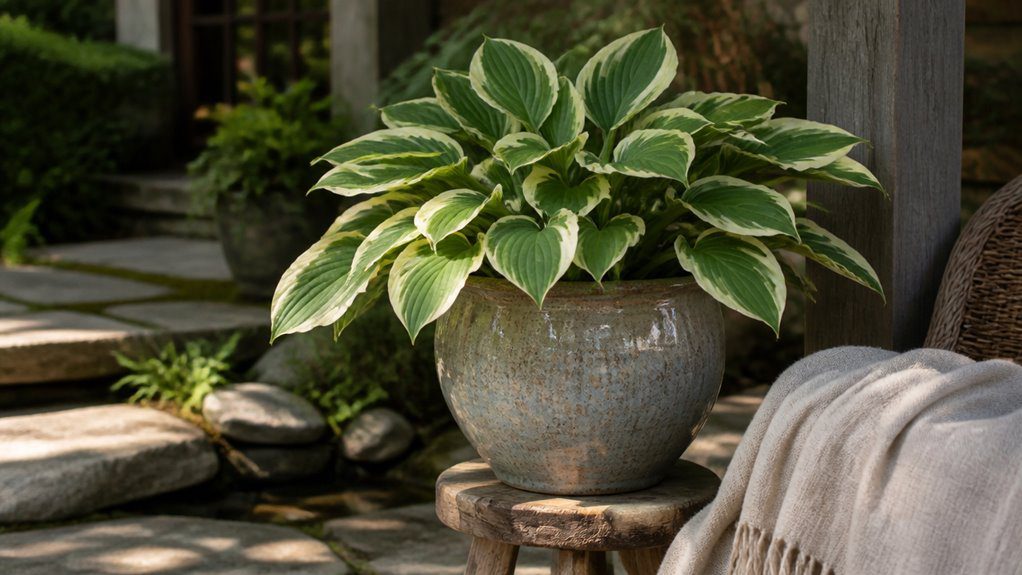
Hostas are a favorite shade plant because they add lots of texture and color without much fuss. To grow them, try shade plant propagation by dividing clumps in early spring. Prepare soil well with compost, and water regularly. Use seasonal pruning methods to keep leaves tidy and encourage healthy growth. These low-maintenance plants brighten shady spots easily and safely.
How to Water Shade Plants Without Overwatering?
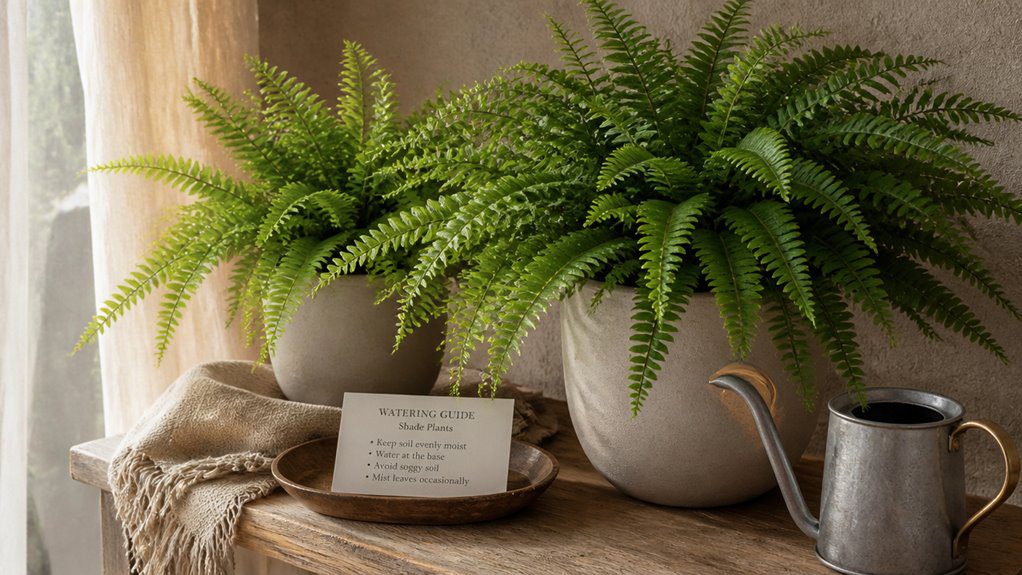
Since shade plants dislike sitting in water, watering them wisely is key. Use watering techniques like drip or soaker hoses for gentle, steady moisture. Check if the top inch feels dry before watering again. Deep, infrequent watering helps moisture retention and encourages strong growth, keeping roots healthy and happy without the risk of overwatering.
Choosing the Right Soil for Shady Gardens?
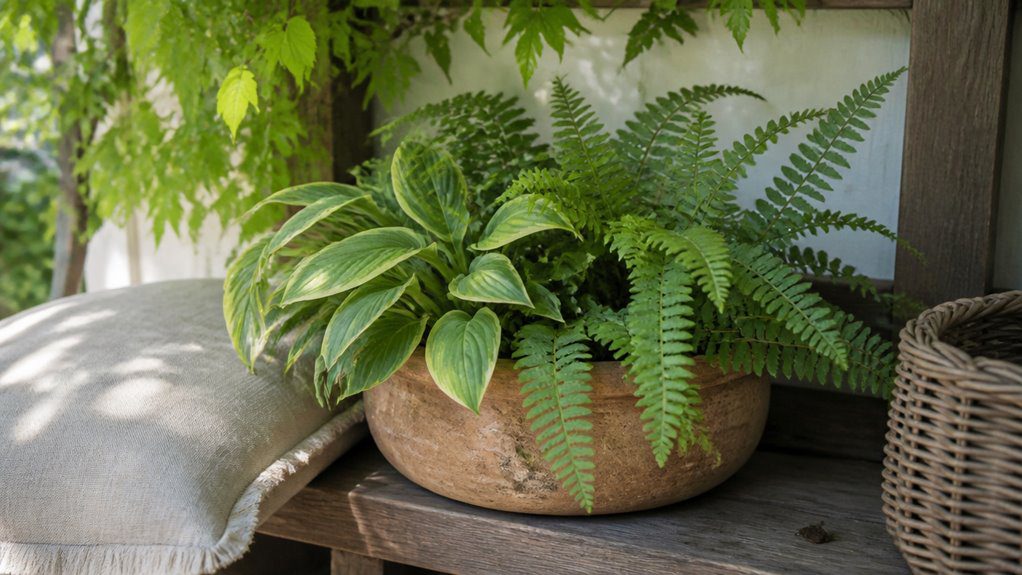
Choosing the right soil is key to happy shade plants. Do a soil testing to check nutrients and pH levels. Adjust pH if needed, especially for plants like azaleas. Add organic amendments like compost to boost soil fertility and help moisture stay put. Happy, healthy plants love well-prepared soil that’s just right for their needs!
Mulching Tips for Low-Maintenance Shade Gardens?
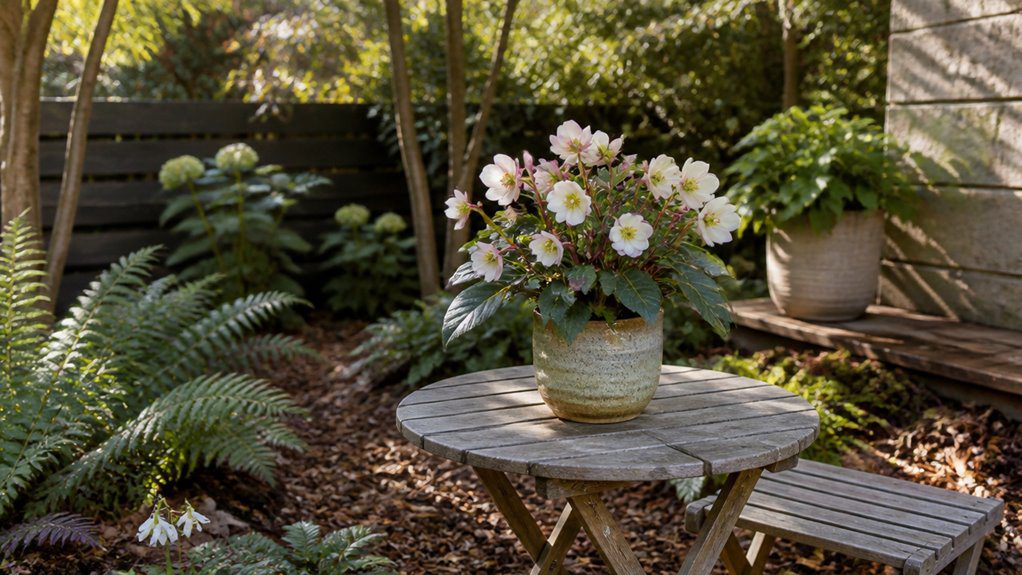
Mulching is a simple trick that makes caring for shade gardens much easier. It helps retain soil moisture, which means less watering. Use 2-3 inches of mulch like shredded bark or compost for better soil drainage. Combine with companion planting to protect plants. Keep mulch fresh yearly and choose good mulching types for steady temperature and weed control.
Pest and Disease Prevention for Shade Plants?
Keeping your shade plants healthy is easier when you stay ahead of pests and diseases. Practice pest prevention by inspecting plants regularly, catching problems early. Improve disease management with good air circulation, healthy soil, and proper watering. Remove any diseased or pest-infested leaves quickly. Using mulch also helps keep pests away. Stay vigilant, and your shade garden will thrive!
Combining Shade Plants for Visual Interest?
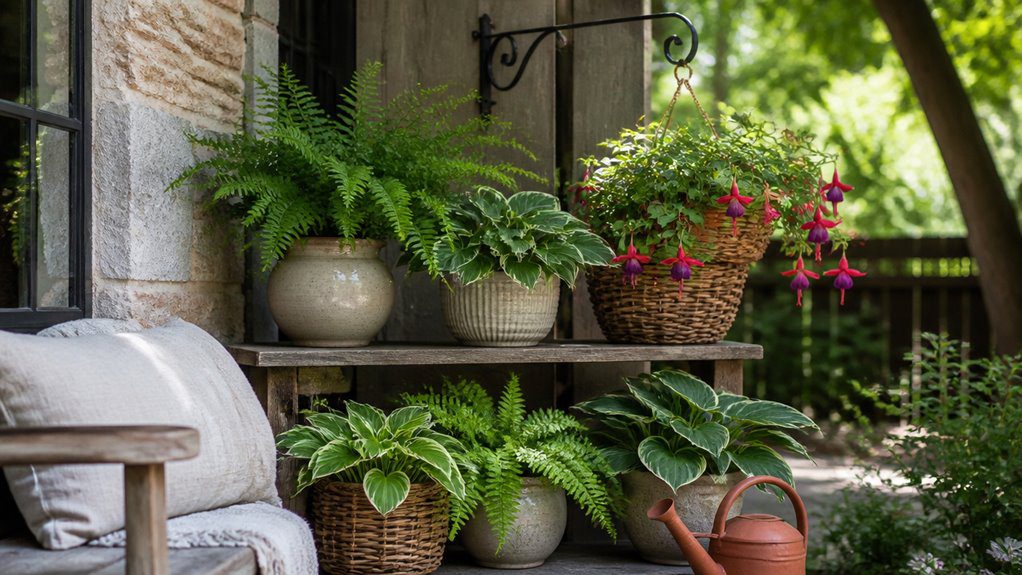
To make your shaded garden pop, try combining different shade plants that have various leaf textures and colors. Focus on plant pairing to create foliage contrast, making each plant stand out. Use a layered design by placing taller plants behind low-growing groundcovers. Mix evergreen and deciduous plants for interest year-round, keeping safety and soil needs in mind.
Common Mistakes in Low-Effort Shade Gardening?
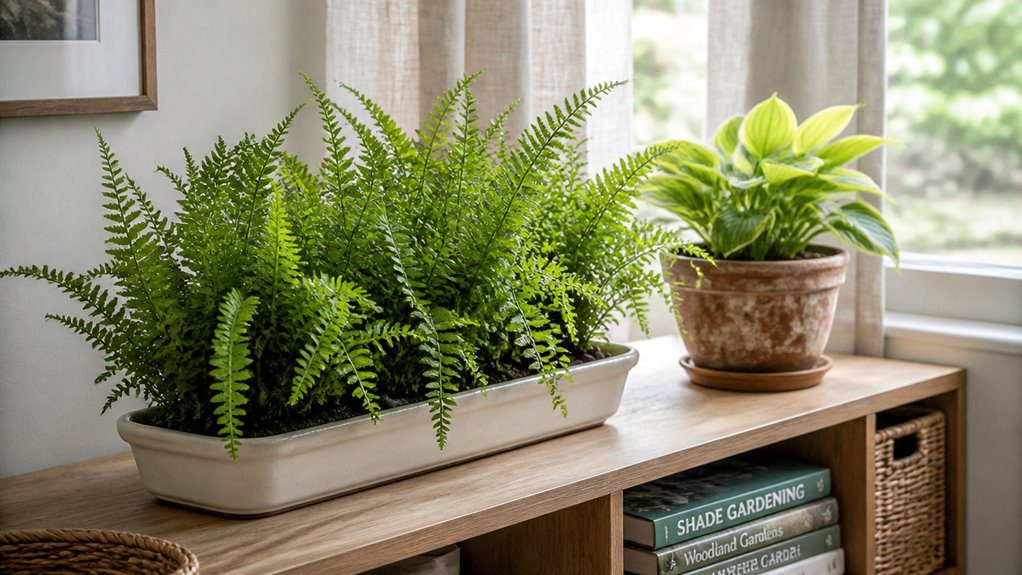
Even if you want a low-effort garden, it’s easy to make mistakes that can cause trouble. Don’t forget proper garden lighting to protect plants and highlight your shade garden. Avoid over or underwatering, and don’t ignore plant pruning. Plan seasonal planting well, and research each plant’s preferred soil and shade level for healthy, happy growth!
Final Tips for a Thriving, Low-Maintenance Shade Garden?
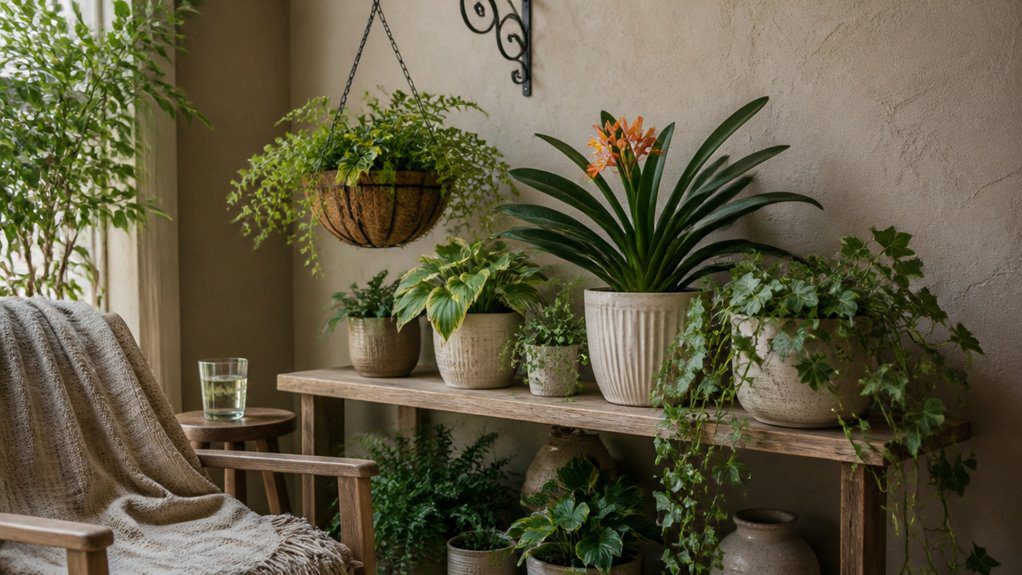
A few simple tips can make your shade garden thrive without extra effort. Plan your shade garden layout carefully, grouping plants with similar needs. Manage sunlight by planting in shaded areas, and do seasonal plant rotation to keep everything fresh. Use organic mulch, water wisely, and remove dead leaves to keep your shade garden safe, healthy, and low-maintenance.
Final Takeaways
Starting a low-maintenance shade garden means less work and more relaxing. With the right plants, you can enjoy lush greenery without fuss. Think about your space, pick hardy plants, and avoid common mistakes. Remember, a little planning goes a long way. So, why not create a cozy, green retreat that stays healthy with minimal effort? Grab your outdoor gloves, and let your shaded paradise grow, easy, fun, and beautifully simple!