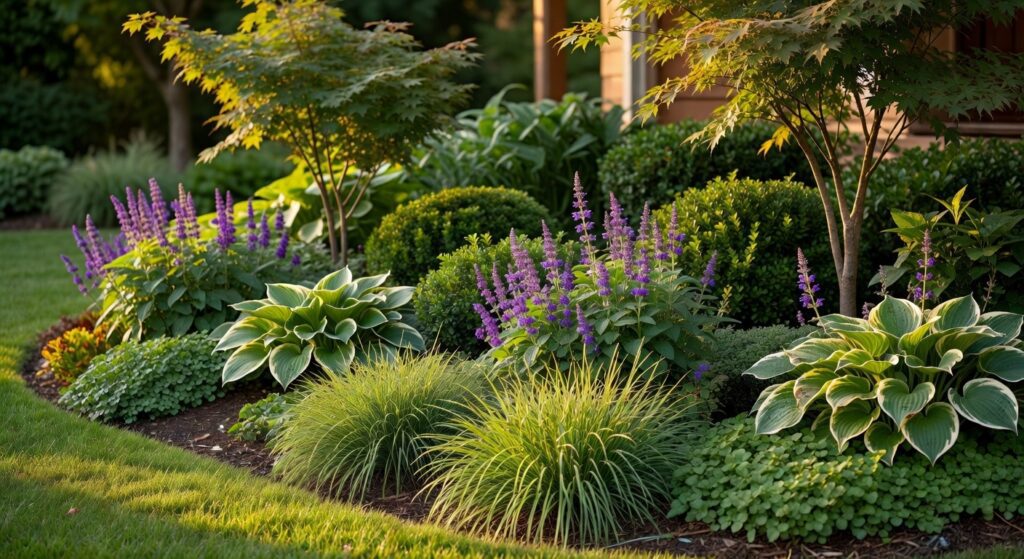
You might think a stunning front yard requires constant work, but it doesn’t. Choose low-maintenance perennials like lavender, sedum, and black-eyed Susans. These plants thrive with minimal care. Group them in clusters of three or five for impact. Space lavender 18–24 inches apart for airflow. Use evergreen shrubs like boxwood as anchors. They stay green all year and need pruning only once or twice annually.
Boost Curb Appeal With These Top Front Yard Plants
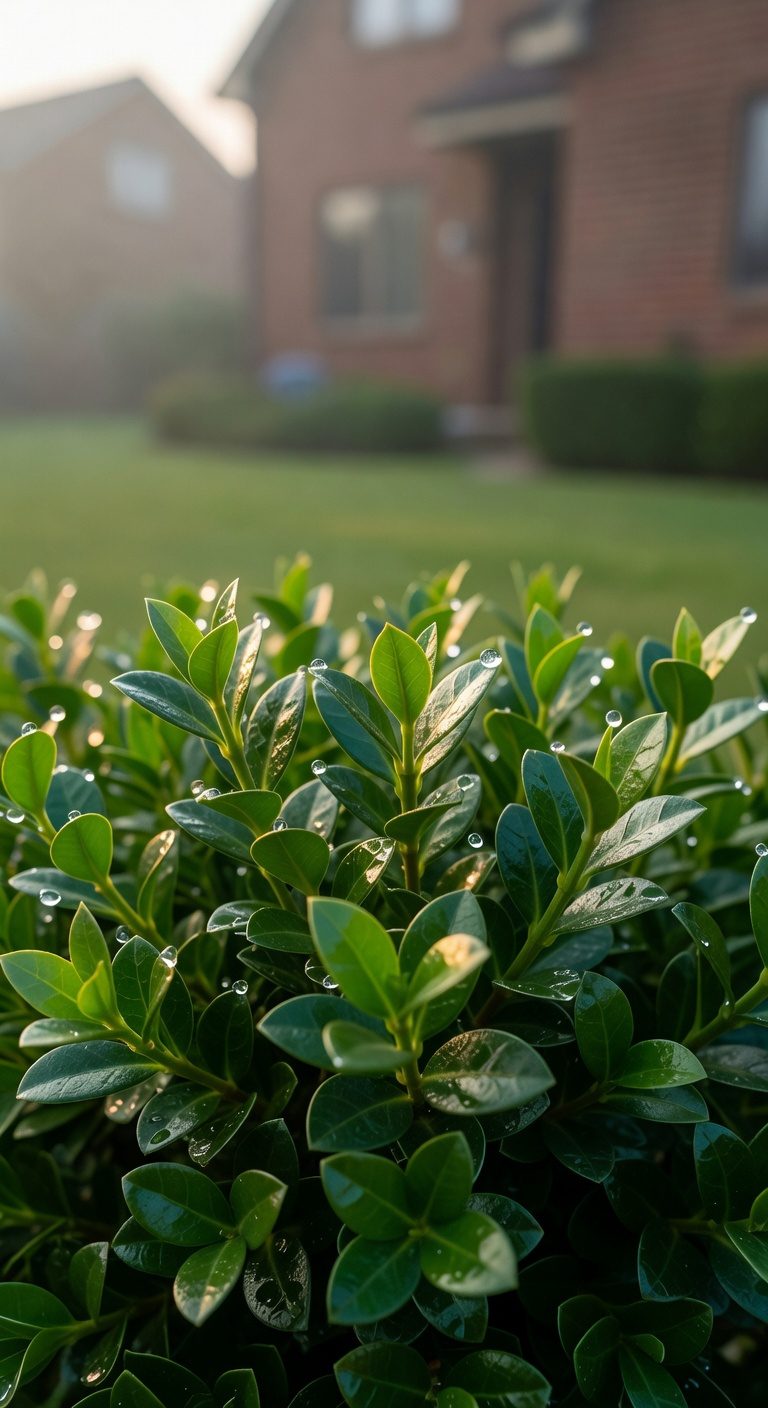
When choosing plants to boost your front yard’s curb appeal, focus on species that offer visual interest year-round and require minimal upkeep. A strong landscape design balances structure and color. Use evergreen shrubs like boxwood (2–3 ft tall) as anchors.
Add seasonal blooms for predictable color.
- Spring: Plant tulips (12 in. height) in fall; they bloom April–May.
- Summer: Use daylilies (24 in. spread); they flower June–August.
- Fall: Include mums (18 in. width); they thrive September–October.
Place taller plants toward the back, shorter ones near walkways. Space each 18–24 in. apart for healthy root growth. Consider incorporating native wildflowers to enhance biodiversity while reducing maintenance demands in your front yard landscape. Hardy perennials like thyme offer year-round visual appeal with minimal care requirements.
Water new plants twice weekly for 6 weeks. Then, reduce to once weekly. Mulch beds yearly with 2 in. of compost. This keeps roots insulated and soil nutrient-rich.
With a few smart choices, your yard stays neat, safe, and inviting all year.
Choose Drought-Tolerant Perennials Like Lavender and Sedum
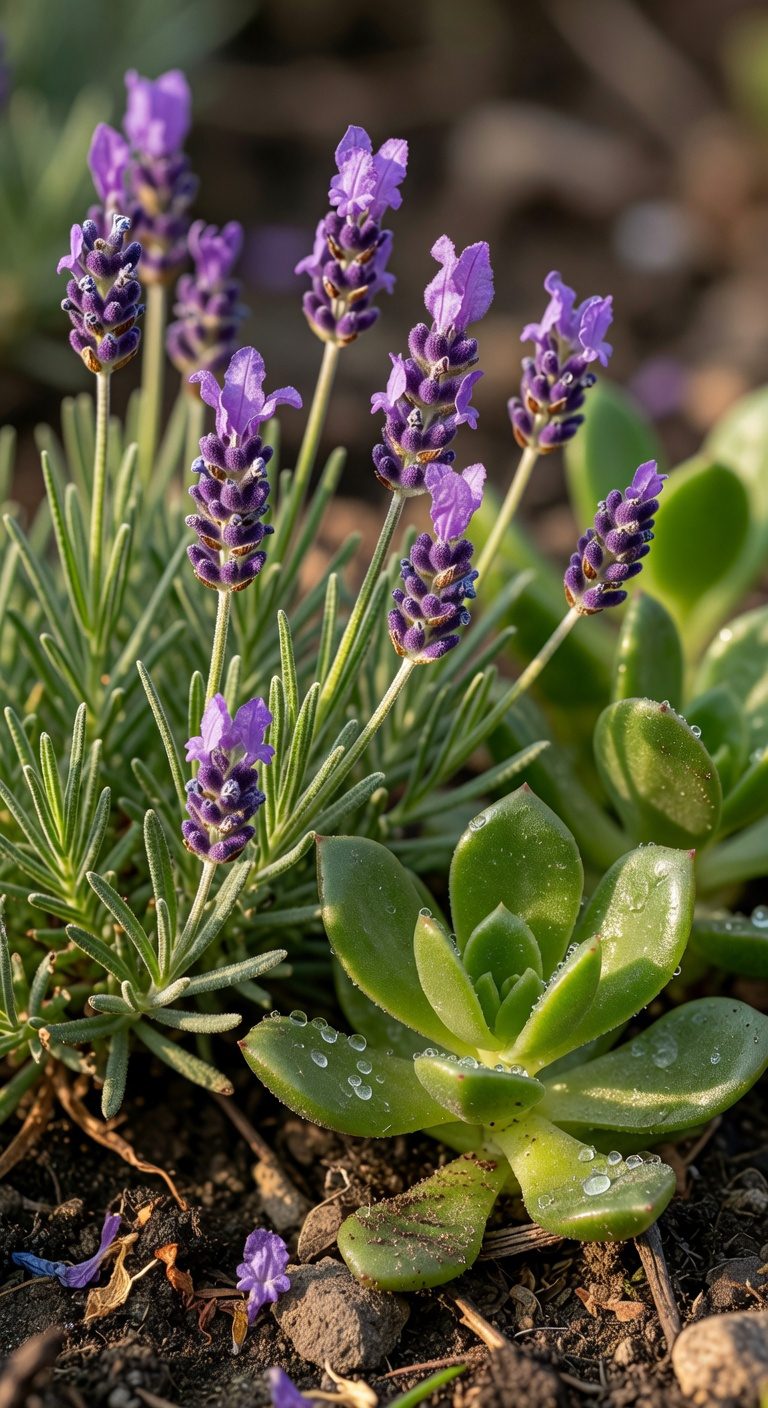
Lavender and sedum are tough, low-water perennials that thrive in front yard beds with little maintenance. Choose them for their drought resilience and long-term perennial benefits. Both survive with minimal care once established.
Lavender (Lavandula spp.)
- Mature height: 12–36 inches
- Spacing: 18–24 inches apart
- Water: Deeply every 2–3 weeks after establishment
- Sun: Full sun (6+ hours daily)
- Zones: 5–9
Sedum (Stonecrop)
- Mature height: 6–24 inches
- Spacing: 12–18 inches apart
- Water: Every 3–4 weeks once rooted
- Sun: Full to partial sun
- Zones: 3–11
Both resist deer and pests, reducing home risks. They form stable root systems in well-drained soil.
Mulch lightly with gravel or sand. Avoid overwatering. Spring pruning improves shape. These low-maintenance plants are ideal for sustainable landscaping practices that reduce ongoing garden demands.
These perennials return yearly, lowering replacement needs. Prioritize drought resilience to save time, water, and effort. You get reliable color and structure with minimal input. Lavender’s calming properties make it an ideal choice for front yards that double as peaceful outdoor spaces.
Frame Your Home With Low-Maintenance Foundation Shrubs
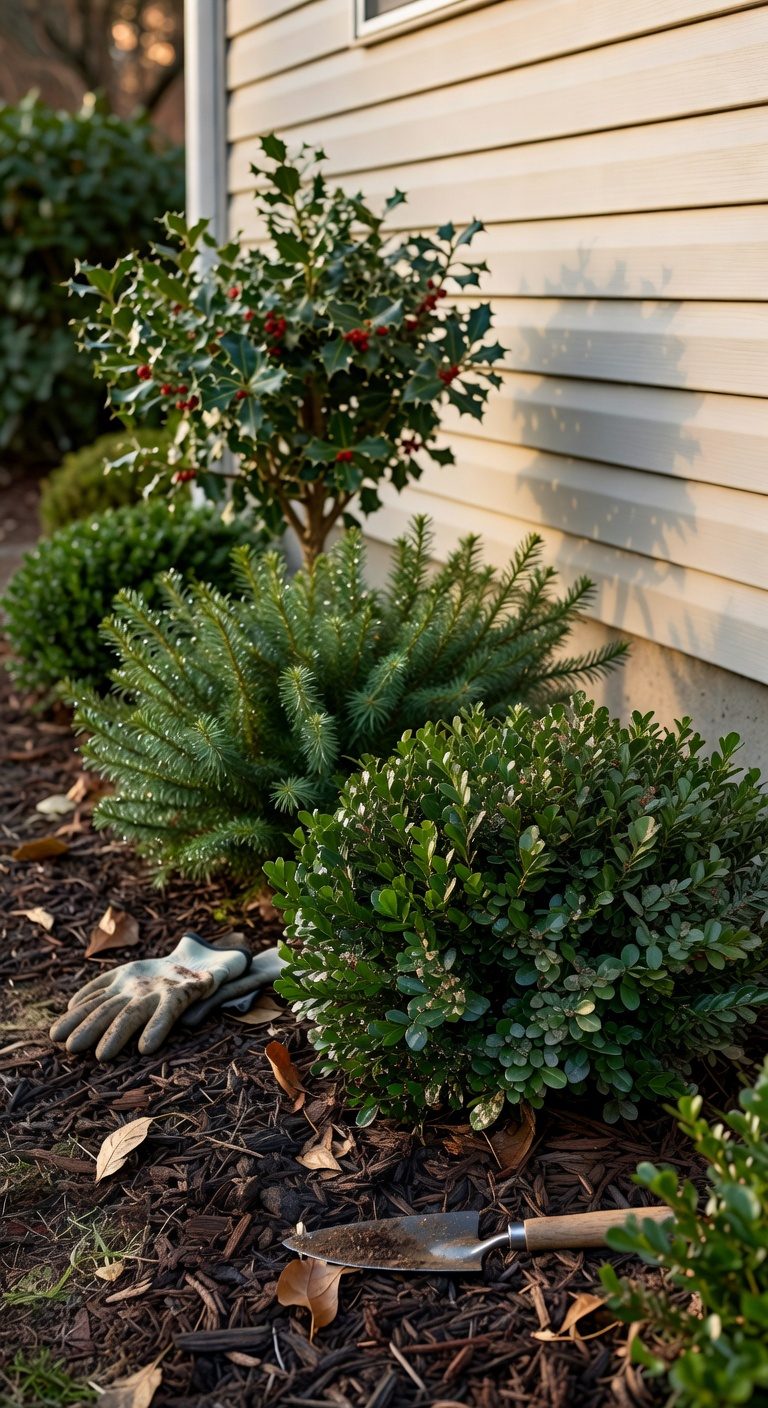
Why let high-maintenance shrubs dominate your foundation planting? Choose a low-care shrub variety to enhance your home’s curb appeal safely. Use these steps for a clean foundation design:
- Pick shrubs under 4 feet tall at maturity to avoid blocking windows.
- Space plants 3–5 feet apart, measured from center to center.
- Plant in well-drained soil, 6–12 inches from the house foundation.
Good options include dwarf abelia, inkberry holly, or oakleaf hydrangea. These tolerate drought and resist pests.
Water weekly for the first two months. After that, rain is usually enough.
Prune once per year in late winter to maintain shape.
Mulch with 2 inches of shredded bark to reduce weeds and hold moisture.
Like indoor plants, foundation shrubs benefit from regular planter selection and thoughtful placement to ensure they thrive in their designated location.
This shrub variety stays compact and predictable. It supports a secure, clutter-free foundation design you can count on.
Use Evergreens Like Boxwood for Year-Round Structure
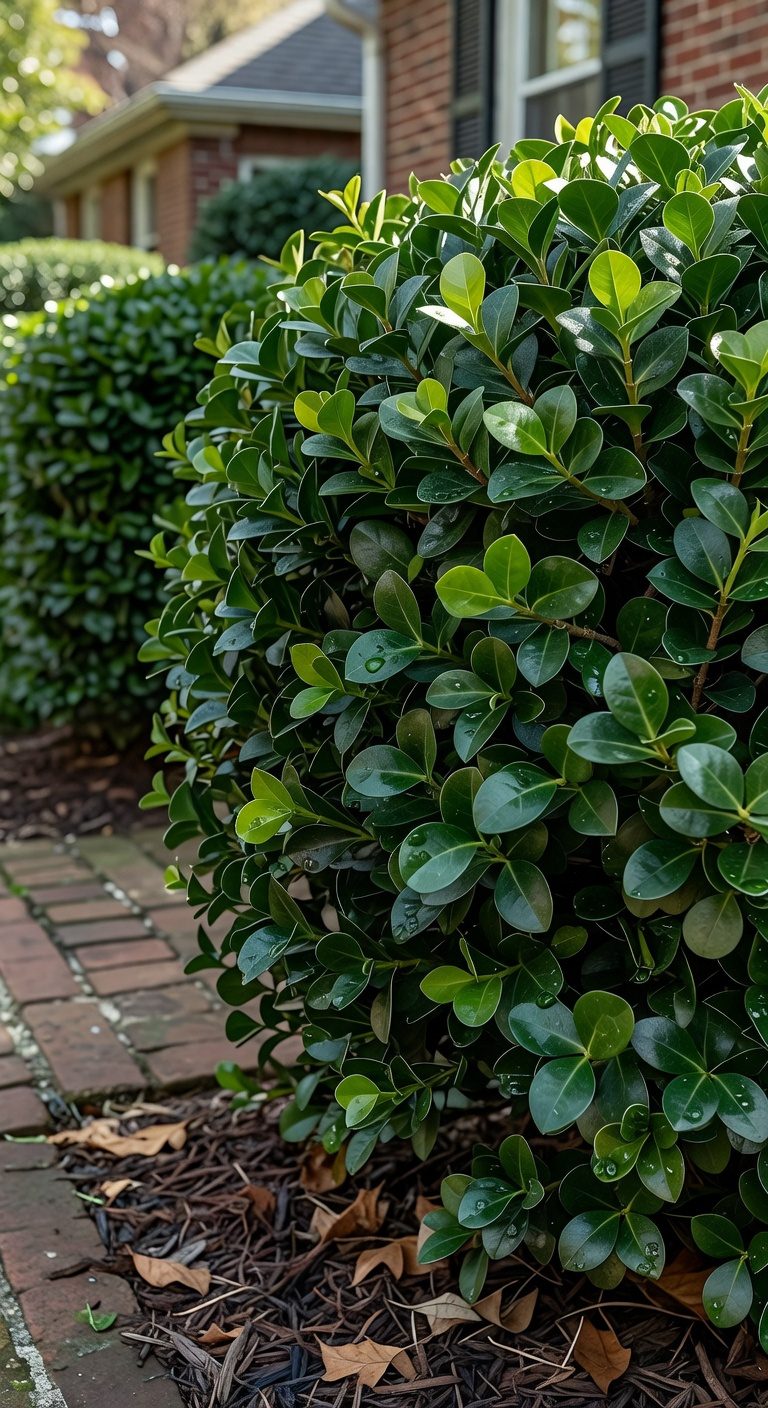
Though deciduous shrubs lose their leaves in winter, evergreens like boxwood keep their foliage year-round, giving your front yard steady structure. You gain clear, safe boundaries along walkways and foundation lines. Evergreen benefits include winter color, noise reduction, and privacy screening.
Plant boxwood varieties such as ‘Wintergreen’ (3–4 ft tall) or ‘Blauer Stern’ (2–3 ft) for compact forms. These shrubs thrive in USDA zones 5–9, prefer full sun to partial shade, and need well-drained soil.
Care schedule:
- Water weekly during first growing season
- Mulch annually in spring
- Prune lightly in late spring to shape
Space plants 2–3 ft apart for hedges. Use slow-release fertilizer in early spring. Avoid heavy pruning after August.
Root systems stay shallow, so keep lawn mowers at a safe distance. With little upkeep, your boxwood stays dense and green.
Plant Sun-Loving Coneflowers and Black-Eyed Susans
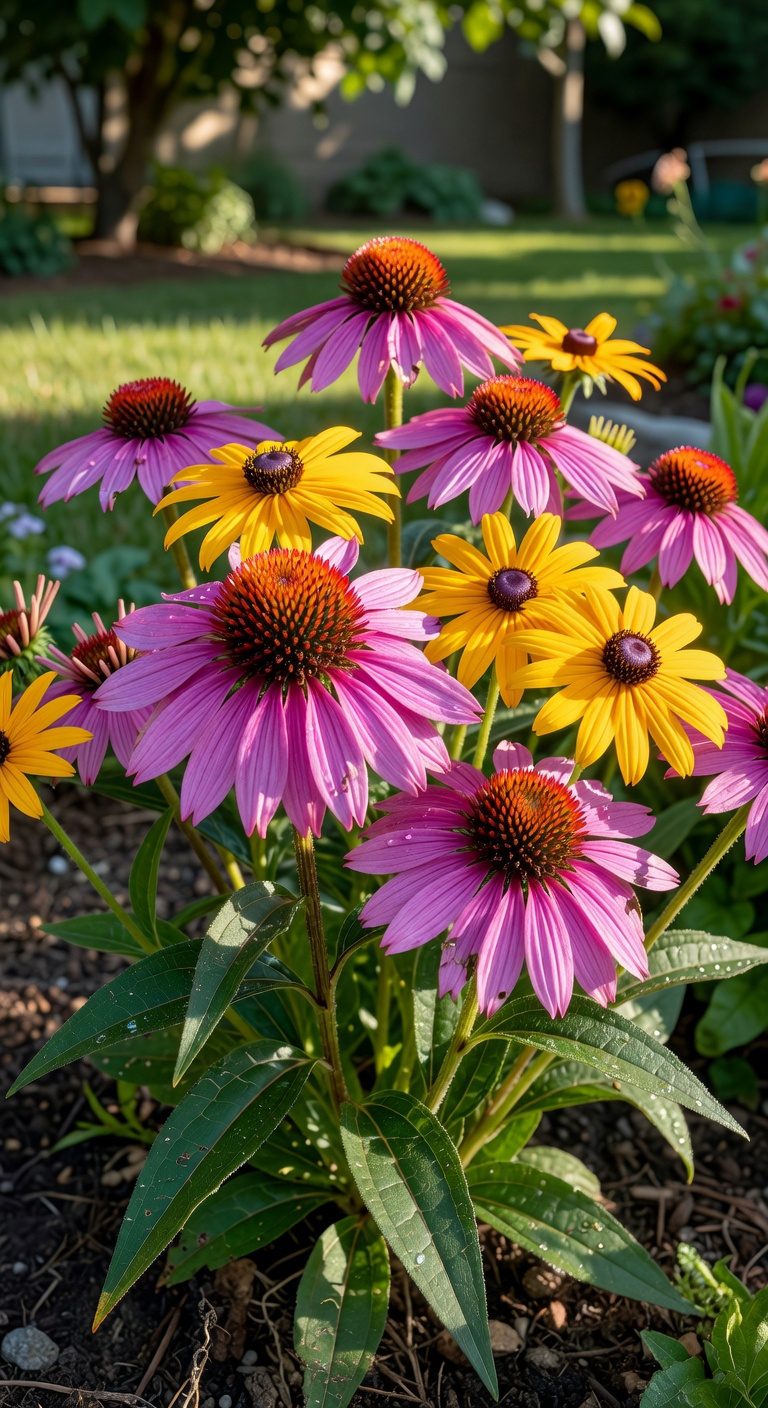
Bright blooms draw the eye and anchor your front yard’s summer appeal, coneflowers (Echinacea) and black-eyed susans (Rudbeckia) deliver just that in full sun.
Plant care is simple: both thrive in well-drained soil and need 6+ hours of direct sunlight daily.
Water weekly during dry spells. Established plants tolerate drought.
Space coneflowers 18–24 inches apart; black-eyed susans 12–18 inches. Both grow 2–3 feet tall.
Deadhead spent flowers to encourage more blooms from June to September.
Use companion planting to boost curb appeal and safety. Pair with ornamental grasses or low-maintenance sedums.
Avoid overcrowding to reduce disease risk.
Both attract pollinators but resist deer and rabbits.
Apply a light mulch layer in spring. Fertilize once in early season with balanced 10-10-10 formula.
Cut back stems in late fall.
These perennials return yearly with minimal effort.
Grow Hostas and Ferns in Shady Front Yard Spots
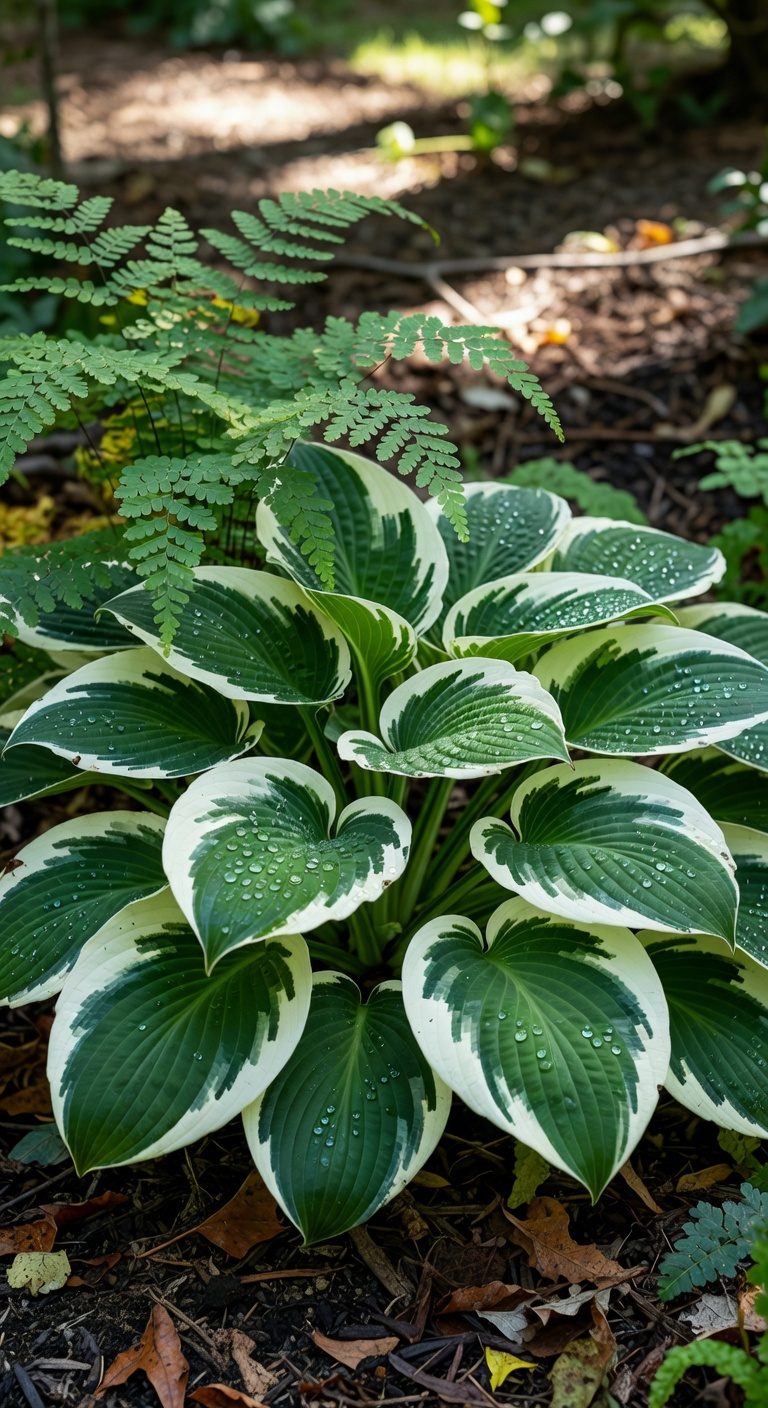
When planting in shady front yard areas, choose hostas and ferns for reliable growth and texture. These plants thrive in low-light conditions and require minimal maintenance.
Hosta Varieties:
- Grow 1 to 3 feet wide, depending on type
- Prefer moist, well-drained soil
- Plant in early spring or fall
- Water weekly; more in dry spells
- Popular types: ‘Patriot’ (variegated), ‘Sum and Substance’ (large leaves)
Fern Types:
- Reach heights of 1 to 2 feet
- Thrive in organic-rich, damp soil
- Mulch to retain moisture
- Avoid direct afternoon sun
- Common picks: Japanese painted fern, autumn fern
Both tolerate shade well and resist most pests.
Space hostas 18–24 inches apart. Ferns spread slowly, plant 12–18 inches apart. No chemical treatments needed. They stay green longer than sun plants.
Replace Grass With Creeping Thyme and Vinca Minor
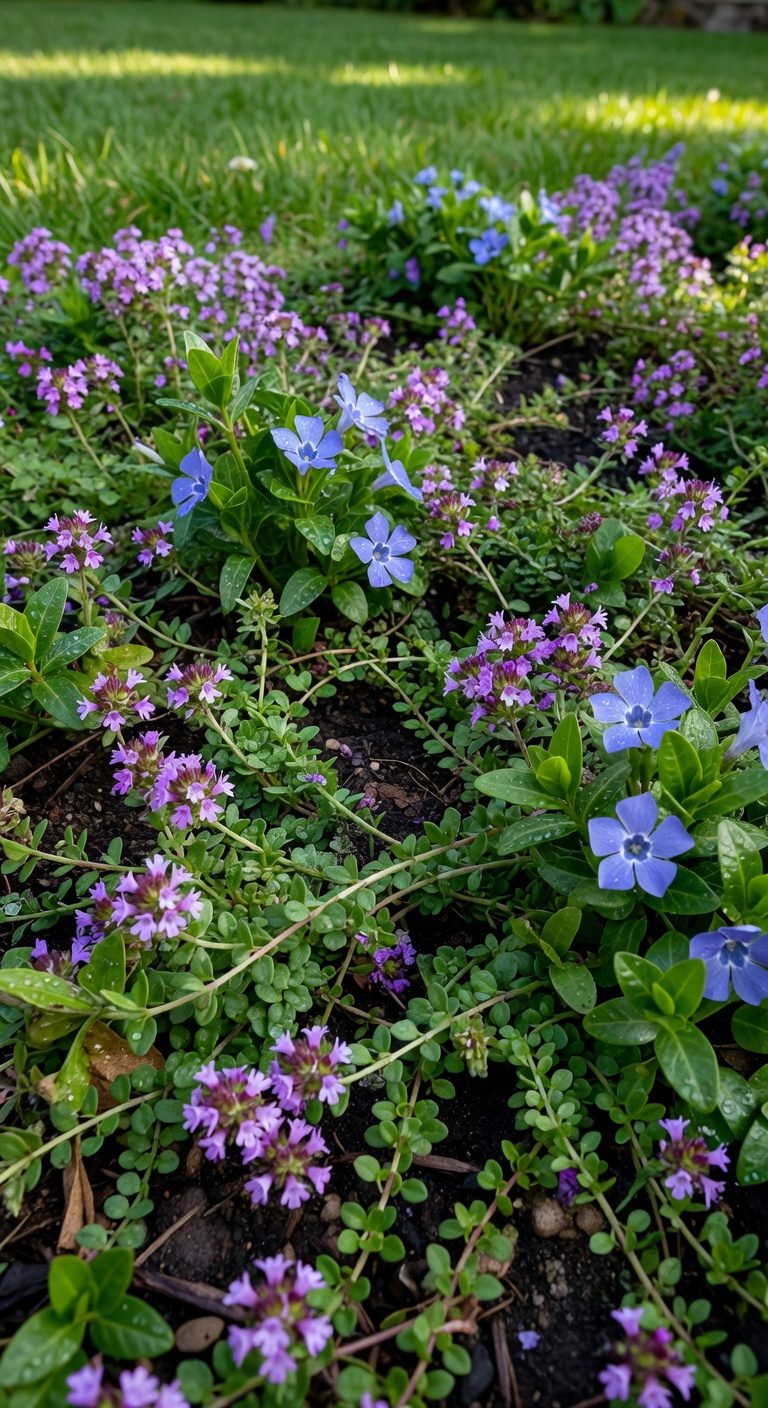
If you’re looking to reduce lawn maintenance, replace grass with creeping thyme or vinca minor in sunny or partly shaded areas.
Both are low-growing, non-toxic ground covers safe for kids and pets.
Creeping thyme benefits include drought tolerance, a height of 2–4 inches, and fragrant foliage. It forms dense mats, suppresses weeds, and blooms with small pink or white flowers in summer.
Plant 8–12 inches apart. Trim lightly after flowering to maintain shape.
Vinca minor uses include stabilizing slopes and filling shaded areas. It reaches 6–8 inches tall with dark green leaves and blue-violet flowers in spring.
Space plants 12–18 inches apart. Water weekly for the first month, then monthly in dry spells.
Avoid walking heavily on either plant. Both resist deer and require no fertilizers.
Mulch around young plants to retain moisture and deter weeds.
Add Texture With Fountain Grass and Blue Oat Grass
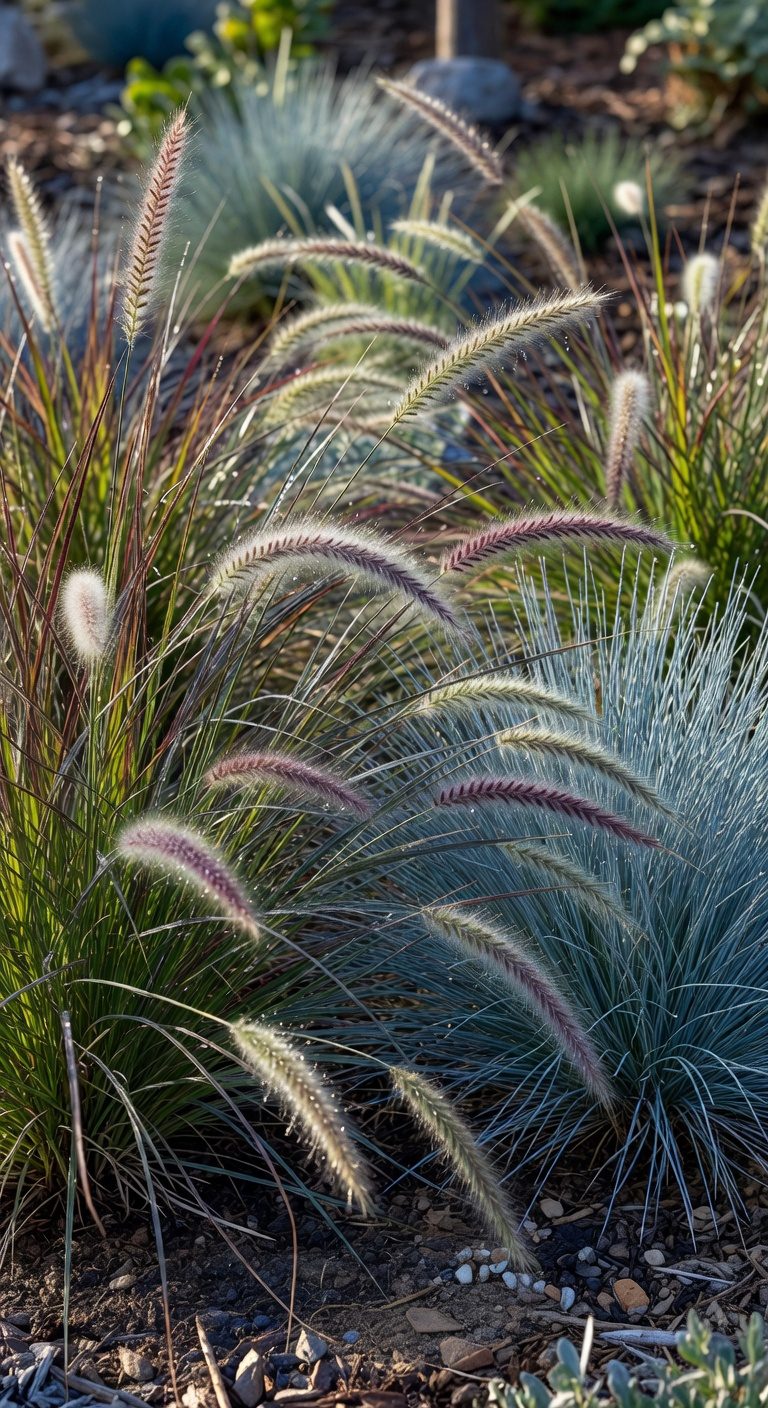
Swap out plain green patches with fountain grass and blue oat grass to bring bold texture to your front yard. These ornamental grasses add safe, low-maintenance visual interest.
Fountain grass (Pennisetum alopecuroides):
- Grows 2–3 feet tall and wide
- Features soft, arching blades and fluffy flower spikes
- Thrives in full sun, well-drained soil
- Water weekly during dry spells
- Trim to 4 inches in late winter
Blue oat grass (Helictotrichon sempervirens):
- Reaches 1–2 feet tall with a 2-foot spread
- Displays silvery-blue blades and open seed heads
- Prefers full sun, tolerates light shade
- Drought-tolerant once established
- Cut back lightly in early spring
Both grasses resist deer and require no harsh chemicals.
Plant in groups of three for balanced texture. Space fountain grass 24 inches apart, blue oat grass 28 inches apart. Use mulch to reduce weeds and retain moisture.
Fill Bare Areas Fast Using Arrowwood and Ninebark
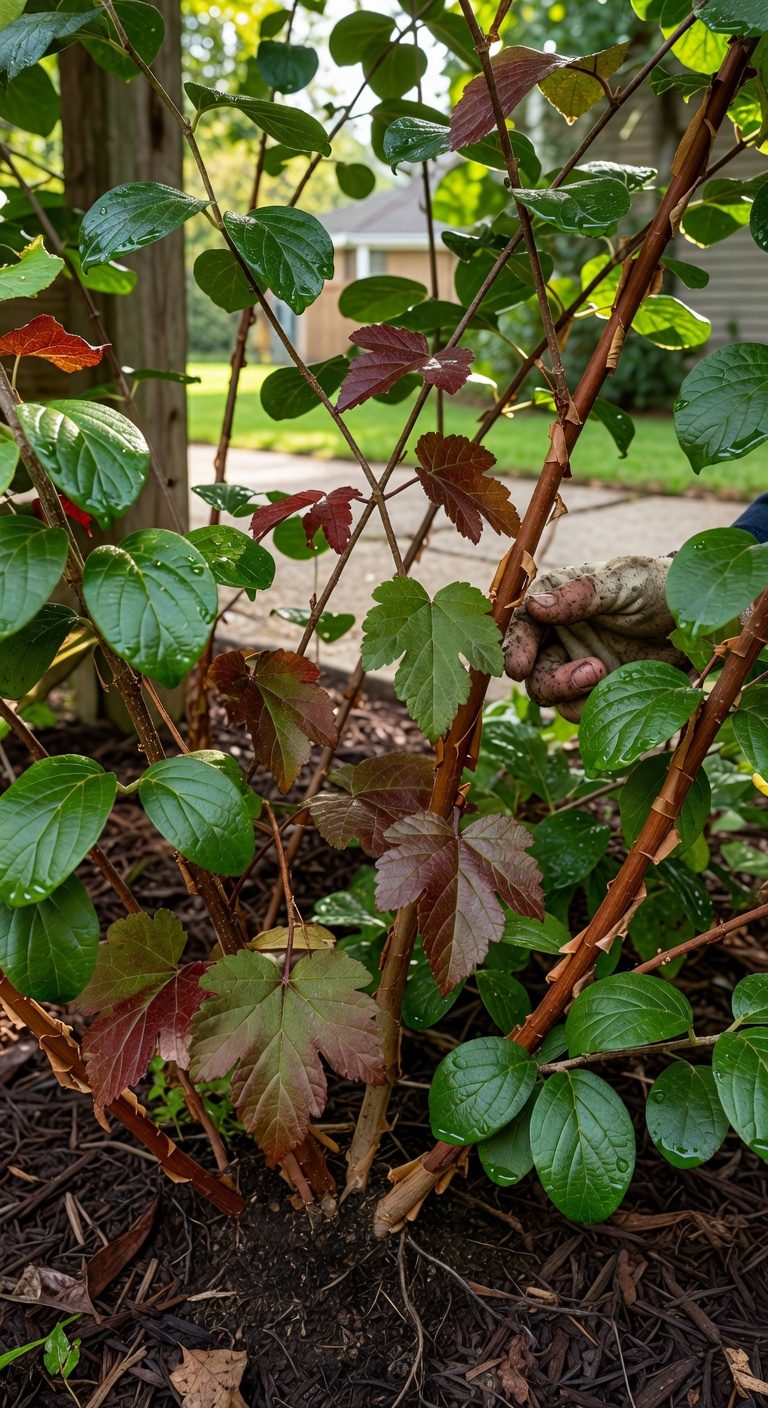
Bare spots in your front yard disappear fast with arrowwood and ninebark. These shrubs offer reliable cover and thrive in safe, low-risk landscapes.
Fast growth means gaps fill in months, not years. Both establish strong root systems within one growing season.
Arrowwood benefits include dense foliage, disease resistance, and adaptability to clay or loamy soils. They reach 6–10 feet tall and wide. Water weekly the first year.
Ninebark varieties, like *Diabolo* or *Summer Wine*, add color and texture. They grow 4–7 feet tall with peeling bark and white to pink clusters. Tolerate partial shade.
Design tips: Space plants 3–5 feet apart. Use along borders or slopes. Prune in early spring to shape. Avoid overwatering once established.
Both resist deer and pests, making them safe, low-maintenance choices.
Plant Dogwood or Crape Myrtle as a Focal Tree
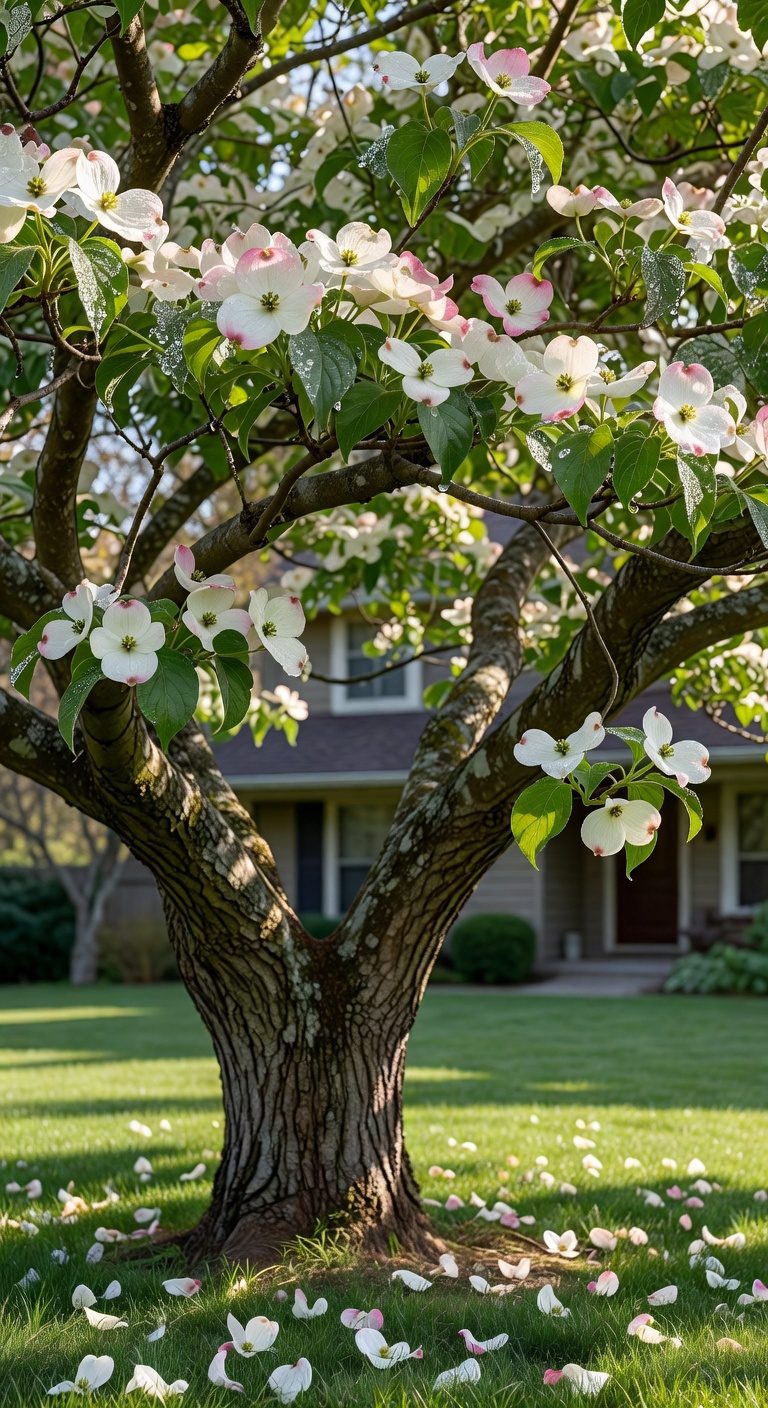
A well-chosen focal tree draws the eye and anchors your front yard design. Consider dogwood or crape myrtle for reliable focal tree ideas.
For dogwood benefits, know this: Cornus florida thrives in Zones 5–9, reaches 20–25 feet tall, and prefers partial shade. It offers spring blooms, fall color, and minimal disease risk when planted in well-drained soil.
Water weekly the first year.
Crape myrtle features include summer flowers, exfoliating bark, and drought tolerance. Choose Lagerstroemia indica for Zones 6–9. It grows 15–30 feet tall.
Prune in late winter to avoid weak branching.
Follow tree placement tips: set your tree 10–15 feet from the house. Avoid overhead wires.
Center it in the lawn or near a walkway for clear visibility.
Give young trees a 3-inch mulch ring, but keep mulch 6 inches from the trunk to prevent rot.
Group Purple Salvia and Yellow Coreopsis for Color
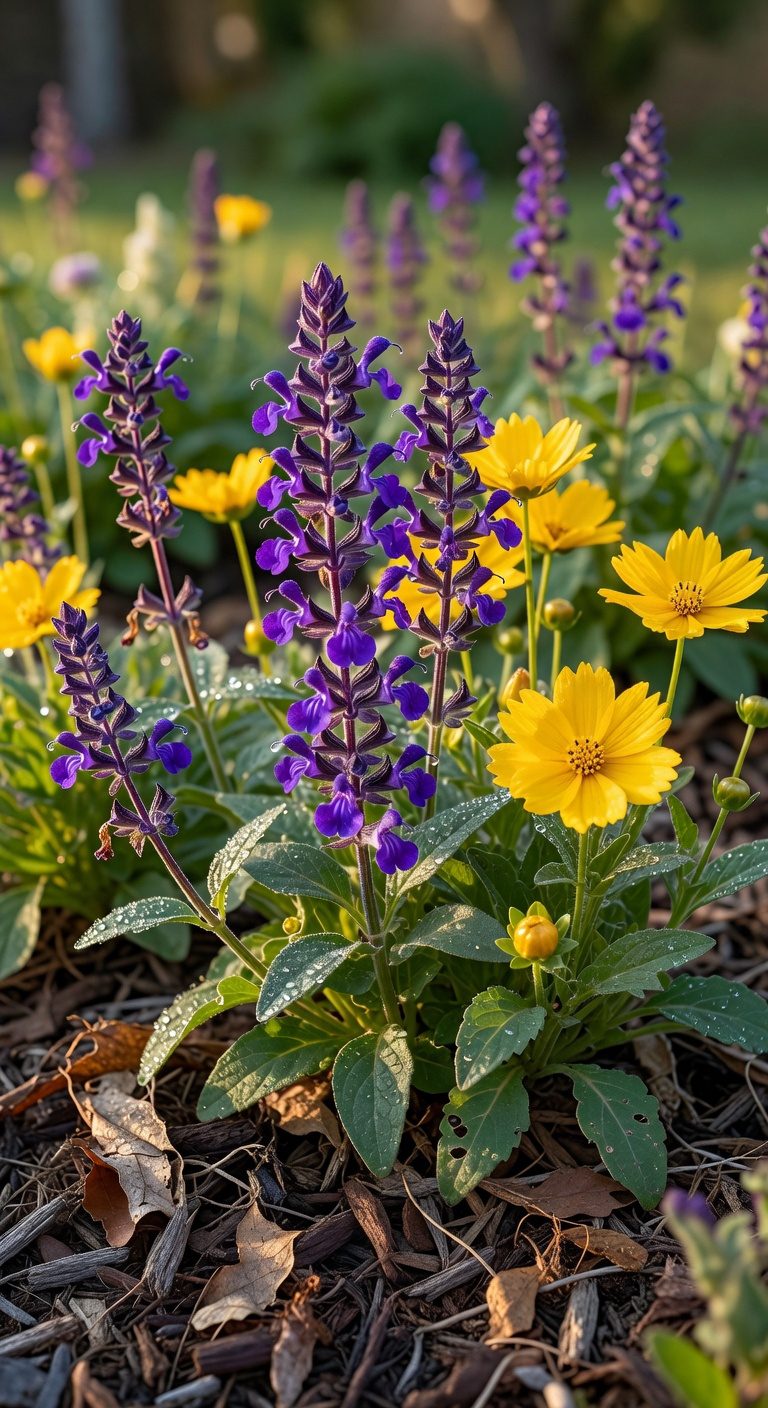
When planning your front yard color scheme, pairing purple salvia with yellow coreopsis creates strong visual contrast that blooms reliably all season.
Plant them in groups of three or more for best impact.
Sun & Soil Needs
Both thrive in full sun (at least 6 hours daily).
Use well-drained soil; avoid wet spots.
Salvia Benefits
Drought-tolerant once established.
Attracts pollinators like bees and butterflies.
Blooms from late spring to fall.
Stays 18–24 inches tall.
Coreopsis Varieties
Try *Moonbeam* (pale yellow, 18” tall) or *Zagreb* (bright yellow, 24” tall).
Deadhead spent flowers to extend blooming.
Resistant to deer and rabbits.
Care Schedule
Water weekly during first growing season.
Trim salvia and coreopsis by one-third in early summer to keep plants bushy.
Apply mulch in spring to retain moisture and reduce weeds.
Make a Statement With Japanese Maple or Oakleaf Hydrangea
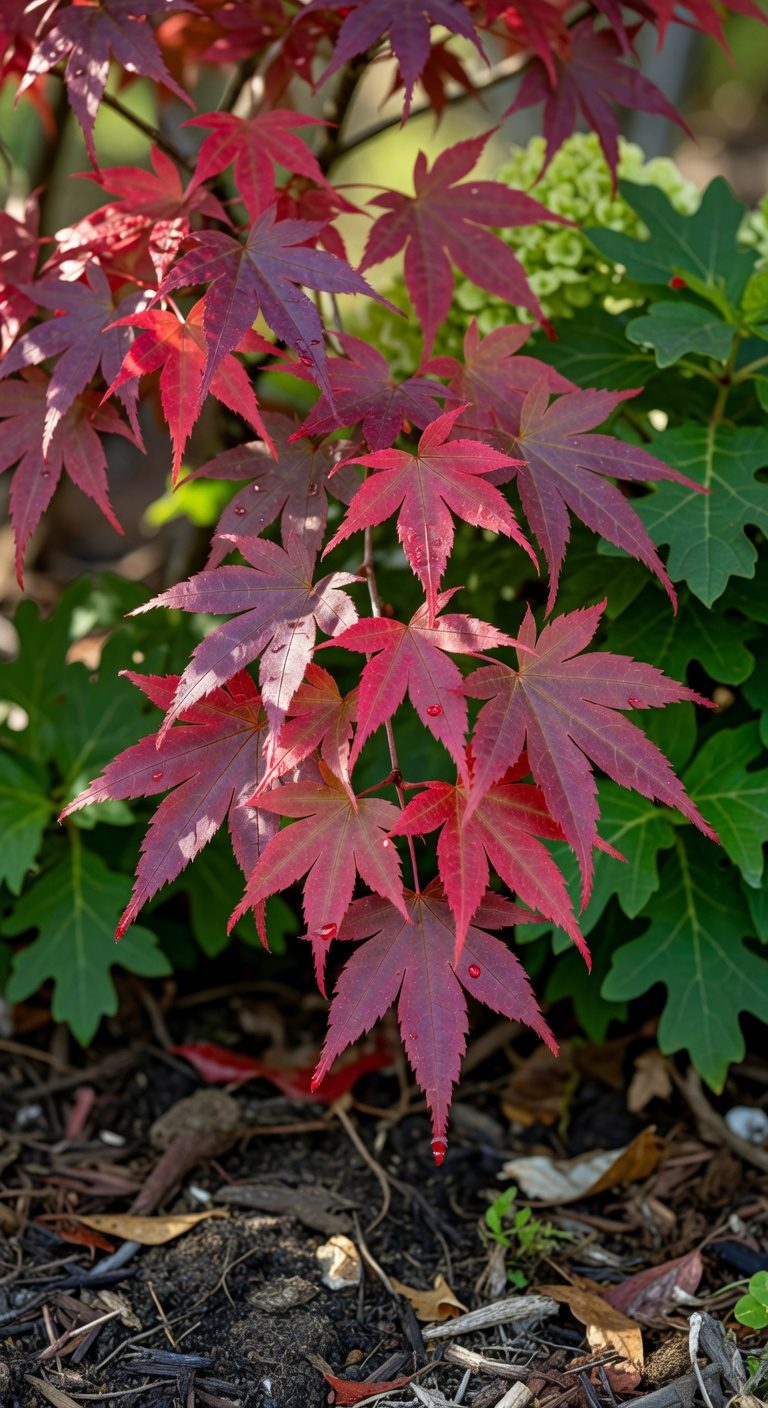
Choose a standout focal point by planting a Japanese maple or oakleaf hydrangea near the front of your yard.
Japanese maple benefits: Grows 15–25 feet tall, hardy in zones 5–8. Prefers partial shade and well-drained soil. Water weekly during dry spells. Mulch to protect shallow roots. Resists pests and adds year-round interest with red-orange fall foliage.
Oakleaf hydrangea care: Reaches 6–8 feet tall, thrives in zones 5–9. Plant in morning sun, afternoon shade. Keep soil consistently moist. Prune right after flowering to avoid removing next year’s buds. Apply slow-release fertilizer in early spring. Flowers turn from white to brown in fall, offering safe cover for birds.
Both plants are non-toxic, low-allergen choices. They require minimal pruning and boost curb appeal without attracting pests.
Edge Walkways With Tough Liriope or Dwarf Mondo Grass
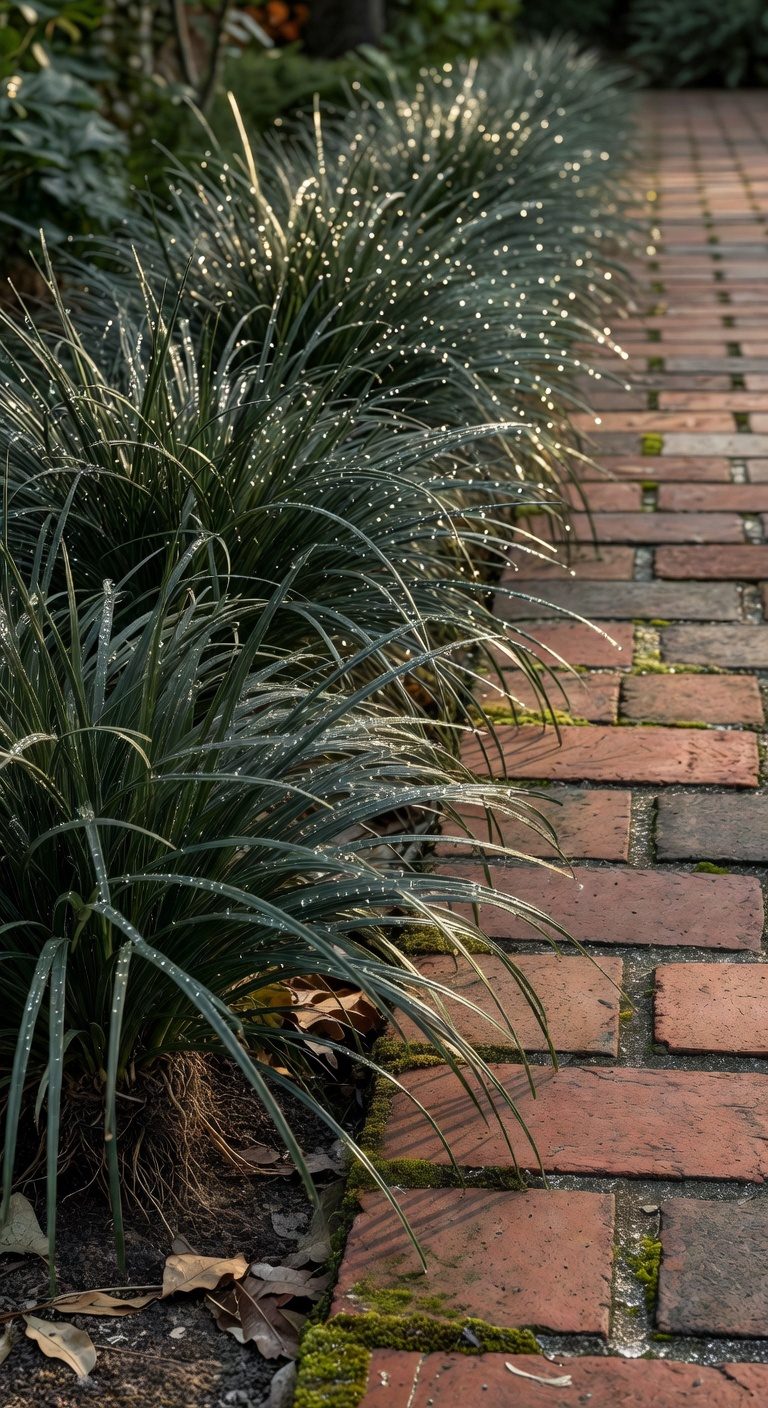
While defining your walkway edges, plant liriope or dwarf mondo grass for clean, low-maintenance borders that stay tidy year-round. These plants resist foot traffic and prevent soil erosion.
Use liriope varieties like ‘Big Blue’ or ‘Mingus’, both reach 12–18 inches tall and spread slowly. Plant 6 inches apart for full coverage in one growing season. Water weekly for the first 6 weeks. After establishment, they need moisture only during dry spells. Apply balanced fertilizer each spring.
Dwarf mondo grass benefits include its dense, 2–3 inch height and intolerance to weeds. It thrives in full sun to full shade. Plant plugs 4 inches apart. Trim once yearly in early spring to refresh growth. Avoid high-traffic stomping.
Both liriope varieties and dwarf mondo grass resist deer and pests. Use them along concrete or paver paths. They require no edging, reducing tripping risks.
Swap Lawn for Native Ground Covers Like Pachysandra
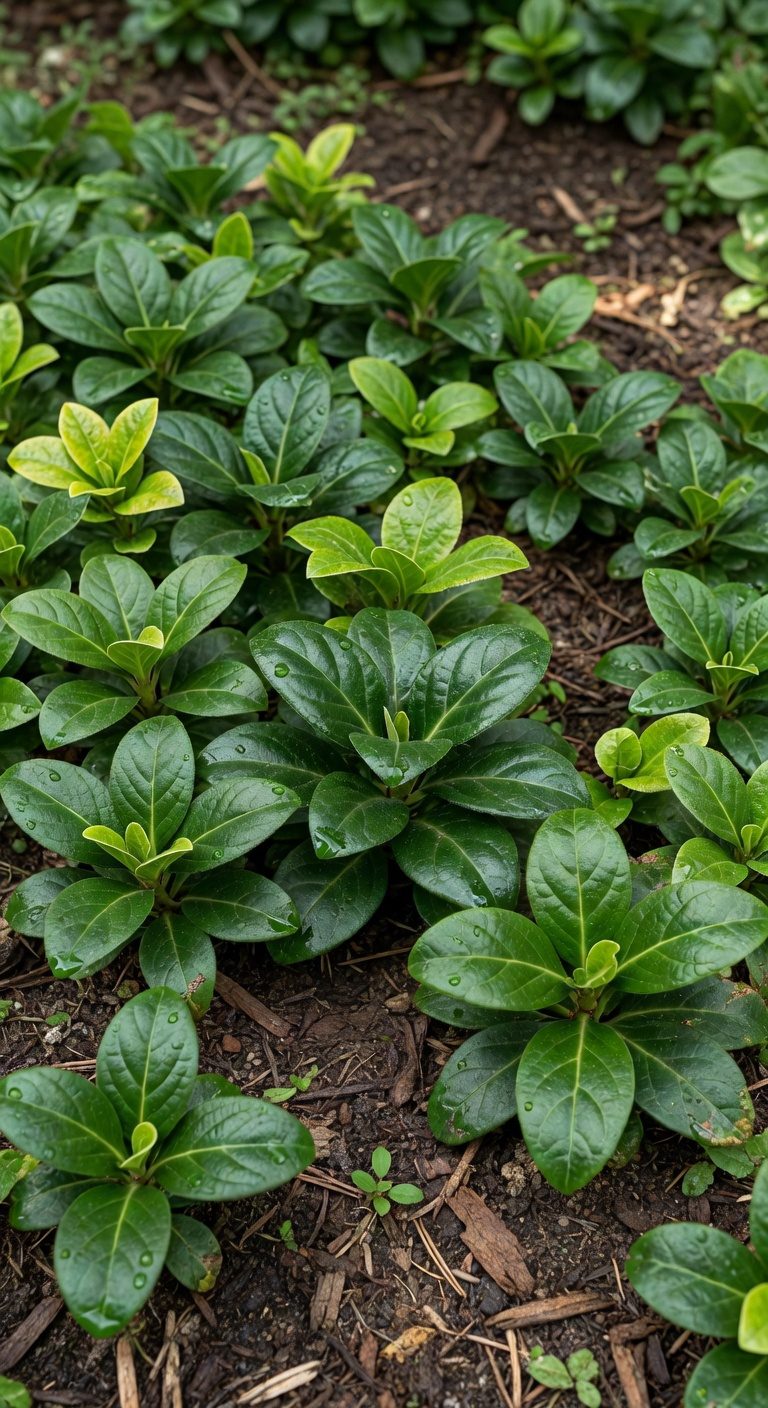
Ground cover transformation starts with tough, low-growing natives like Allegheny pachysandra (Pachysandra procumbens). You’ll gain pachysandra benefits such as drought tolerance, shade adaptation, and zero chemical needs. This evergreen spreads slowly, reaching 6–12 inches tall, forming dense mats that block weeds.
Use native groundcovers to replace turf in low-traffic zones. Pachysandra thrives in USDA zones 4–9, prefers partial to full shade, and requires minimal upkeep.
Care schedule:
- Water weekly the first growing season.
- Mulch lightly in spring.
- Prune stray stems in early spring if needed.
It resists deer and stays disease-free when planted in well-drained soil. Avoid heavy foot traffic areas. You’ll reduce mowing, improve soil health, and support local ecosystems.
Plant in groups of 3–5 per square foot for fast coverage. You’re choosing safety, stability, and sustainability with native groundcovers like pachysandra.
Enjoy Winter Interest With Red Twig Dogwood Berries
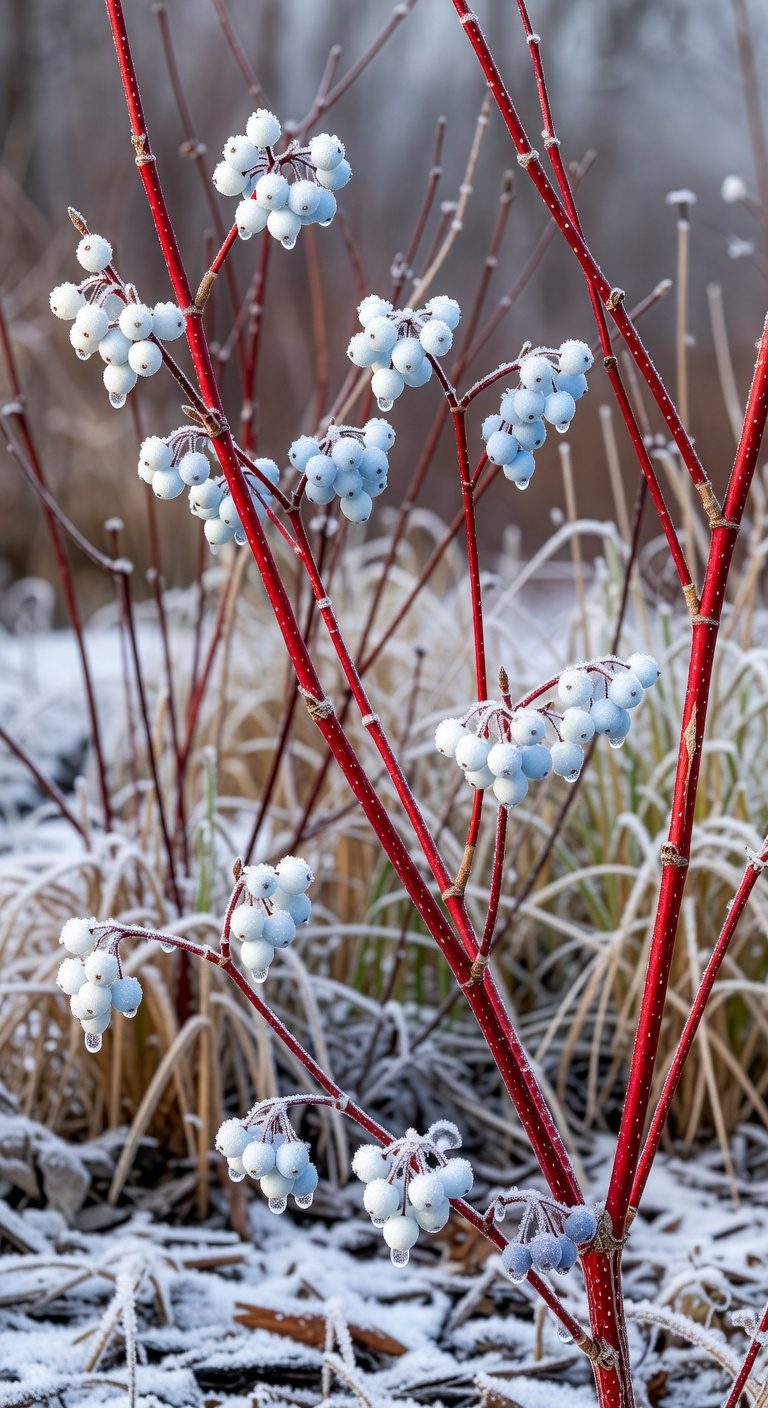
When winter light filters through bare branches, red twig dogwood (Cornus sericea) grabs attention with bright crimson stems and clusters of white berries that persist into late season.
You’ll enjoy the winter arrangement it creates near walkways or foundation edges. The plant grows 6–8 feet tall and spreads 5–6 feet.
Plant in full sun to light shade. Use moist, well-drained soil with a pH of 5.5–7.0. Water weekly during first growing season.
Prune one-third of oldest stems each late winter to boost new growth and color. Birds eat the berries, so your berry display may fade by midwinter.
Space plants 4–5 feet apart for a solid look. Apply 2–3 inches of mulch to protect roots. Avoid high-traffic zones where berries could stain hardscapes.
Wear gloves when pruning. This shrub is non-toxic and safe near children and pets.
Block Deer With Russian Sage and Lamb’s Ear
Red twig dogwood draws the eye in winter, but other plants serve different roles in active seasons.
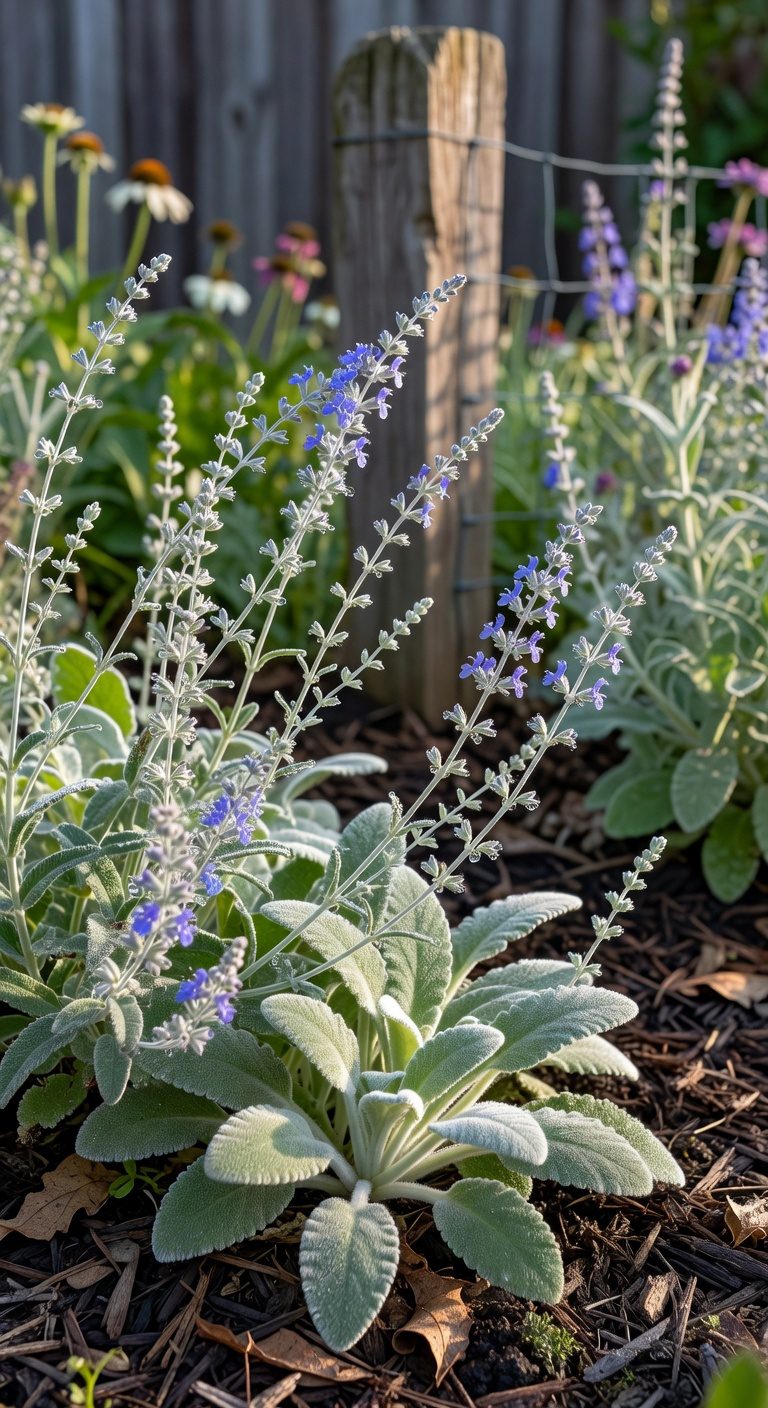
Use deer resistant plants to protect your front yard. Russian sage and Lamb’s Ear help block deer naturally. Both feature aromatic foliage that deters browsing.
Russian sage:
- Grows 3–5 feet tall, 2–3 feet wide
- Blooms June to September with lavender spikes
- Prefers full sun, well-drained soil
- Water deeply once weekly during drought
- Prune to 6 inches in early spring
Lamb’s Ear:
- Reaches 1–2 feet tall with 18-inch spread
- Soft, silvery leaves with fuzzy texture
- Thrives in full to partial sun
- Drought tolerant once established
- Trim flower spikes to maintain shape
Plant in groups for visual mass and better defense. Space 18–24 inches apart.
These deer resistant plants add texture and safety without fencing. You’ll enjoy peace of mind and low upkeep year after year.
Fit Plants Into Tight Spaces With Dwarf Boxwood
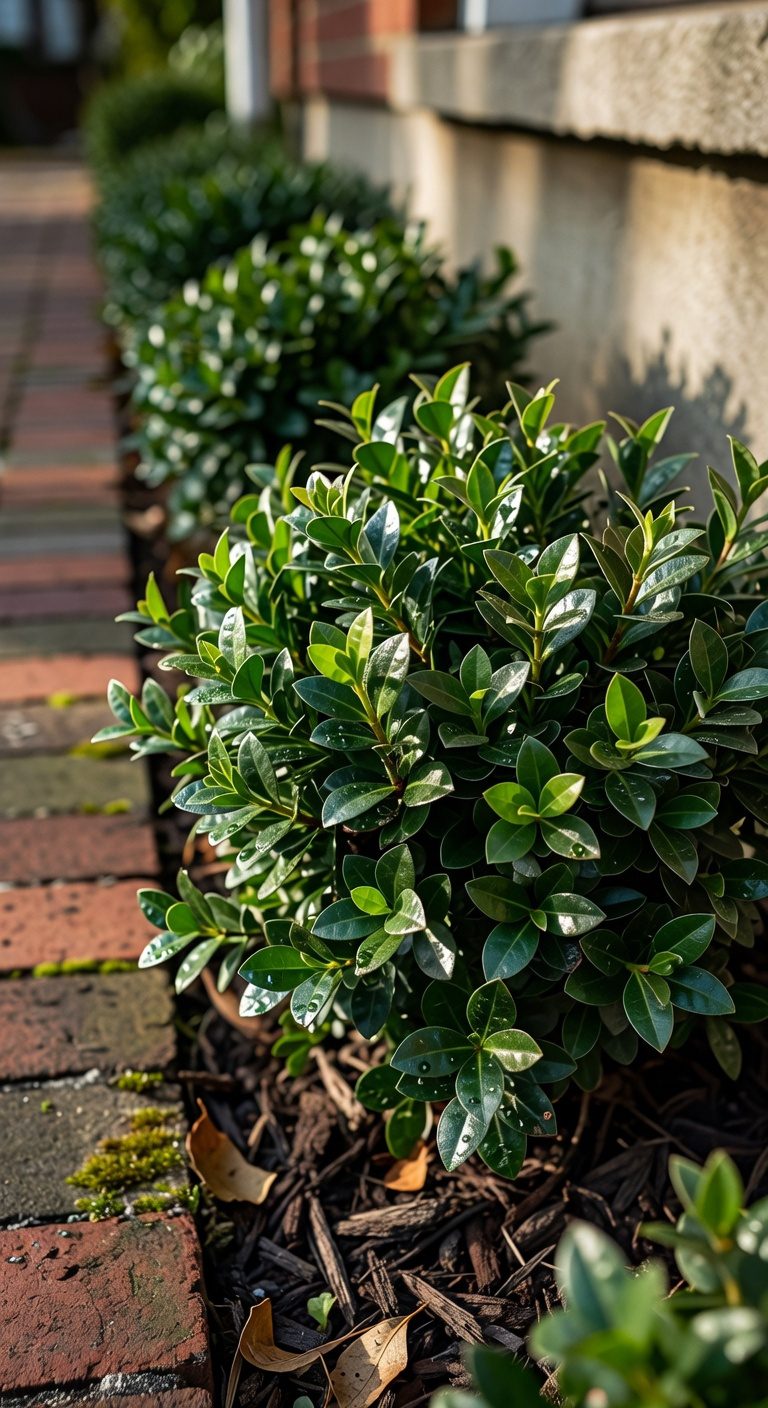
While larger shrubs dominate many landscapes, dwarf boxwood fits neatly into tight spaces without sacrificing structure or polish. For tight space landscaping, use dwarf boxwood to define edges or fill narrow beds. These shrubs grow 1–2 feet tall and wide, making them ideal for small zones near walkways or foundations.
Dwarf boxwood care is simple. Plant in well-drained soil and partial to full sun. Space plants 12–18 inches apart for hedges. Water weekly during the first growing season. Once established, they tolerate dry spells.
Prune lightly in late spring to maintain shape. Avoid heavy cuts, as they recover slowly. Use mulch to retain moisture and limit weeds. Fertilize once in early spring with slow-release granules.
Watch for pests like mites, rinse leaves if needed. With routine care, your dwarf boxwood stays dense, safe, and neat year-round.
Attract Butterflies With Coneflower, Milkweed, and Aster
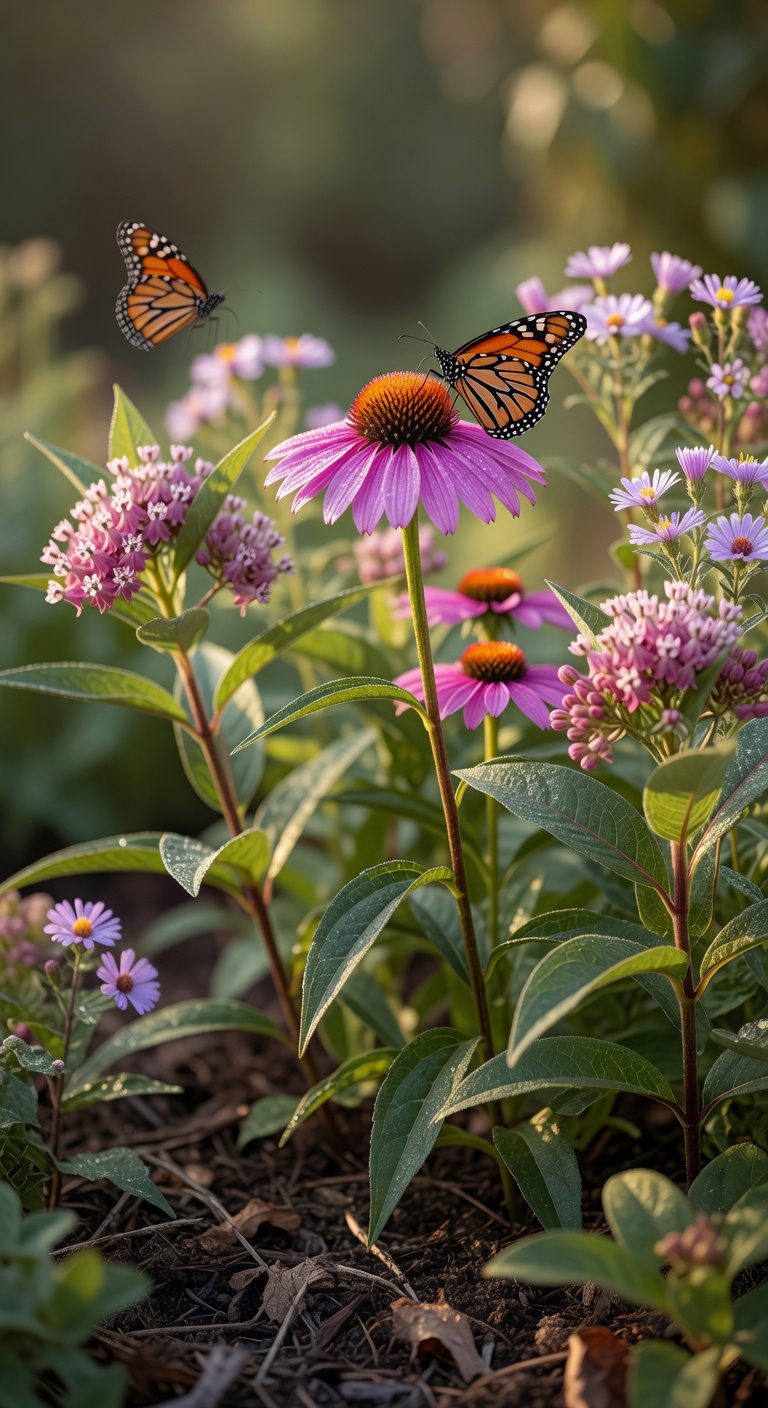
Though butterflies favor nectar-rich blooms, you can draw them reliably by planting coneflower, milkweed, and aster in your front yard.
Create safe butterfly gardens using these perennials:
- Coneflower (Echinacea purpurea), 2–4 ft. tall, blooms midsummer, drought-tolerant
- Milkweed (Asclepias tuberosa), 1–2 ft., orange flowers, essential for monarch caterpillars
- Aster (Symphyotrichum novae-angliae), 3–5 ft., purple blooms, thrives in full sun
Plant in groups of 3–5 for better visibility. Space 18–24 inches apart. Water weekly during first growing season. Mulch lightly to retain moisture.
These plants support pollinator pathways, connected green spaces that help insects move safely across neighborhoods.
Avoid pesticides; they harm butterflies and bees. Deadhead spent blooms to encourage repeat flowering. Cut back in late fall.
Your yard becomes a low-risk zone for pollinators. This setup needs minimal upkeep once established.
You help protect vital species just by choosing the right plants.
Brighten Shade With Variegated Hosta and Lungwort
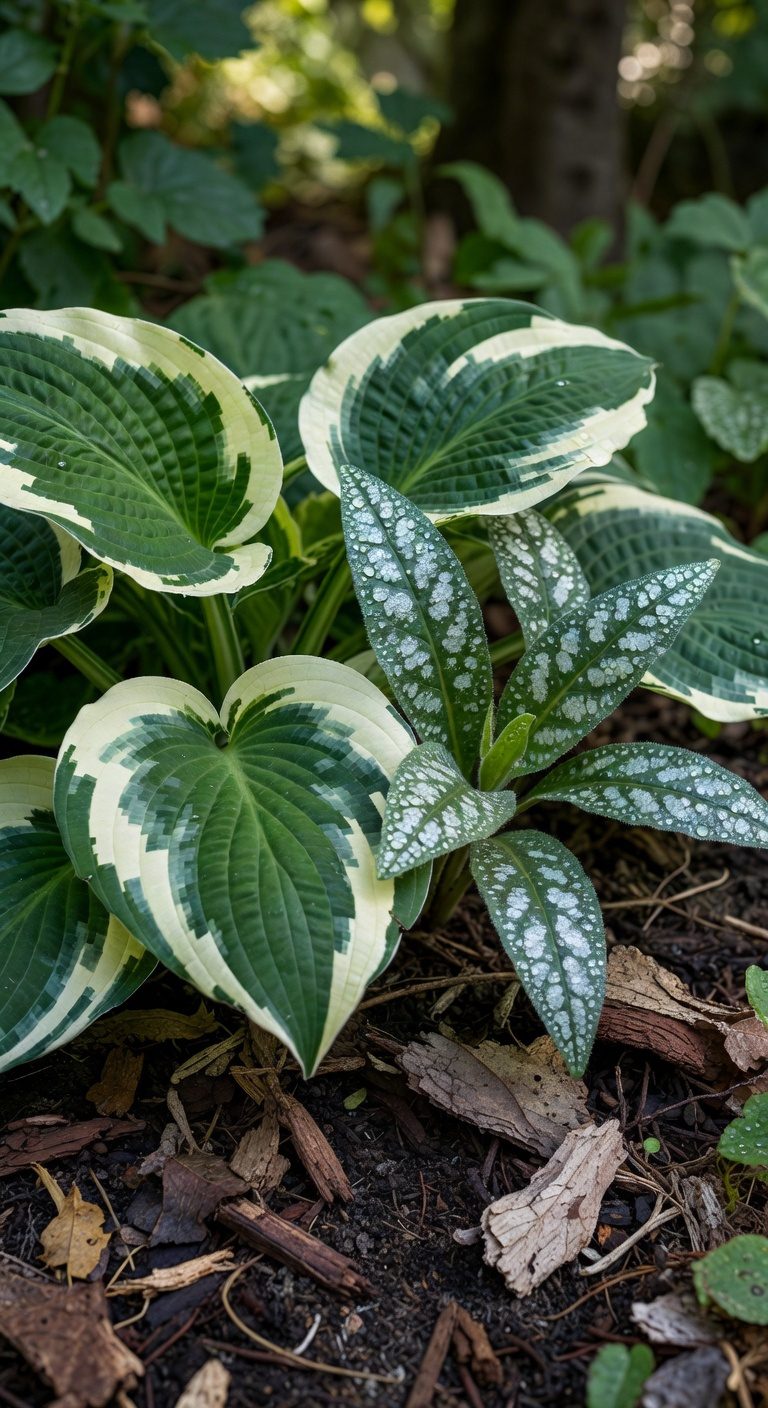
When light is limited, you can still create visual interest using foliage plants like variegated hosta and lungwort.
These plants thrive in shade gardening and deliver reliable texture and brightness.
Plant Profiles:
- *Variegated hosta*: Grows 1–3 feet tall and wide. Leaves feature creamy-yellow margins with green centers. Prefers moist, well-drained soil.
- *Lungwort (Pulmonaria spp.)*: Reaches 12–18 inches tall. Silvery-spotted foliage with pink-to-blue flowers in early spring.
Care Schedule:
- Water weekly during dry spells.
- Mulch in spring to retain moisture and suppress weeds.
- Divide hostas every 3–4 years in early spring.
Design Tips:
Use foliage contrast to define layers. Place hostas in back, lungwort in front.
Both are non-toxic and deer-resistant, offering safety for kids and pets.
No special treatments needed.
Plant in zones 3–8.
Pair Sedum and Yarrow for Zero-Fuss Color
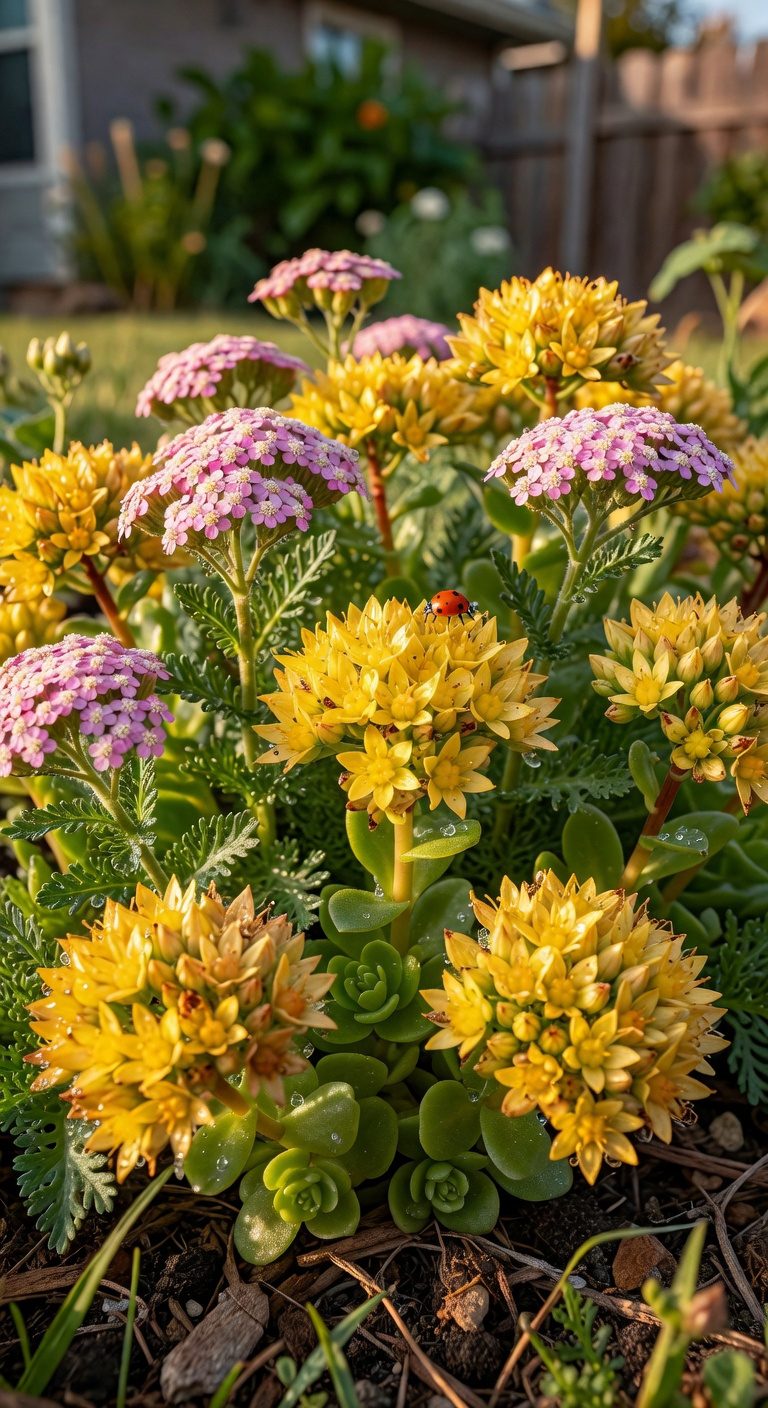
If you want bold color with minimal upkeep, pair sedum and yarrow in full sun beds. Both tolerate heat, resist pests, and need little water.
Planting Tips:
- Space sedum varieties 12–18 inches apart.
- Place yarrow 18–24 inches apart for airflow.
- Use well-drained soil; avoid clay-heavy mixes.
Sedum Care:
- Choose low-growing or upright sedum varieties like ‘Autumn Joy’ or ‘Dragon’s Blood’.
- Water deeply every 2 weeks once established.
- Trim in early spring to encourage dense growth.
Yarrow Maintenance:
- Deadhead spent blooms monthly to prolong flowering.
- Cut back by half in midsummer for neat form.
- Divide every 3 years in spring to prevent crowding.
Both attract pollinators but resist deer. You’ll enjoy steady color from summer to fall with almost no effort.
Use Native Plants Like Switchgrass and Bee Balm
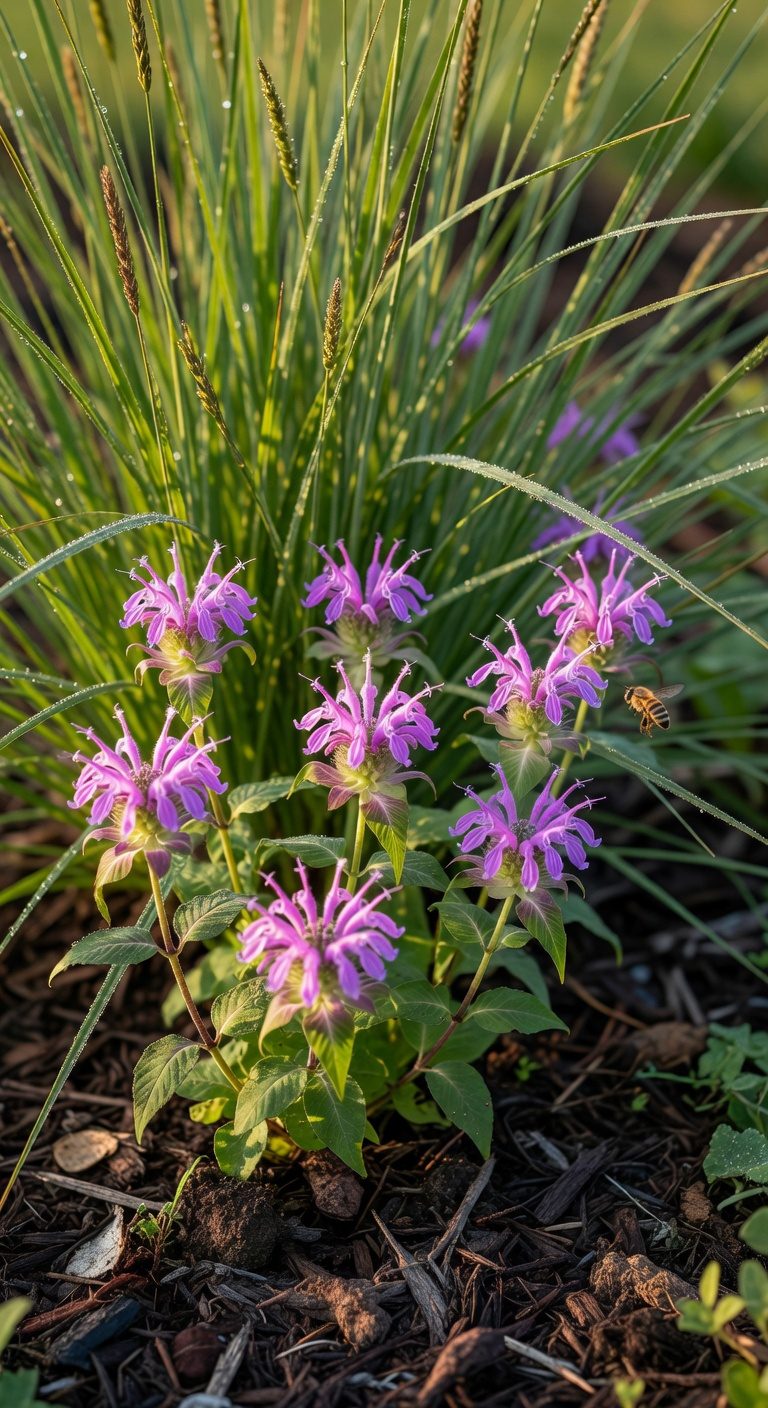
Since native plants adapt easily to local soil and climate, choose switchgrass and bee balm for resilient front yard color. These species thrive with minimal care, offering reliable beauty and safety through deep root systems and disease resistance.
Native landscaping reduces erosion and supports local pollinators. Switchgrass (Panicum virgatum) grows 3–6 feet tall, forms clumps, and thrives in full sun. It needs moderate watering and survives drought once established. Cut it back in early spring.
Bee balm (Monarda fistulosa) reaches 2–4 feet tall, blooms midsummer, and attracts bees and butterflies. It prefers well-drained soil and partial to full sun. Space plants 18–24 inches apart to prevent mildew. Water at the base weekly during dry spells.
Both deliver strong ecological benefits by boosting biodiversity and requiring fewer chemicals, making your yard a safe, sustainable space.
Grow Hens-And-Chicks in Sunny Rock Gardens
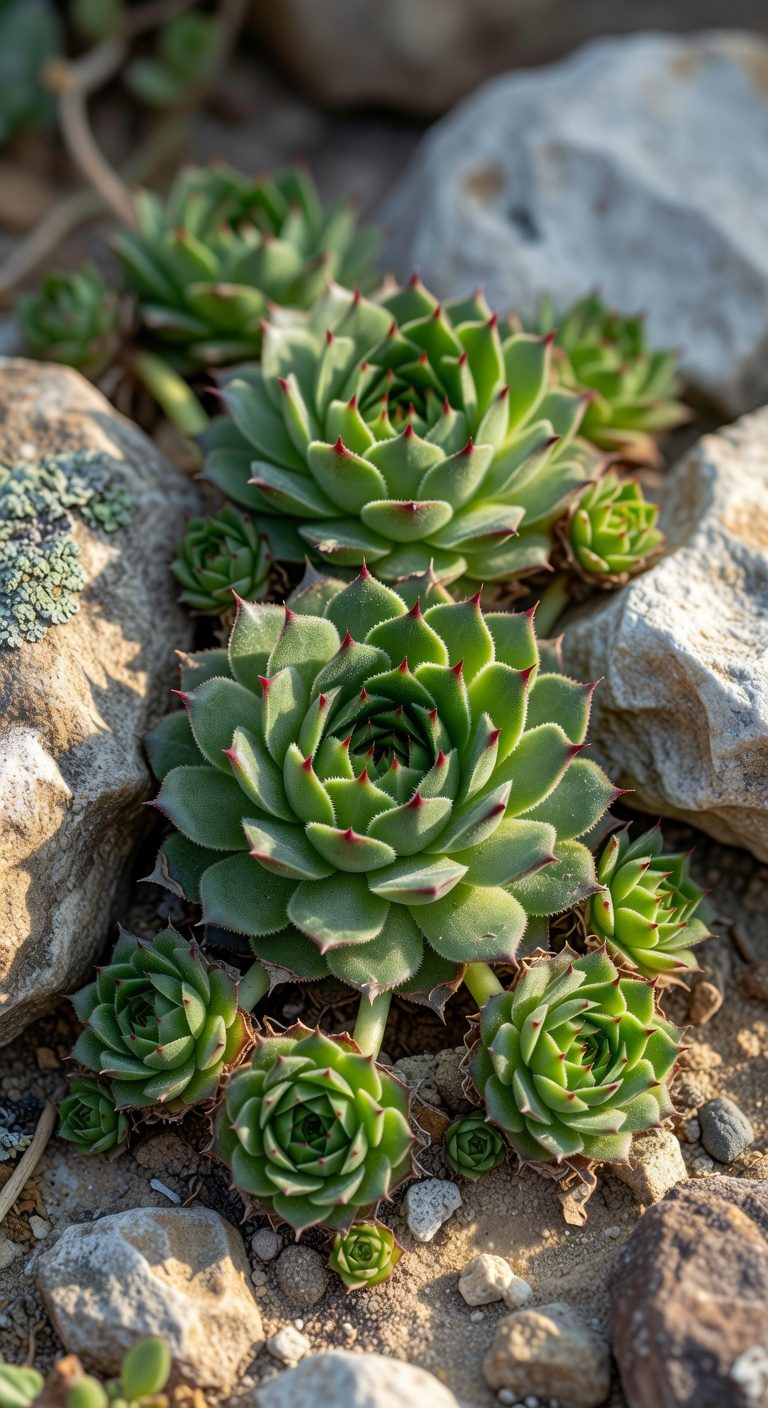
Though they thrive in harsh conditions, hens-and-chicks (Sempervivum tectorum) need well-drained soil and full sun to grow well in rock gardens.
Choose a spot with at least 6 hours of daily sunlight. Use sandy or gravelly soil to prevent root rot. Space plants 4–6 inches apart for airflow.
Select from common hens and chicks varieties like ‘Ruby Heart’, ‘Cobweb’, or ‘Albovittata’. These tolerate drought and cold (USDA zones 3–8).
In rock garden design, place them between stones or along edges. They spread slowly via offsets. Water only when soil is dry, about once a week in summer. Reduce watering in winter.
Avoid overwatering. Watch for soggy leaves, a sign of rot. Remove dead foliage with clean scissors. Don’t mulch.
They’re non-toxic and safe around kids and pets. Let them naturalize for low-maintenance ground cover.
Pick Mildew-Resistant Phlox and Bee Balm
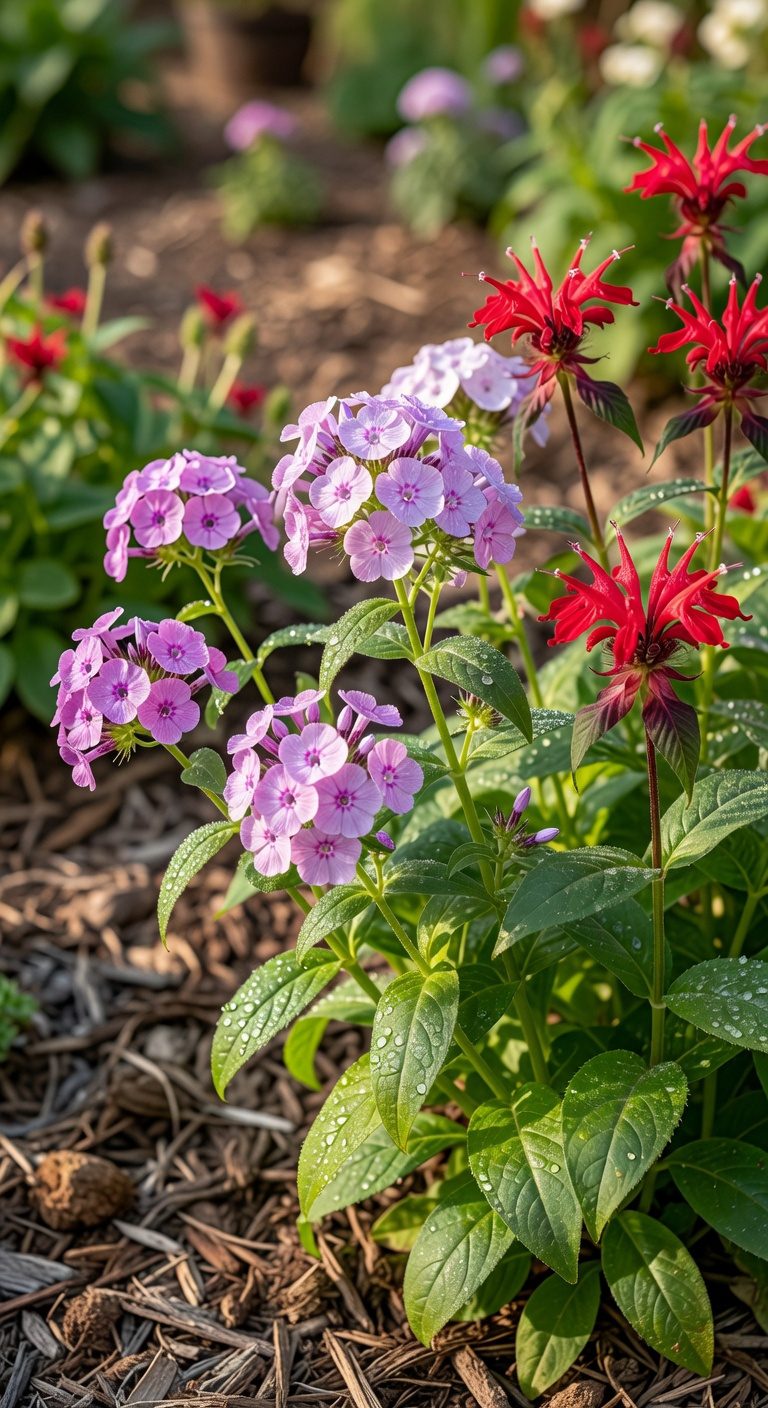
Now shift focus to sun-loving perennials that add color and attract pollinators, mildew-resistant phlox and bee balm. Choose these for dependable outcomes and low risk.
Mildew Resistance:
- Select cultivars like ‘David’ phlox paniculata or ‘Pow Pow’ bee balm.
- These resist powdery mildew, a common issue in humid climates.
- Space plants 18–24 inches apart for airflow.
- Water at the base in the morning to keep foliage dry.
Pollinator Attraction:
- Phlox blooms in mid-summer with white, pink, or purple clusters.
- Bee balm produces vibrant red, pink, or purple flowers in July.
- Both draw bees, butterflies, and hummingbirds safely.
- Plant in full sun (6+ hours daily) for best bloom.
Deadhead spent flowers. Cut back in fall to reduce disease risk.
These perennials return yearly with minimal care and strong disease protection.
Build Structure With Clipped Boxwood and Japanese Yew
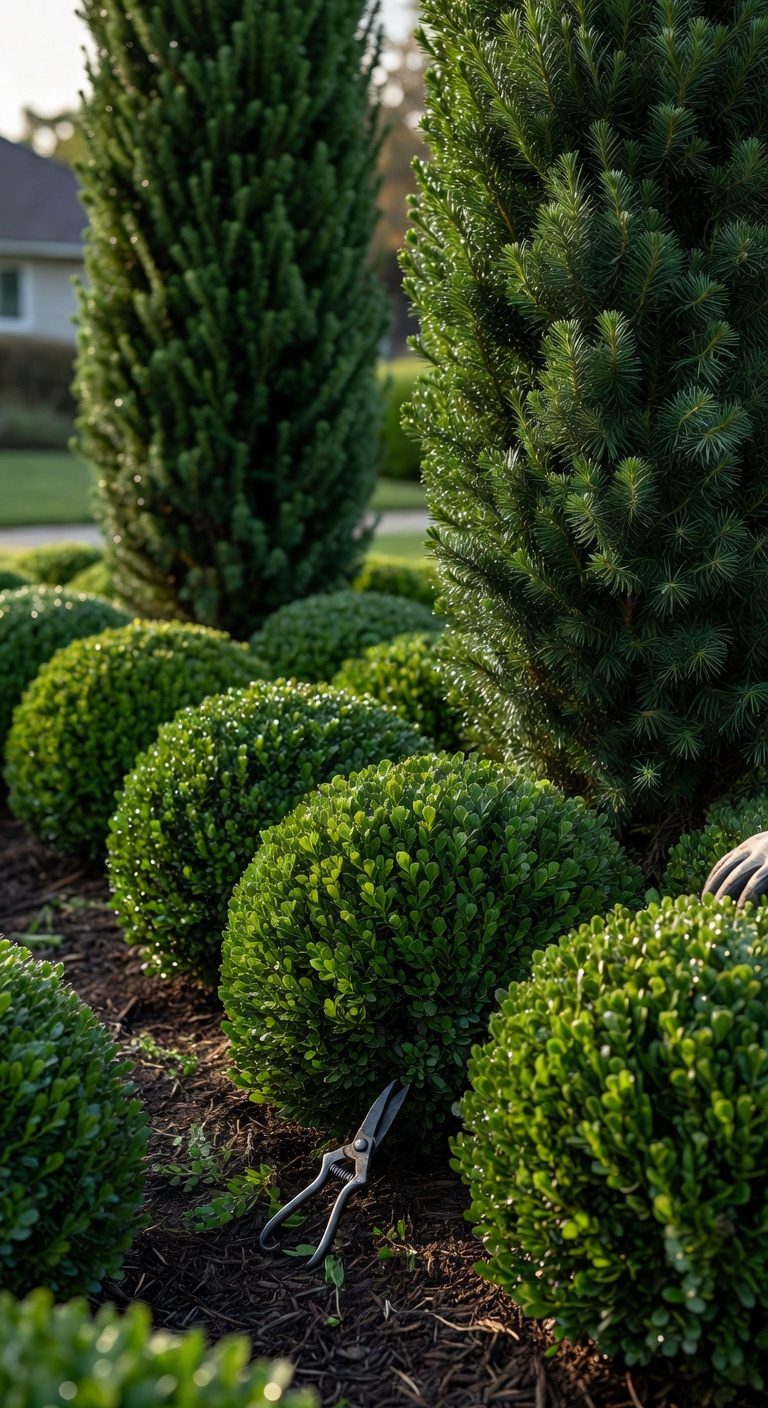
Planting Basics: You can create a secure, tidy look using clipped boxwood and Japanese yew**. These plants add structure and stay green year-round.
Choose dwarf clipped boxwood for low hedges (1–3 ft tall). Space them 12–18 inches apart. Trim every 6–8 weeks in growing season. Use sharp shears for clean cuts.
Pick Japanese yew for taller forms (3–6 ft). Plant 2–3 ft apart for privacy. Yews tolerate shade and cold. Avoid wet soil, drainage is key.
Both resist pests and need little upkeep. Water deeply once a week when young.
After year two, they survive on rainfall in most zones.
Fertilize in early spring with slow-release granules. Never pile mulch against stems.
Clipped boxwood and Japanese yew give clean edges and safe sightlines. They stay dense, block wind, and won’t trap debris.
Perfect for calm, orderly front yards.
Mix Knock Out Roses and Coreopsis for All-Season Blooms
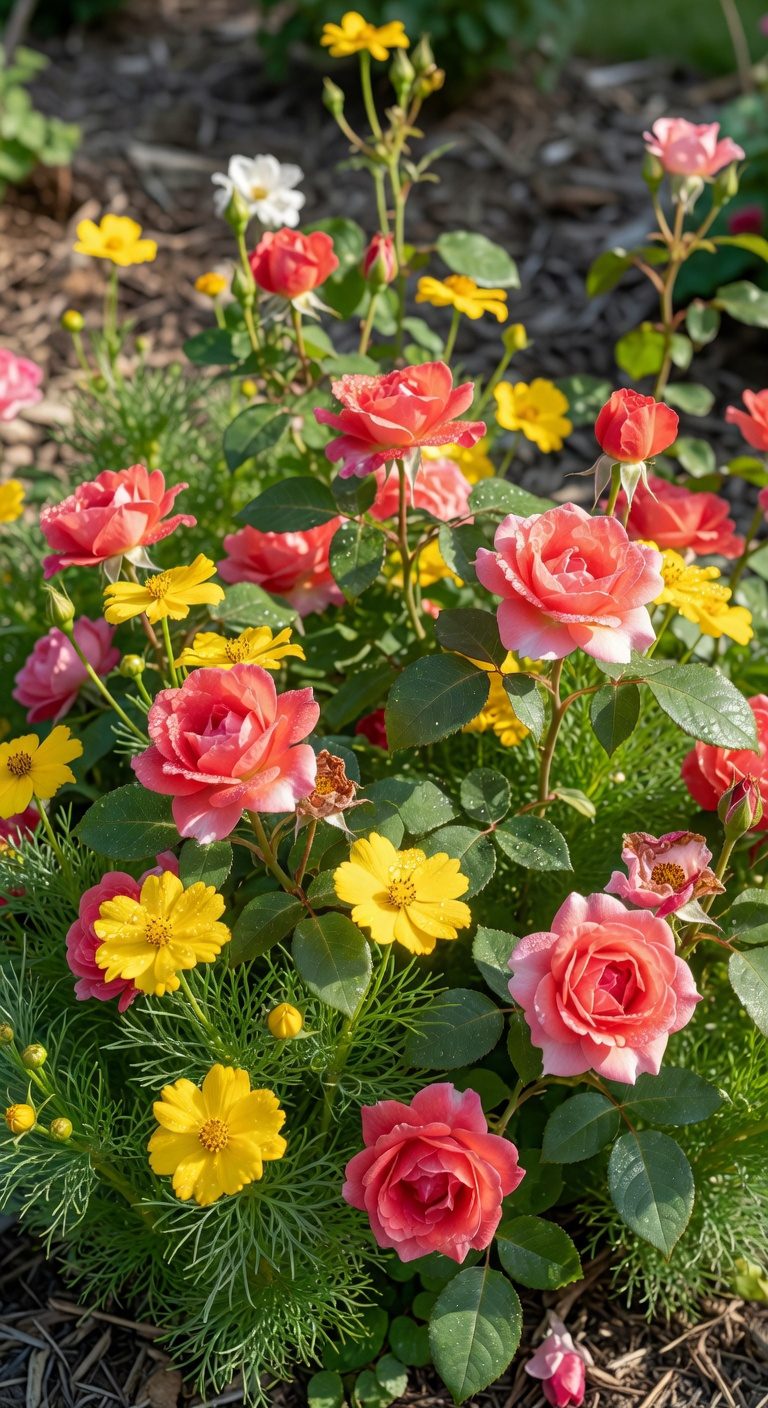
When you want color that lasts from spring to frost, combine Knock Out roses and coreopsis for reliable, continuous blooms. These rose pairings thrive in full sun and well-drained soil, needing minimal care. Plant them 2–3 feet apart to allow airflow and reduce disease risk.
- Knock Out roses bloom every 5–6 weeks from May to November.
- Coreopsis varieties like Moonbeam and Zagreb flower nonstop from June to October.
Both are pest-resistant and cold hardy to Zone 5. Water deeply once a week during dry spells. Fertilize roses in early spring and midsummer with slow-release granular food. Trim coreopsis by one-third in midseason to encourage compact growth.
Deadheading isn’t required but improves appearance. Use mulch to suppress weeds and retain moisture. These plants are safe around children and pets.
With proper spacing and care, your front yard stays bright and low-maintenance year after year using these proven rose pairings and coreopsis varieties.
Final Takeaways
Plant these 25 landscape plants to upgrade your front yard like a Victorian-era gardener with modern know-how. Space boxwood 2–3 feet apart for structure. Add lavender, sedum, and coneflowers in sunny spots. Water deeply once weekly. Use mulch to retain moisture. Deadhead coreopsis monthly. Trim hens-and-chicks in spring. Install edging to define beds. Choose native wildflowers to support pollinators. Maintain year-round appeal with minimal effort.